
From qurut to mobile apps: Can grassroots startups boost family incomes in Tajikistan?
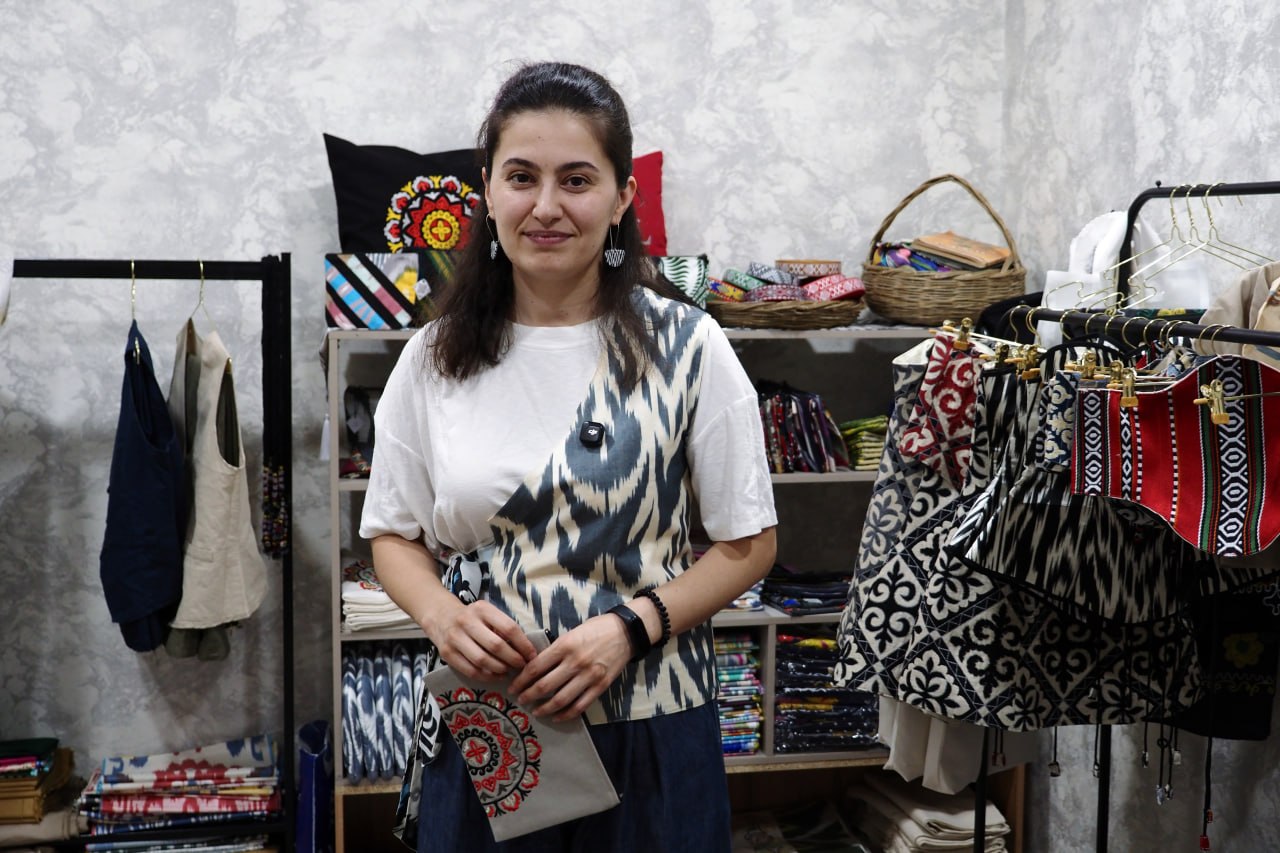
Family-run qurut production, the revival of traditional pottery, modern sewing workshops, digital services and small-scale agricultural equipment are among dozens of business ideas emerging across Tajikistan.
The authors of the most promising projects have presented their ideas through state business incubators, hoping to secure grants and turn them into sustainable enterprises.
Using Sughd Province as an example, Asia-Plus examines the ideas being proposed by local entrepreneurs and the obstacles preventing many of them from becoming viable businesses.
Nearly 100 ideas submitted in Panjakent
The state business incubator in Panjakent, which has been operating for less than a year, has received nearly 100 business proposals. Fourteen were selected for a three-day entrepreneurship training program.
According to Shohrukh Karimi, head of the Zarafshan Valley branch of Tajikistan’s State Institution for the Formation and Development of Entrepreneurship, most applications concern agriculture, food processing and traditional crafts.
He said the main challenge facing project authors was a lack of funding.
“The center told us that Panjakent is very active. We submitted nearly 100 ideas, and 14 passed the selection process. When people ask what the main problem facing young people is, the answer is money and investment,” Karimi said.
“We are reaching out to the European Bank, the Asian Development Bank and the Aga Khan Foundation. They have promised to support the ideas of our young people.”
The participants hope to receive grants to launch or expand their businesses.
“If even five or six people receive support, that will be a good result for our institution,” Karimi said.
A family business producing qurut
One participant proposed expanding her family’s production of qurut, a traditional hard dried dairy product made from fermented milk.
The woman attended the business incubator with her two young children and explained that the whole family currently makes qurut by hand at home.
“The father, mother and children are all involved. She asked for help purchasing equipment that would shape and dry the product. The qurut could then be vacuum-packed, branded and sold under its own label,” Karimi said.
According to him, the family has developed its own production method.
“The preparation method and ingredients are a family secret. We registered the application and hope she receives a grant,” he added.
Cheaper filtered water for apartment residents
Another participant proposed installing Aqua Life vending machines offering filtered drinking water near apartment buildings.
“A person could leave their building with a five- or ten-litre container, insert a coin and fill it with water. If bottled water costs 10 somoni in a shop, this water could be sold for three somoni,” Karimi explained.
The project’s author linked the initiative to residents’ growing concerns about the quality of drinking water.
“Our region has industrial deposits and gold-mining operations. People are less willing to drink the spring and tap water they used before. I liked this idea, and it passed the selection,” Karimi said.
Reviving the pottery traditions of the Zarafshan Valley
Another selected project involves producing ceramic tableware and souvenirs.
Karimi said some ceramic products sold to restaurants and souvenir shops are currently imported from Samarkand.
“Pottery was a traditional craft in the Zarafshan Valley, dating back to ancient Sarazm and old Panjakent. Today, it has almost disappeared,” he said.
“A woman approached us who knows the craft but does not have equipment or a workshop. Her application was also selected.”
Other ideas include a psychological support centre for young people and a sports and educational space for children.
One participant wants to open a Kids Gym offering age-appropriate sports and play programmes for infants and preschool children.
“He already has premises. He wants to involve children in sports during school holidays. He is a teacher at a sports university,” business incubator staff said.
Sewing and design projects in Khujand
Several participants in business training sessions in Khujand presented projects related to clothing production and design.
Amina said she runs a workshop where she teaches women and girls hand sewing, embroidery and beadwork.
“Any girl, woman or housewife can learn. I train them for free or for a small fee and then invite them to work in my workshop,” she said.
One part of her project focuses on custom-made wedding dresses. According to Amina, many dresses are currently ordered from Tashkent or rented for ceremonies.
“People now pay 5,000 or 8,000 somoni to rent a dress they wear for three hours. I want that money to be spent on a dress the bride can keep,” she said.
Nigora Khojayeva, founder of the Nozanin atelier, wants to open a sewing supplies shop next to her workshop.
The atelier has operated for several years and employs four people.
“To find the right thread for a single dress, we have to travel all the way to Panjshanbe market. During that time, we could have sewn another dress,” Khojayeva said.
Mohliqo Tojiboyeva, a lecturer at the Polytechnic Institute, presented a project to produce school and sports uniforms from natural materials.
“We found that parents and children are dissatisfied with the clothes they currently wear. They are uncomfortable and do not always meet hygiene standards,” Tojiboyeva said.
Another participant said her workshop had been producing national and specialised clothing for more than ten years.
“We work with banks that want unified uniforms. Most companies also need corporate workwear,” she said.
She noted that small workshops can accept orders that larger factories may consider unprofitable. The business also plans to train and employ girls facing difficult personal circumstances.
Mini-equipment for farmers and digital services for drivers
Khurshed, a resident of Isfara, proposed purchasing small agricultural machinery and renting it to orchard owners.
“There are many orchards in Isfara. Large machinery is difficult to use between the trees, so small machines are needed for cultivating the soil and pruning branches,” he said.
“At present, much of this work is performed manually, including by women.”
Another participant, Abdullojon, presented a mobile and web application for drivers.
“Many young drivers do not know where to find reliable spare parts, change their oil or quickly locate the service they need,” he said.
The platform is intended to connect drivers with spare-parts dealers and vehicle service centers.
According to Abdullojon, the application has already been developed. Its design, branding and marketing strategy are ready, and nearly 100 partners have joined the project in Khujand.
“For the first two years, the app will be free. We then plan to introduce a subscription. We want to obtain a grant, strengthen our marketing and expand from Khujand to Dushanbe,” he said.
Akram, another participant, proposed opening an advertising agency offering 3D-printing services.
“I worked with advertising agencies and noticed that none of them provided this service. A 3D printer could produce promotional materials and plastic components that are otherwise difficult to find,” he said.
How a grant transformed the Bodil brand
Zebuniso Boboyeva, founder of the Bodil brand, holds a degree in engineering design and fashion technology.
She taught at the Polytechnic University for more than ten years before moving into design. In 2023, Boboyeva received a business-incubator grant and purchased a four-head embroidery machine.
“After receiving the grant, we moved production out of our home and opened a center,” she said.
Four or five people now work at the center permanently, while more than 15 women and girls complete orders from home.
According to Boboyeva, the grant allowed the company to increase production and reach a wider market.
“We develop the designs and select the colors and patterns. Each woman then receives an assignment, completes it at home and returns the finished item,” said she said. “We recruited housewives, trained them and explained our quality requirements.”
Craftswomen from Panjakent, Devashtich and other districts work with the brand. They produce wallets, decorative table runners, coasters, cushions and upholstered furniture featuring national design elements.
The main customers are foreign visitors, hotels and local residents buying gifts.
The products are sold through shops in Dushanbe and on the Alif Shop and LAK-LAK online platforms.
The brand also participates in folk craft exhibitions and has completed orders for Tajikistan Fashion Week.
From 100 to 500 pairs of shoes per shift
An enterprise headed by Siroj Bahriddin in Isfara produces around 50 types of footwear, including work boots, military footwear and sports shoes.
The company employs between 15 and 17 people, most of them women.
“We are currently using old equipment and producing about 100 pairs of shoes per shift,” Bahriddin said.
The enterprise has ordered a new injection-molding machine for shoe soles from China.
According to Bahriddin, once the equipment arrives, the workshop will be able to produce between 400 and 500 pairs per shift.
The company imports raw materials from Uzbekistan, Türkiye and Russia.
“Tajikistan has animal hides. People sometimes even throw them away, but the country does not have facilities to process leather,” he said.
The enterprise is discussing cooperation with a specialist from Khujand who could supply processed leather after acquiring the necessary equipment.
Funding remains the main obstacle
The experience of the Bodil brand and Bahriddin’s footwear enterprise shows that small projects can expand production and create employment for local families.
After receiving its grant, Bodil began working with more than 15 women, while the Isfara footwear company already employs up to 17 people.
However, most of the other initiatives remain at the proposal stage and are still waiting for funding.
Their impact on employment and household incomes will become clear only if they secure financial support and successfully begin operating.
Related Stories
 Technology
Norway’s RunwayVC reaches €40 million first close for Fund II to back industrial technology startups
52 minutes ago
 Technology
Standard Chartered Foundation Launches Women in Tech Accelerator in Egypt
1 hour ago
 Technology
Seeds | Brain
1 hour ago
 Technology
Xero's CEO gets pay
2 hours ago
 Technology
European leaders join Zelenskyy in Kyiv for Ukraine’s Independence Day as Russian invasion pushes on
2 hours ago
 Technology
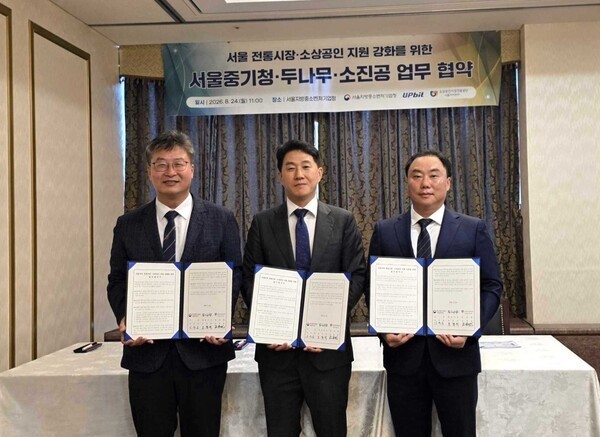
Dunamu Partners With Seoul SMBA, SEMAS on Traditional Market Digital Innovation
2 hours ago
 Technology
New accelerator launched for early
2 hours ago
 Technology
Cinnamon Care Collection rolls out AI
3 hours ago