
From roots to returns: Why Indian real estate is drawing NRI interest
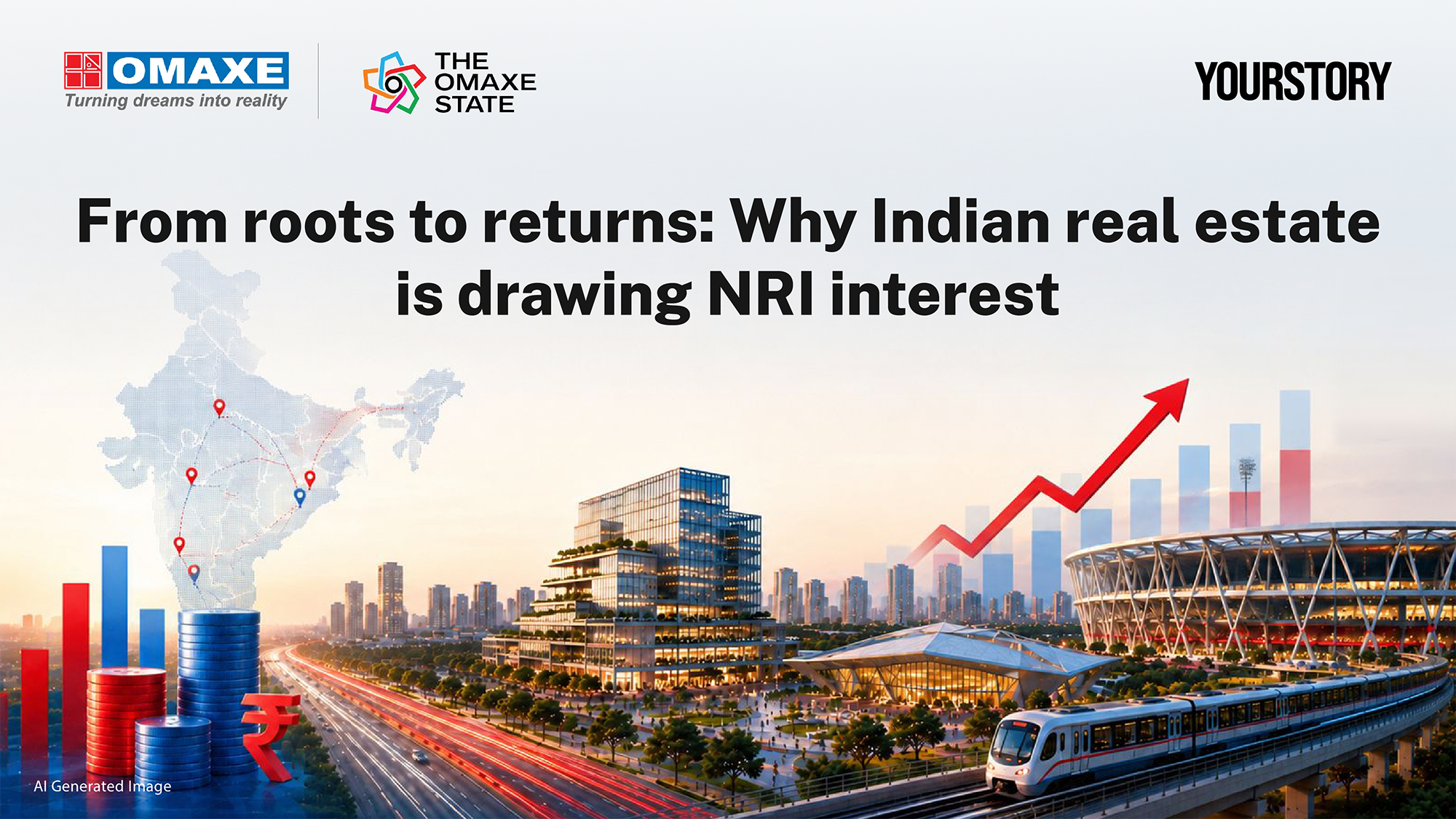
For generations of Indians living overseas, buying property in India has carried an emotional significance that often goes beyond the investment itself.
A home in India meant staying connected to family, having a place to return to, or building something to pass on to the next generation. That connection remains, but the economics around it are changing.
India is in the middle of a real estate expansion that is changing both the scale of the market and the opportunities within it. A joint KPMG-NAREDCO study estimates that the industry could grow from around $290 billion in 2025 to $970 billion by 2030, driven by urbanization, infrastructure development, rising incomes, and greater institutional participation.
For non-resident Indians (NRIs), this presents a different proposition. Investing back home is increasingly about more than owning a residential property. It can also mean participating in the growth of commercial districts, organized retail, and emerging urban destinations.
The growing economic engagement of overseas Indians with India is already evident.
India continues to be the world's largest recipient of remittances, with inward remittances reaching $144.79 billion in FY26, according to RBI data reported by Business Standard. While remittances cannot be equated with real estate investment, they underline the depth of financial ties between the Indian diaspora and the domestic economy.
Real estate is increasingly part of that relationship.
A July 2026 Equirus Wealth report identified sustained NRI investment as one of the factors supporting demand in Delhi-NCR's luxury housing market. It also noted that a weaker rupee had improved affordability for overseas buyers, alongside motivations such as portfolio diversification, wealth creation, and future family use.
Currency, therefore, can be an advantage, but it is not necessarily the reason to invest.
For an NRI earning in dollars, pounds or dirhams, rupee depreciation can reduce the effective entry cost of an Indian asset. But the longer-term proposition depends on something more fundamental: whether the location is creating sustained economic activity and demand.
Increasingly, that means looking at the infrastructure around an asset rather than the asset in isolation.
Following where cities are growing
Real estate has always been tied to infrastructure. A new road can change commute patterns. A metro line can expand the reach of a business district. Airports, convention centres and commercial hubs can create new pockets of economic activity around them.
Delhi-NCR offers a useful example.
Commercial activity across the region continues to expand. Delhi-NCR recorded 4.1 million sq ft of office leasing in the second quarter of 2026, while retail leasing reached 0.7 million sq ft, up 13% quarter on quarter and more than 1.2X year on year, according to Cushman & Wakefield. Mall vacancy also declined to 7.2%, with fashion and food and beverage among the leading demand categories.
Within this larger market, Dwarka is emerging as an infrastructure-led district. One of the biggest catalysts is Yashobhoomi, the India International Convention and Expo Centre. Developed with an investment of over Rs 25,700 crore, the project has added large-scale convention and exhibition infrastructure to a part of Delhi already connected to the airport and the Airport Express Metro.
The significance lies in what develops around infrastructure of this scale.
Convention centers bring business travellers. Better transport improves accessibility. Hospitality follows visitors, while retail, restaurants and entertainment cater to both visitors and local residents. Over time, these uses can reinforce one another, creating destinations rather than isolated real estate developments.
The rise of destination real estate
This coincides with another shift in Indian commercial real estate: consumers increasingly expect more from physical spaces. The traditional model of visiting a mall primarily to shop is giving way to destinations where retail sits alongside dining, entertainment, hospitality, sport and social experiences.
For investors, this changes how commercial property can be assessed. Footfall is no longer necessarily dependent on a single activity. Different parts of an integrated development can create different reasons to visit across the day, week and year.
It is in this context that projects such as The Omaxe State in Dwarka become relevant.
Being developed through a public-private partnership between the Delhi Development Authority and Worldstreet Sports Center, a wholly owned subsidiary of Omaxe Ltd, the 50.4-acre development brings together sports, retail, food and beverage, hospitality, and entertainment within one precinct. Its plans include a 30,000-seat international cricket and football stadium, indoor sporting facilities, retail spaces, restaurants, and entertainment infrastructure.
Its location alongside Yashobhoomi also reflects the broader investment thesis shaping parts of urban India: large public infrastructure can create the foundation, while private development builds complementary economic activity around it.
Making distance less of a barrier
For NRIs, another important change is practical.
Buying property in India while living abroad has historically involved layers of paperwork and dependence on people on the ground. Regulation today provides NRIs general permission to purchase residential and commercial properties in India, barring categories such as agricultural land, plantation property, and farmhouses.
Digital documentation, RERA disclosures, online payments and Power of Attorney-based processes have also made it easier to evaluate and transact remotely.
Together, these changes are widening the idea of what investing “back home” can mean.
The emotional connection has not disappeared. But it increasingly sits alongside a more investment-led assessment of infrastructure, connectivity, demand, and long-term economic activity.
For NRIs watching India's growth from thousands of kilometres away, that may be the bigger shift. The question is no longer simply whether to own a piece of home, but where India's next centres of activity are being built—and how to participate in their growth.
Related Stories
 India
India
Starlink, Ambani’s venture should get equal treatment, let consumers decide: Shashi Tharoor
2 days ago
 India
India
Lawrence Bishnoi’s rise: Student politics, first murder and a sprawling crime network | India News
2 days ago
 India
India
India’s finance minister says market liquidity makes it easier for investors to exit
2 days ago
 India
India
India news: CJP alleges 'deliberate' delay in leaders' release
2 days ago
 India
India
Indian Diaspora Holds Pro-Modi Counter
2 days ago
 India
India
Clashes Erupt in London as Diaspora Divided Over India's Election Chief and Electoral Roll Controversy
2 days ago
 India
India
London: Indian diaspora rallies in support of PM Modi, criticises CJP protesters
2 days ago
 India
India
Cabinet Approves Go
2 days ago