
Greece first country to battle wildfires with space technology
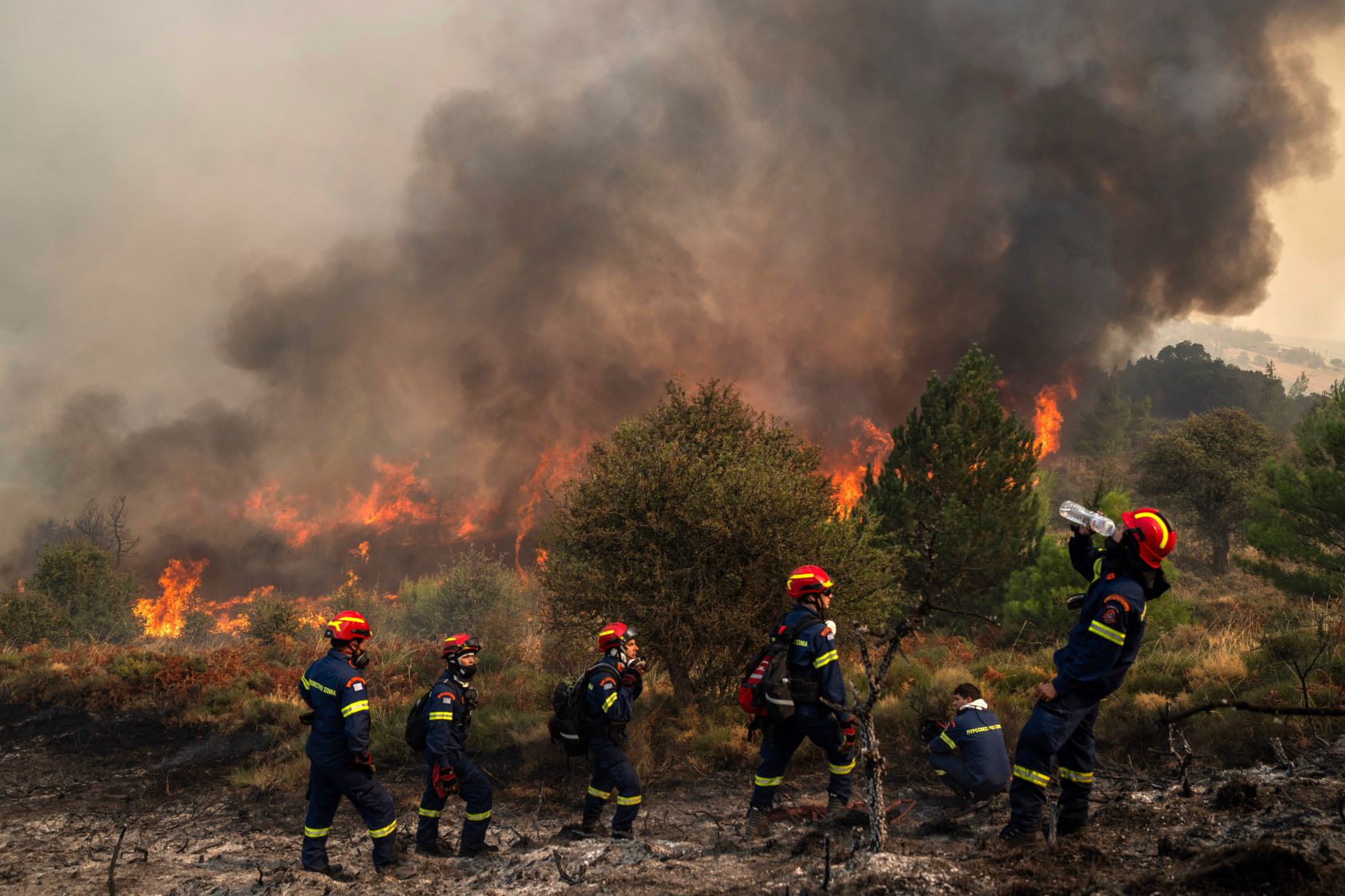
Greece has a history of devastating wildfires. In 2018, a blaze east of Athens resulted in more than 100 casualties, while a massive fire in 2023 set the record for the largest wildfire ever recorded in Europe. The latest major wildfire broke out this Sunday afternoon, 5 July, west of Athens. According to The Guardian, 210 firefighters, supported by specialised teams and 29 aircraft, were deployed to extinguish the fire.
The country’s continued crisis in battling wildfires has led to innovation, with Greece now being the first nation in the world to integrate a satellite array into its national firefighting system. The satellites, each smaller than a carry-on bag, are monitoring fires from space and were launched into low orbit in May, according to Associated Press.
Traditional satellites can only spot fires of great size, whereas these new satellites, built by German company OroraTech, carry thermal sensors designed to flag new blazes as small as four metres in diameters. If a fire erupts, an alert with AI-processed satellite data will be sent to national officials with the location, size and intensity of the fire. When multiple fires occur simultaneously, real-time data is crucial to prepare the appropriate response.
Fire Service Col. Zisoula Ntasiou, vice president of the International Association of Fire and Rescue Services, told Associated Press: “For example, if you have 10 fires all over Greece and the fire radiative power is lower in some cases, you will not give priority to those ignitions; you will give priority to other ones.”
“The global temperature is going up. That causes fires to change in intensity and ferocity,” Ioannis Lantouris, head of OroraTech’s Greek operations, told Associated Press. “Our models have to change and adjust to that. They have to be faster. They have to be more precise.”
Although multiple countries use thermal satellites, Greece is the first country to fully integrate them into its firefighting system. In collaboration with three European companies, Greece is building a wider observation network combining thermal satellites, radar satellites capable of seeing through clouds and smoke, and optical satellites that capture highly detailed imagery of the ground. The network is funded by the EU at a cost of 200 million euros.
Leaders across Europe plan to use similar networks beyond fire detection, with the system potentially extended to include border surveillance, crop management, disaster response and heat-wave planning.
“These technologies support civil protection, security and, where necessary, defence-related applications,” Dimitris Papastergiou, Greece’s minister of digital governance, said in an interview at his office in Athens.
The EU is planning to increase funding for the Greek programs with an additional 350 million euros. Officials say the ambition is to move beyond satellite imagery as a passive tool and develop systems which help governments manage crises as they unfold in real time.
Related Stories
 AI News
How to watch England vs Argentina live: Stream link, TV channel, team news, prediction
1 hour ago
 AI News
Arsenal news: Rice expected to start England's World Cup semi
1 hour ago
 AI News
Alternative venues to watch World Cup: bowling lanes, cafes and a beach
1 hour ago
 AI News
World Cup 2026: Jude Bellingham best at World Cup and Harry Kane can destroy Argentina
1 hour ago
 AI News
Halifax's parking rate and permit fee increases take effect
1 hour ago
 AI News
A look at Edmonton’s plan to curb future flooding
1 hour ago
 AI News
Pokemon card library building community in Herring Cove
1 hour ago
 AI News
Memorial tennis tournament honours late Sarnia pro Justin Bourassa
1 hour ago