
How a new forensic technology tool is helping Toronto police link shootings
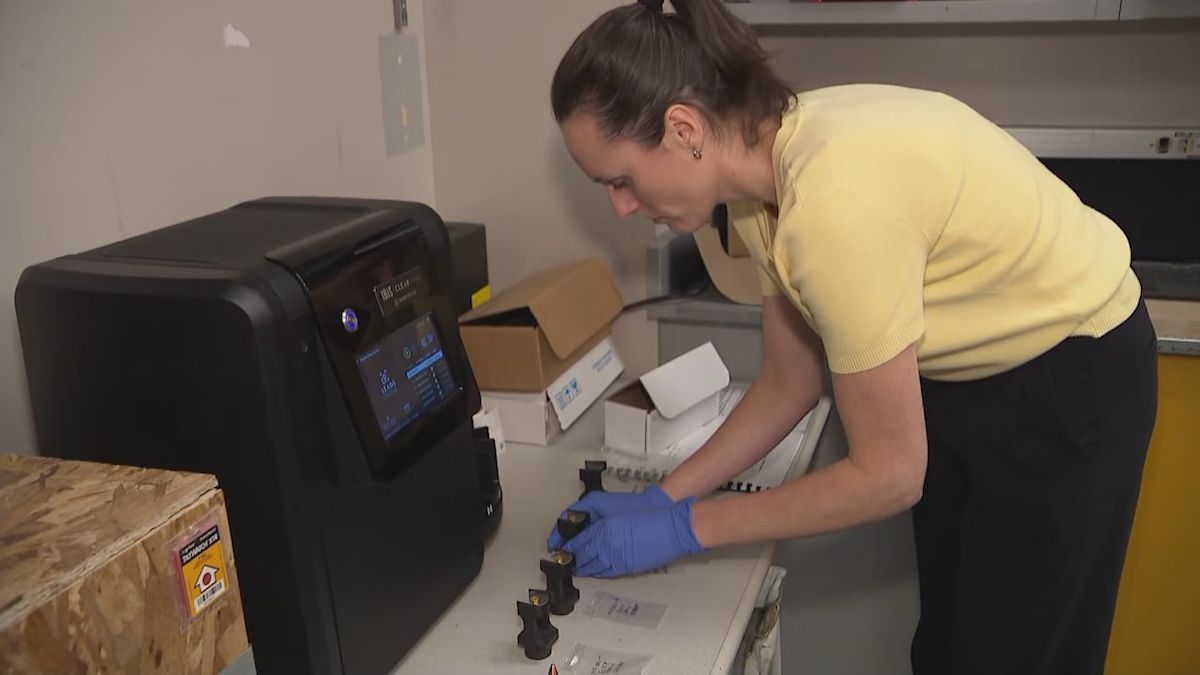
Toronto police linked two different killings this month using new forensic firearm technology that police say shaves days off shooting investigations.
Firearm analysis technology ClearCase scans bullet casings recovered from crime scenes to identify ties between shootings in a Toronto police database.
Police say the technology speeds up the investigative process by generating leads that used to take days — in about 20 minutes.
Since introducing ClearCase in August, police say they've used it to process hundreds of bullet casings, linking 25 shells to each other in just the last month.
Police say the technology helped investigators quickly connect Cameron Marlor, 17, to two Etobicoke shootings earlier this month, by identifying that bullet casings found at both crime scenes were shot from the same gun.
"It provided linkages between multiple scenes that we would've otherwise been unaware of until probably a week later," said Supt. Bradley Donais, commander of the Toronto police forensic identification services unit.
Marlor is wanted for second-degree murder, attempted murder and several firearms related offences in connection with the death of Malik Abass, 18, who died in hospital after being shot in the area of Rathburn Road and The East Mall on Nov. 7
Marlor, of Toronto, is also wanted for first-degree murder in connection with the death of Brandon Blake, 18, who died in the area of Martin Grove Road and Finch Avenue W. after he was shot on Nov. 10.
Police obtained judicial authorization to identify the underaged suspect, who is wanted on a Canada-wide warrant.
Police insert bullet casings into the ClearCase machine, they say which captures a high-resolution three-dimensional scan of the shell, in less than a minute. That scan is stored in a database and compared against all other casings scanned by police.
"When a cartridge case cycles through a firearm, the firearm leaves a signature — essentially — on that cartridge case, and that's what we're identifying," Donais said. "Though I can't identify who fired the firearm, I can identify that this firearm fired these multiple cartridge cases."
Supt. Bradley Donais, commander of the Toronto police forensic identification services unit, said on Tuesday that ClearCase technology sped up shooting investigation by about a week. (Paul Smith/CBC News)
The 3D scan doesn't use artificial intelligence or damage bullet casings, and investigators are still able to pull DNA and fingerprint evidence from the shell.
Before ClearCase, police had to wait for scientists to complete manual bullet casing analysis, which Donais said is more accurate than the new tech, but takes up to a week.
"For investigators, it's game changing," Donais said. "We're providing information almost in real time that they can action quickly."
After completing the ClearCase scan, police still send bullet casings for manual analysis at the Centre of Forensic Science, which Donais said "remains the gold standard," for a second opinion.
But that near-immediate result from ClearCase can be essential in time sensitive cases, Donais said.
"If we arrest someone with a firearm and we test it immediately before they go for bail, we can know if that firearm has been linked to anything else," he said.
"The more information we can provide our investigators and hence the court, the better informed decisions they can make about bail."
Toronto is the first city in Canada to test ClearCase, but because shootings are often linked to cases in other cities, Donais wants more jurisdictions to adopt the technology.
"The hope is that we can expand beyond Toronto and into the GTA, and that would allow us to link occurrences from anywhere," he said. "Bad guys don't necessarily follow our boundaries."
Other teens also suspected of murder
Marlor isn't the only teenager police say was involved in the shootings earlier this month.
Police arrested Armani Callender, 19, of Toronto, on Sunday in connection with the Nov. 7 shooting of Abass. He was charged with second-degree murder, attempted murder, possession of a firearm knowingly not holding a licence and possession of a loaded regulated firearm.
Police also arrested a 16-year-old on Nov. 14 in connection with Blake's shooting. He was charged with first-degree murder.
Joseph Kunene, 19, of Toronto, is also wanted for the first-degree murder of Blake, police say. He was previously described as six feet, 175 pounds, with black hair, brown eyes and a distinctive tattoo on his right hand.
Related Stories
 Canada
Canadian auto sector moving away from U.S. imports, new report shows
21 minutes ago
 Canada
 safe from potential fallout of U.S. toxic chemical detonation
21 minutes ago
 Canada
Banff senior falls through thin ice while skating on Lake Louise and dies
1 hour ago
 Canada
Federal case over Ontario nuclear plant's worst fish kill hits procedural snag
1 hour ago
 Canada
'Traitors Canada' Season 4: Toronto HR consultant won more than $77,000 by being the sweet one
1 hour ago
 Canada
Montreal mayor walks back 'clumsy' Kraft Dinner comment after major tax hike
1 hour ago
 Canada
As Pentagon blasts Canada’s defence spending, Carney says Trump hasn’t raised concerns
1 hour ago
 Canada
Dozens dead in fire on major highway surrounding Cairo
2 hours ago