
How BJP and Congress are chasing Gen Z: Inside the battle for India’s youngest voters ahead of 2029
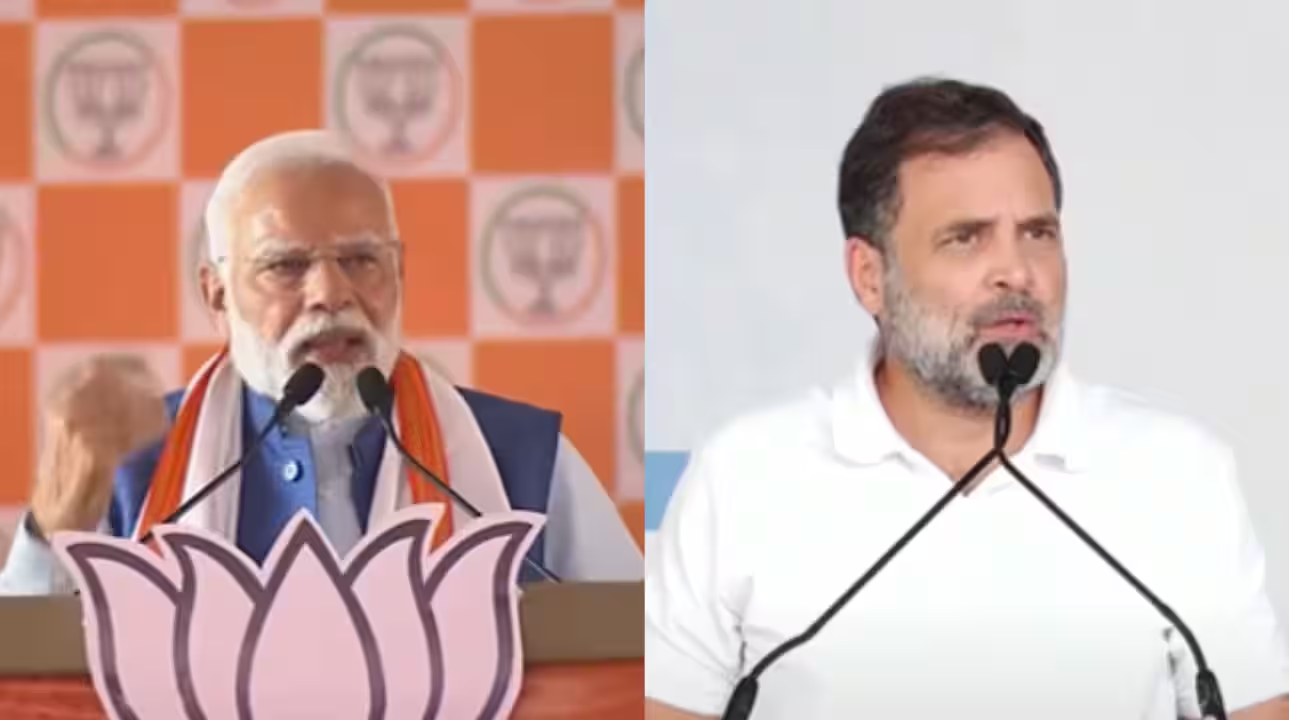
How BJP and Congress are chasing Gen Z: Inside the battle for India’s youngest voters ahead of 2029
The NEET protest that rocked India in July, 2026 not only brought the youth of the nation back in the spotlight, it has literally forced the political parties to re-think their strategies to reach out to young voters.
The young voters in question are India's Gen Z-- the one that does not necessarily consume politics through rallies, television debates or newspaper headlines.
Gen Z is increasingly consuming, discussing and even organising around politics through Instagram, YouTube, memes and campus networks.
This makes India's youngest voters both an electoral opportunity and a communication challenge for political parties ahead of the 2029 Lok Sabha elections.
So how are India's two biggest political parties- the Bharatiya Janata Party(BJP) and the Congress re-shaping their outreach programs focussed on youth?
BJP: From one-way messaging to two-way Gen Z politics
BJP has been a successful adopter of social media, and over the last decade it has grown its presence significantly on digital platforms focusing on older voters. But the 2026 youth protests showed that the same digital ecosystem can be used to challenge an established political narrative. Hence, BJP recently launched 'One Day, One University' campaign aimed at Gen Z and Alpha.
This is the party's physical outreach program under which a Union minister would visit a university and interact with students, taking the government's engagement with young people beyond social media and into campuses.
Another part of BJP's outreach is digital-- meaning, more short-form, interactive and youth-oriented content.
In fact, Prime Minister Narendra Modi himself turned to Instagram with selfie-style videos to address the protesting students. This is a reverse from how PM has addressed the nation so far- i.e from podiums or through his flagship 'Mann ki Baat' program. Reuters described the move as an effort to woo young voters after the Gen Z-led protests.
The government's broader digital strategy has also been receiving attention. A Cabinet review on August 19 reportedly assessed the social-media reach of Union ministers, with Modi topping the Centre's social-media report card.
It should be noted that Prime Minister Modi dropped a couple of reels during Jantar Mantar protest- including a GRWM reel which fetched over 100 millions views collectively.
Additionally, in Delhi, the BJP has asked its youth wing, MLAs, ministers and student organisations such as BJYM and ABVP to intensify campus engagement with first-time voters and university students.
So far, BJP has leaned heavily on the rallies, roadshows.
Congress: Turn youth grievances into a political movement
Meanwhile, the main Opposition party in India, Congress is also quietly changing its strategy. The party's agenda is mostly taken forward on the national platform by Leader of Opposition in Lok Sabha Rahul Gandhi-- who is also leaning into the shift and re-shaping the party's political outreach aimed at youth.
From conventional rallies to large scale public marches like 'Bharat Jodo Yatra' or his interaction with farmers through field visits, Gandhi has now moved onto quick 'Ask Me Anything' for Gen Z and Alphas (Direct Q&As).
More recently, Congress outreach centrepiece is “Chhatron Ki Goonj” (Students' Voice) campaign led by Rahul Gandhi.
The party's own website describes it as a nationwide student movement around these issues.
Rahul Gandhi has taken the campaign directly to students rather than relying solely on conventional rallies.
At his Prayagraj interaction, his messaging centred on “dard, data, daulat” — using young people's experiences and economic concerns as the basis for his pitch.
How big could Gen Z's vote be in 2029?
According to NDTV, by 2029, Gen Z -- broadly defined as those aged 18 to 32-- is projected to number nearly 380 million in India, including around 199 million men and 181 million women. That would make Gen Z the country’s largest adult generation, surpassing Millennials, whose population is projected at around 357 million.
People aged 18 to 29 accounted for 38.3% of India’s voting-age population in 1988. By 2024, that share had dropped to 30.1%, and UN median projections indicate it could decline further to 27.8% by 2029.
Even as Gen Z is set to become India’s largest adult generation, young voters are making up a shrinking share of the electorate as the country’s population gradually ages.
Discover the latest Business News, Sensex, and Nifty updates. Obtain Personal Finance insights, tax queries, and expert opinions on Moneycontrol or download the Moneycontrol App to stay updated!
Find the best of Al News in one place, specially curated for you every weekend.
Stay on top of the latest tech trends and biggest startup news.
Related Stories
 India
India
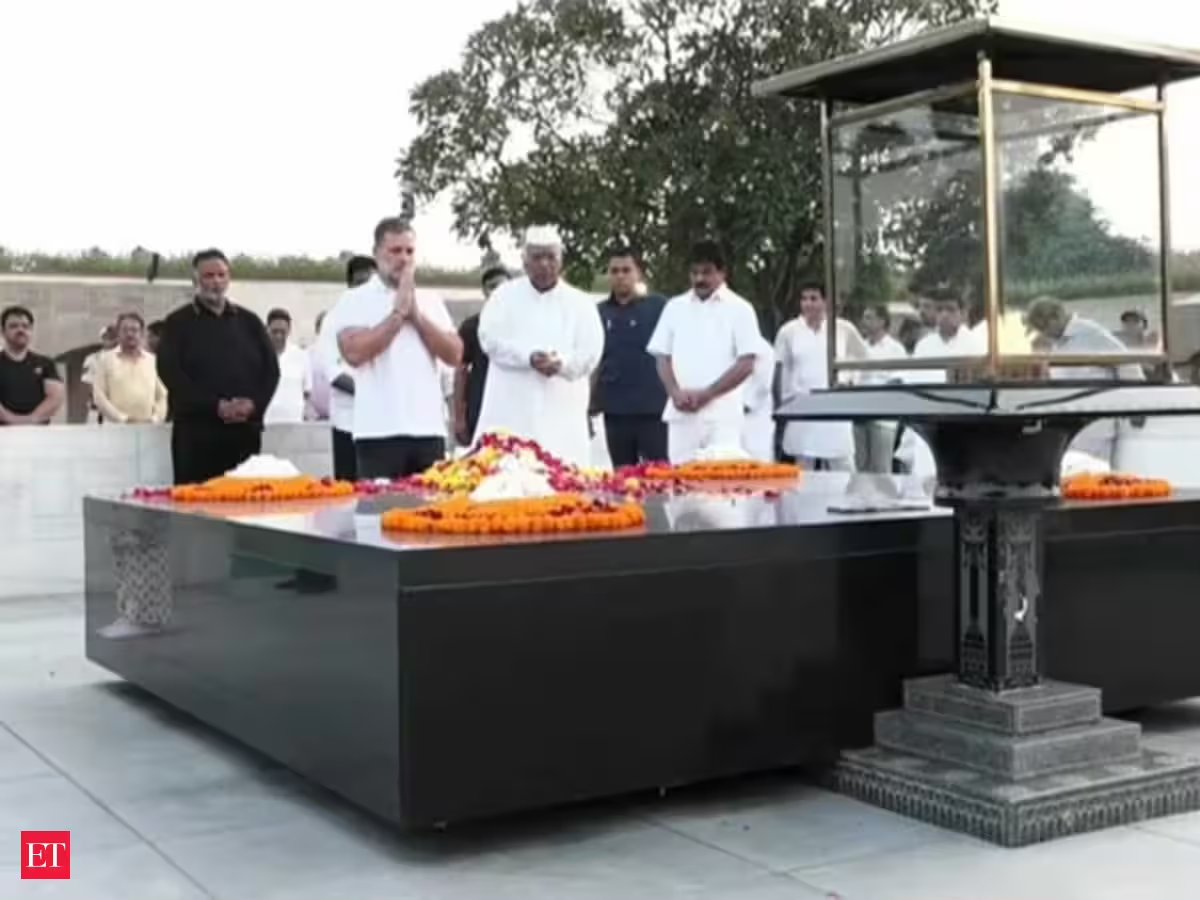
INDIA Bloc leaders pay tribute to Mahatama Gandhi at Raj Ghat, continue demand for CEC's resignation
17 minutes ago
 India
India
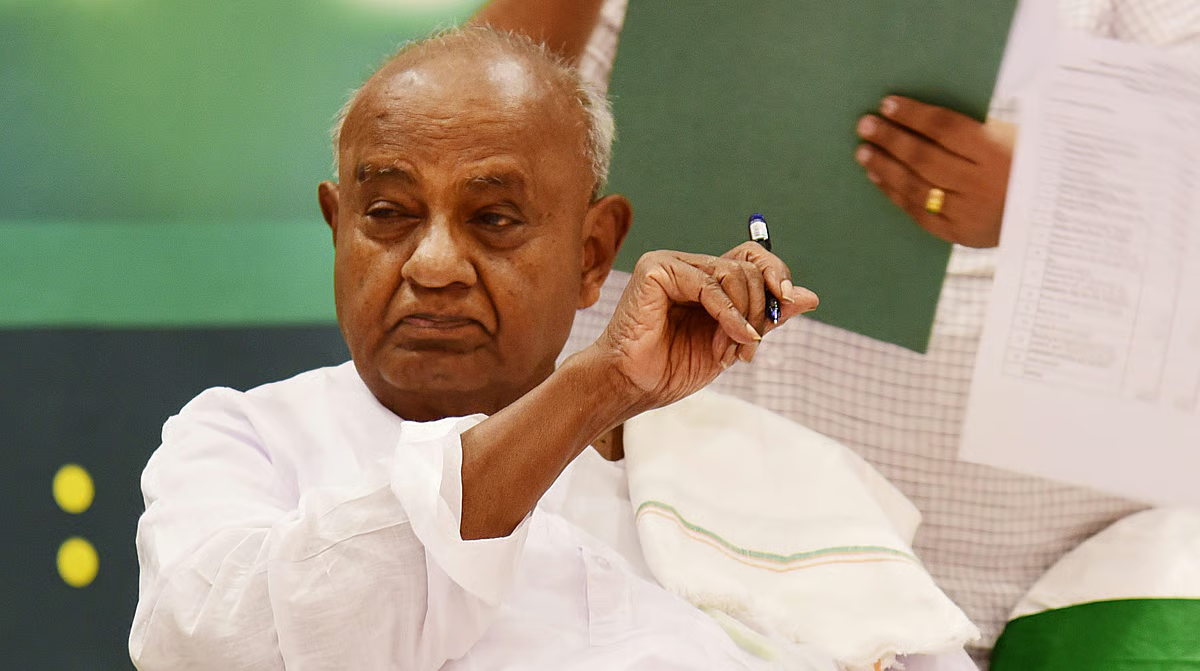
JDS supremo H D Deve Gowda vows return to active politics after Pitrupaksha
17 minutes ago
 India
India
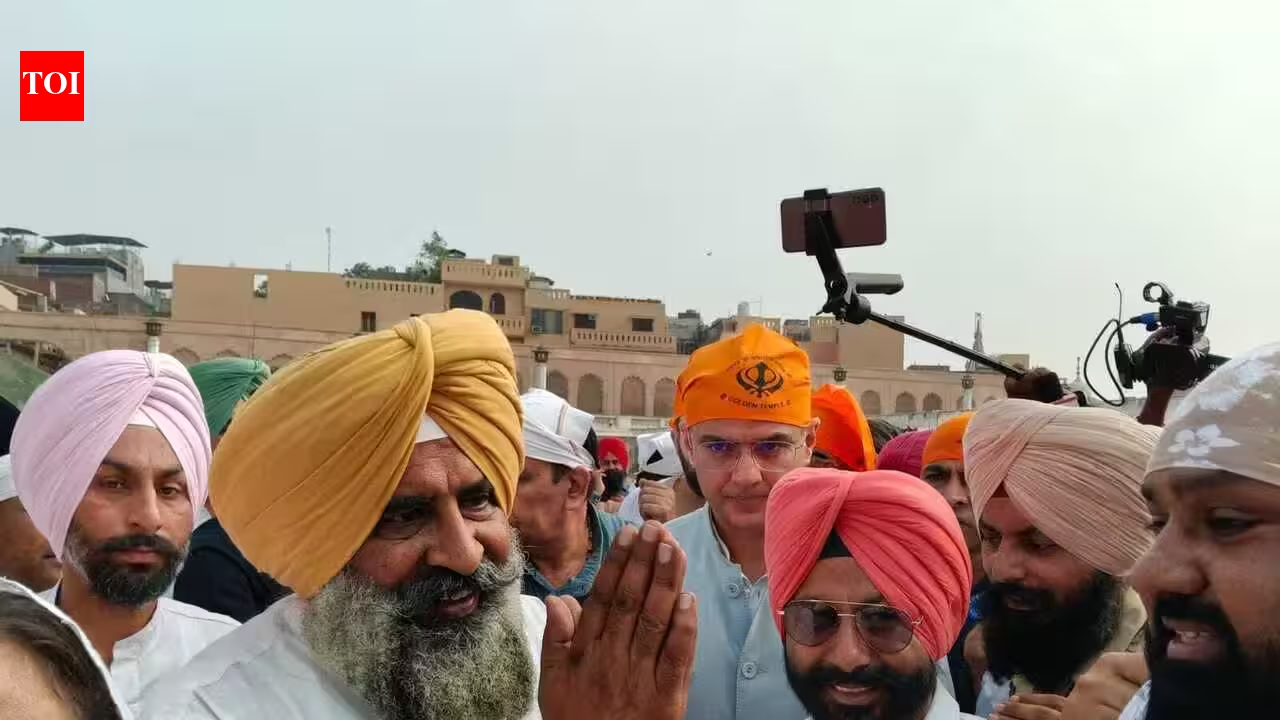
‘Not day of politics’: Back as Punjab Cong chief, Pargat first visits Golden Temple, drops in at Giani Te
1 hour ago
 India
India
CEC row: 42 Former Judges write an open letter and warn against attempts to undermine Election Commission
2 hours ago
 India
India
INDIA bloc to protest at Rajghat as Kharge hosts 2nd lunch for Opposition MPs
3 hours ago
 India
India
Outspoken Indian actor Nana Patekar suddenly dies at 75
4 hours ago
 India
India
INDIA Bloc MPs gather for 2nd lunch meeting, expected to march to Rajghat later today
5 hours ago
 India
India
India defends satellite internet approval process after Elon Musk jab
6 hours ago