
How leading fleets are using technology to improve efficiency and safety
This article first appeared in the June issue of Fleet News iQ
Fleets implementing new initiatives and technology can see strong results if they go about it the right way, a Fleet News Awards roundtable has heard.
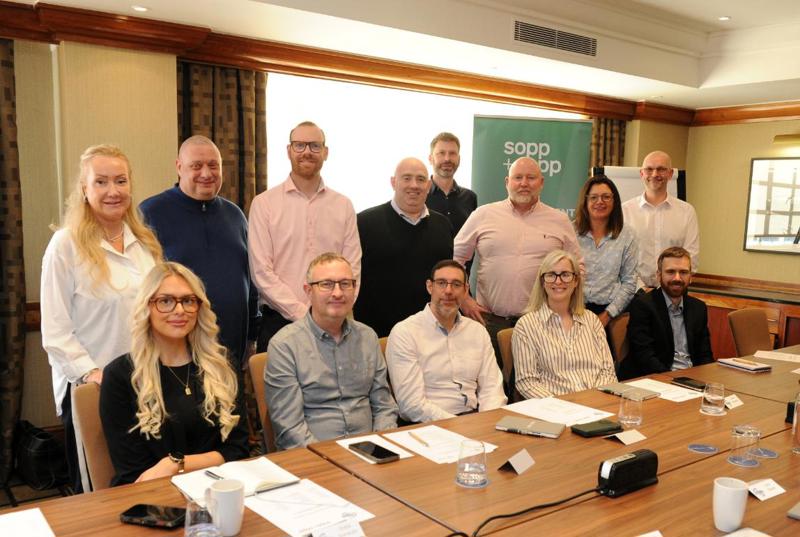
Sponsored by sopp+sopp, the event saw a panel of fleet decision-makers who were short listed for this year’s awards asked to discuss initiatives and innovations they had introduced to their fleets and how successful they had been.
Our panellists touched on topics such as dash cams, telematics, AI, fleet management software and driver mental health.
Fleet News: What recent experience and successes have you had with your fleets through initiatives and innovations?
Russ O’Neil, fleet control manager, Balfour Beatty: I think our dashcam experience is relatively new tech – not the sort of dashcams you go and buy from Halfords, but managed dashcam services.
We’ve partnered with Michelin Connected Fleet who, in turn, are partnered with VisionTrack.
It was one of our Scotland contracts that brought this through initially, because they wanted to manage fatigue on their winter fleet operations – they weren’t having a lot of incidents, but they wanted to manage people being fit for work.
We’ve got the AI camera, driver-facing – we’re trying to stay away from the AI tag because it’s got negative connotations, so we call them smart cameras.
They are looking at the driver and looking for particular behaviours. That might be non-seat belt use, mobile phone use, smoking, which have three legal aspects.
But then also fatigue, so drivers yawning, which is not against the law, but if you see people do it over and over again, then you start to identify issues – people that aren’t fit for work and could do with different shift patterns.
What I’ve learned over the years is any telematics or dashcam company, they’ve all got return on investment case studies, etc.
But you’re buying a box and a website. It’s up to you to make improvements happen.
I’ve spoken to many telematics companies. They all sell the story about return on investment.
Frankly, it’s not going to be where we were 15 years ago. We’re still making savings year-on-year, but the hockey stick (graph) is not going to be as steep as it was.
Helen Brislane, fleet director, Churchill Group: We can see that in our drivers’ scoring with fuel efficiency and speeding.
We had a baseline, then we turned the in-cab device on giving them feedback and we saw a 77% reduction in speeding and a 66% cut in harsh driving events, but then we’ve just seen it creep back up again.
FN: What results have other fleets seen with cameras and telematics?
Matthew Munford, fleet manager, KCOM Group: We’ve seen a really good reduction in incidents – faults down from like 90% to around 20%, overall incidents down 77%.
We don’t do a lot of miles. Most of our engineers work around Hull and East Riding, with very little driving, so the chances for having an incident are quite low.
But most are hitting things that aren’t moving, so when we put the telematics tender out it was more about understanding what incidents we were having and then tailoring the telematics system to reduce those.
So, we just went for forward and rear cameras. Winning the hearts and minds of the driver was really easy because they saw it as an aid, not as a tool to manage their performance.
The buy-in was really good, but we did loads of engagement from the outset. When we drilled down one level below, asking why they were not reporting incidents, I think the fear was that they’d lose a van for days, and it’s a chore to move all their gear into a spare vehicle.
So, we introduced drop-in clinics for local garages. When you do bump a vehicle, it’s repaired quickly.
I think by really understanding the obstacles for the engineers, we’ve enjoyed a really good reduction in our numbers.
Lucy Stuart, head of fleet and logistics, Cadent: Our accident rate was going up. We went out to tender, we trialled different companies in different areas of our business.
We awarded to Samsara at the end of last year, and we are in the process now of going through that install a bit at a time.
We’ve seen some really significant improvements, such as a 70% reduction in mobile phone usage from the baseline period.
We are cooperating very closely with the unions. We’re working through who will get access to data and how that data will be used.
Data is only going to come to the fleet team, to help alleviate the fear of it going to the supervisors to use it as a stick. We don’t want it to be used as a stick.
Anthony Roberts, commercial director, sopp+sopp: We worked with a large supermarket at one of its depots, and we put in what we call Fleet Scout.
Basically, it’s a gantry with some cameras, and the AI scans the lorry as it goes through.
We did this mainly with O-licenced vehicles to look at compliance, and also early identification of damage, so they could repair before it got worse and save themselves money.
But the thing that actually came out of it was that the vehicles were coming back a lot less damaged, because the drivers knew they had to drive through the gantry.
And the fleet manager we worked with was quoting double-digit percentages of savings, just because, he felt, the drivers were taking more care knowing that every day the vehicle was going to get analysed and scanned, and the manager would know about damage.
So, even back to its simplest form, having something watching you is going to make you behave differently.
FN: What other technology have you achieved results with?
Stuart Conway, head of fleet, Emcor UK: I’ve been at Emcor for three-and-a-half years now. When I joined everything was done on spreadsheets.
Vehicles, grey fleet, licence checks, everything. So, the first thing we did was implement Key2 management software meaning all of the data that used to be on spreadsheets now goes into Key2.
But the efficiencies of that is not just all the data being in one place. For example, I need to send a report every month on insurance. That used to be a manual task.
Key2 just sends that automatically, along with a lot of other reports. We’ve also taken SMR in-house.
My background is as a mechanic, then moving into maintenance control.
Emcor outright purchase our vehicles. So, I was in quite a lucky position that, when I started, we owned the assets.
We were paying a leaseco to maintain the vehicles for us, and I was looking at how they were doing it and saying ‘this is really not particularly good at all’.
Luckily, I report to the CFO, who had trust in me and said ‘ok, if you think you can do it better and cheaper in-house, do it’.
I went to Epyx. We’ve put in place ServicePoint, so we can trade with all the garages we were trading with before through ServicePoint.
We’ve got a relationship now with The AA, with Kwik Fit and with National Windscreens.
Over the two years we monitored for our Fleet News Awards submission we saved £300,000 on SMR.
But we also reduced our vehicle off-road (VOR) time 48%. On the back of that, we reduced our hire dependency 47%, saving a further £147,000.
FN: Is driver health becoming a bigger factor in fleet management?
Russ O’Neil: I think mental health and driving is going to be the next big topic for us all.
I know the DVLA can tell us about medication, what we should do around driving, but the people who have got mental health conditions, perhaps undiagnosed, they’re not prescribed.
I’m seeing cases of that increase. People use it as an excuse not to drive or certainly not to drive with a dashcam, because of anxiety.
That’s becoming more and more prevalent.
Lucy Stuart: We had some of that with in-cab driver coaching lightbars. Some of the drivers were saying that once the lightbar had flashed red, that was it, that their driving score was ruined for the day, it put them in a bad mental state for the rest of the day.
So, one of the things we were looking at with a replacement was that it had no flashing lights so it didn’t affect their mental state.
Anthony Roberts: We come from the angle of managing accidents, or supporting customers in reducing their accident frequency, and there’s an element of driver awareness and training – we understand that a lot of that sits with fleet managers.
We had a seminar with a doctor speaking on driver health, how many people are driving or just living undiagnosed with situations and issues.
And I do think a lot of what is said around ‘are we checking out what Dave’s up to, Dave’s had two accidents’, I do think that health element is probably an area that needs to be far more explored with what is driving these drivers.
Russ O’Neil: I think we need the DVLA to intervene. Any action you want to take about people with potentially ADHD and anxiety could be seen as discriminatory, so you need guidelines and authority.
Fleet News iQ - the magazine fleet leaders have been asking for
Fleet News iQ – a brand-new quarterly print insight magazine created specifically for today’s professional fleet leaders.
Shaped by feedback from fleet decision-makers, Fleet News iQ delivers tangible, in-depth content in the format they've been asking for.
Read all issues of Fleet News iQ
Sean joined Fleet News (and sister title Automotive Management) in 2026 as content editor.
He has been a journalist reporting on the fleet industry since 2017. Since then, he has attended and reported on dozens of events held by organisations such as the SMMT, AFP, BVRLA, and National Highways, interviewed senior figures from car manufacturers, industry bodies and automotive suppliers, and reviewed hundreds of new cars and vans.
His continuing goal is to explain the key issues of the day for decision-makers and help to give them a better understanding of their industry.
Sean graduated with an MA in Journalism from Brunel University of London and began his writing career as a local newspaper reporter.
He is a previous winner of the Rising Star prize at the Newspress Awards, which recognise achievement in motoring journalism.
Related Stories
 Technology
When Tech Companies Die, What Happens To The Products They Leave Behind?
5 days ago
 Technology
Two Finns supplying Russia with missile tech worth tens of millions
5 days ago
 Technology
Drones with pepper spray, four
5 days ago
 Technology
Micron Technology stock pre-market at EUR 800.50: memory storage - ad
5 days ago
 Technology
TAIEX Ends at 4
5 days ago
 Technology
ZAWYA: Technology, start-ups can double India
5 days ago
 Technology
Czech government to consider CZK 1 billion fund for startups
5 days ago
 Technology
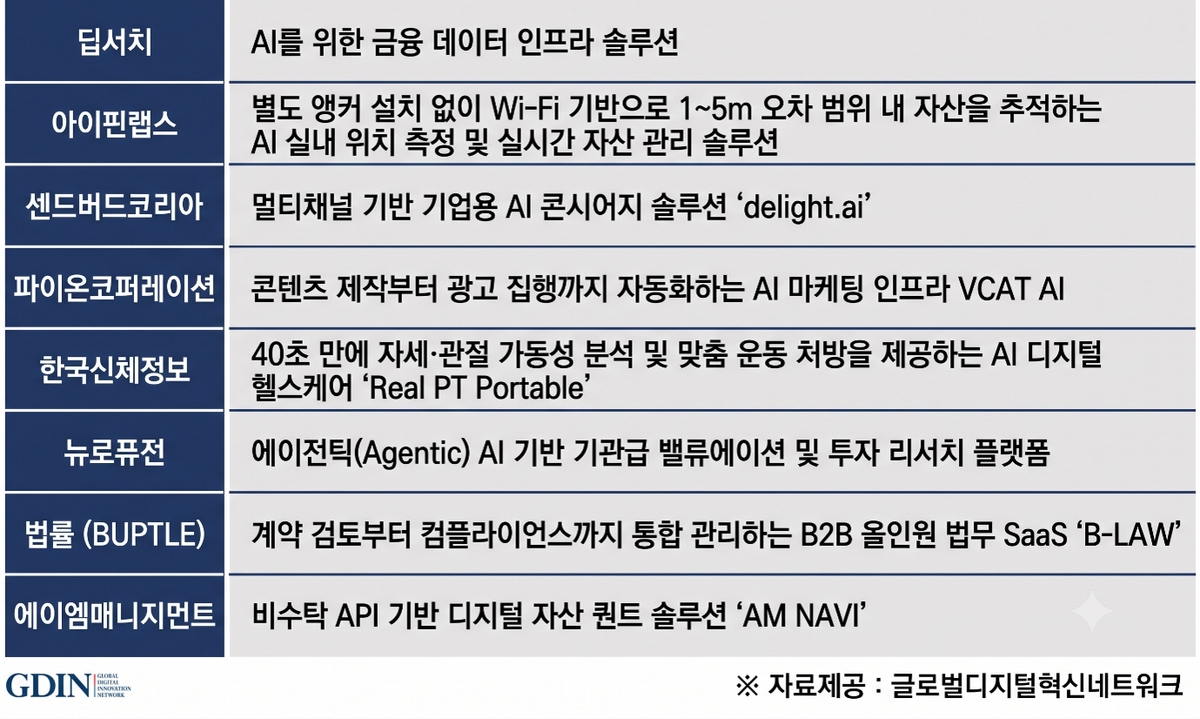
GDIN Supports Eight Startups at CEATEC 2026 in Japan, Opens Door to Local Investor Collaboration
5 days ago