
How PawLab grew from an idea and a credit card into a multi-million
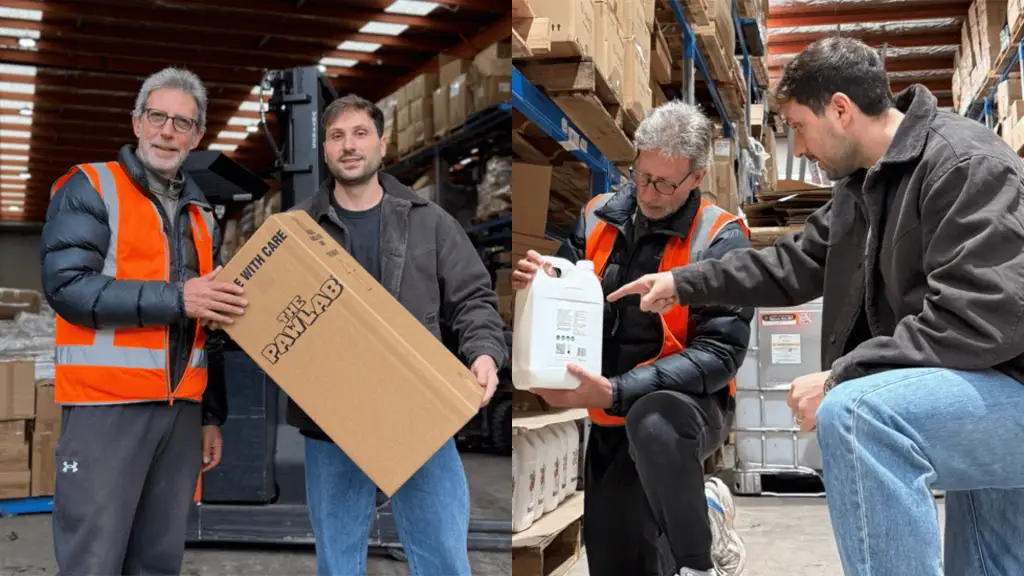
When Selwyn Lazar started noticing frustrated pet owners walking into a Godfreys store on Melbourne’s Chapel Street, he probably didn’t expect it would lead to a multi-million-dollar family business.
At the time, Lazar had returned to retail with plans to eventually secure a Godfreys franchise and build an online business alongside it. Instead, he uncovered a problem: pet parents desperate for products that actually worked.
“People weren’t just looking for a vacuum cleaner,” Lazar says. “They were looking for solutions to pet hair and odours.”
More importantly, Lazar says price wasn’t an issue. Customers were focused on whether the product would actually solve their problem. It was the aha moment.
Today, PawLab has become one of Australia’s fastest-growing pet cleaning brands, bootstrapped from a credit card during COVID and built by family members who turned homes into warehouses, packed orders themselves and trusted the fact that pet owners were fed up with wasting money on products that didn’t work.
The test-and-learn product process
Lazar spent about a year behind the counter at the Windsor store, listening closely to customers and testing products in real time.
“What amazed me was how open people became when you simply asked, ‘Do you have dogs or cats?’” he says. “Very often they would start telling you how frustrating it was to keep buying products that didn’t really work.”
Lazar says the same complaints kept cropping up. Customers were all dealing with pet mess, yet something larger was also in play.
“I kept hearing the same thing from customers: ‘I’ve cleaned it, but the smell keeps coming back,” he says. “They weren’t just buying a cleaner. They were trying to get their home back.”
That insight sparked the first version of the business. Lazar began testing eco-friendly enzyme cleaners from behind the counter and quickly realised that customers responded differently when the product was positioned as a solution for pet parents rather than just another household cleaner. He decided to put his product to the test. The family filled five-litre bottles with product, slapped on labels under the original name (PetLab), and started taking them to local markets. The response was immediate.
“The moment that stuck with me was when people started asking for us at markets we weren’t even at that week,” Lazar says. “That was when I thought, ‘Okay, this is not just a product. We might actually have a solution.’”
Bootstrapping a business during COVID
Like plenty of Aussie startups born during the pandemic, PawLab started with shaky financial foundations.
“It was a strange time to be starting anything,” Lazar says. “Physical retail was heavily restricted, people were working from home, and there was a lot of uncertainty.
“Putting money on a credit card to get started felt daunting. There was no investor behind us and no safety net if it didn’t work.”
Still, the timing strangely made sense. Australians were spending more time at home with pets than ever before. Puppies were arriving in lockdown numbers. Pet hair, muddy paws and indoor accidents suddenly became everyone’s business.
And Lazar wasn’t building the business alone. His son-in-law Tyron, who was carving out a successful career at digital marketing agency King Kong, started taking an interest in what was happening, too.
“I explained the problem I had been seeing with pet owners, what we had tested behind the counter, and how customers were responding,” Lazar says.
Instead of immediately jumping in, Tyron did what any good digital marketer would do: he checked the data.
“He went away and did his own digital marketing research,” Lazar says. “He came back to me and said the online data was pointing in the same direction.”
People were actively searching for solutions around pet odours, stains and pet-safe cleaning products.
“That was the moment he started to see what I was seeing, but through a digital lens.”
Working with family can either strengthen relationships or absolutely torch Christmas lunch forever. Thankfully for the PawLab team, it’s the former.
“Tyron is my son-in-law, my co-founder, a fellow dog lover, [a] great dad and an all-round mate,” Lazar says. “So in many ways, he is the full package.”
The pair quickly realised their skills complemented each other naturally.
“I bring the retail, product and customer experience,” Lazar says. “Tyron brings 10-plus years of digital, e-commerce and marketing expertise.”
That division of labour helped the business scale quickly without constant clashes.
“We don’t need to step on each other’s toes because we both know what we are there to do.”
That doesn’t mean family business life is always smooth sailing.
“Like any family business, you have honest conversations,” Lazar says. “But I think that is part of what makes it strong.”
Over time, the pair has learned how to separate family emotion from business decisions.
“You have to protect the family relationship, but you also have to respect the business enough to have the conversations that move it forward.”
The glamour of startup life (not)
Forget about shiny startup offices, breakfast bars, and ping pong tables. The early days of PawLab were organised chaos.
“Our homes became makeshift warehouses and fulfilment centres. There were boxes, bottles, labels and orders everywhere. If orders needed packing, we packed them. If labels needed applying, we labelled. If customers had questions, we answered them,” Lazar explains.
Everyone pitched in. It wasn’t glamorous, but it gave the family something incredibly valuable: direct contact with customers.
“We could see what people were ordering, what they were asking, what they were loving, and where we needed to improve.”
The orders kept growing. In PawLab’s first year alone, the business generated more than $600,000 in sales.
“That told us this was not just a small side hustle or a garage business. There was real demand,” Lazar says.
“People were not just buying once out of curiosity; they were coming back because the problem we were solving was an ongoing one.”
That repeat purchase cycle became the thing that convinced Lazar that PawLab had genuine long-term potential.
“It was becoming sustainable,” he says. “Customers were coming back, orders were growing, and we were able to reinvest money from the business back into more stock, better products and the next stage of growth.”
Lazar believes PawLab’s growth also reflects a much bigger cultural shift happening in Australia.
“Pets are finally being treated as family,” he says.
For many pet owners, the old approach of throwing the dog outside and hoping for the best is long gone. Pets sleep on beds, sit on couches, and travel with families. That changes buying behaviour.
“Pet parents aren’t looking for the cheapest option anymore,” Lazar says. “They want products that are safe, effective, practical and that genuinely improve life at home.”
It’s also why PawLab has stayed focused on practical problem-solving rather than chasing gimmicks.
“If it doesn’t solve a real problem or add real value, then it doesn’t belong in our range,” Lazar confirms.
One of the more surprising things about PawLab’s growth story is that the company has remained self-funded. Lazar says the decision was based on maintaining discipline and focus in the business. Staying founder-owned also meant they could grow at a pace that made sense operationally.
“The business was growing, customers were coming back, and we were able to keep reinvesting back into stock, product development, people and systems,” he says.
“When it is your own money and your own cash flow funding the next stage, you think very carefully about every decision.”
That caution became especially important as demand ramped up.
“The biggest challenges have been demand planning and logistics,” Lazar says. “If you under-order, you risk running out and disappointing customers. If you over-order, you tie up cash in inventory.”
As any product-based founder will tell you, growth sounds exciting until you’re knee-deep in freight costs, warehousing headaches and forecasting spreadsheets.
“In the early days, you can solve problems by working harder,” Lazar says. “But as the business scales, you need better processes, better forecasting and better infrastructure.”
Looking back, Lazar says the biggest lesson is surprisingly simple: validate the idea before you go all in. He believes too many founders fall in love with the idea before proving there’s genuine demand behind it.
“You need to test whether the problem is real, whether customers care enough to pay for the solution, and whether they come back again,” he says.
“For us, that has been the key difference. We have tried to make decisions based on evidence, not just ambition.”
While PawLab’s growth numbers are impressive, Lazar says the proudest moments are often the smallest ones.
“What means the most is when a customer writes in to say their house finally smells like a home again,” he says.
That’s the thing about businesses built around real-world frustrations. When they work, they become part of people’s everyday lives. Lazar says that’s exactly what keeps the family motivated.
“PawLab is a business, but it’s also a shared mission,” he says. “To make pet parenting easier for people who love their pets like family.”
This article was first published by Business Builders.
Never miss a story: sign up to SmartCompany’s free daily newsletter and find our best stories on LinkedIn.
Related Stories
 Business
Festival to host tribute to influential photographer
1 hour ago
 Business
My cofounder and I were rivals at hackathons. At 21, I've put college on hold to build a startup with him.
1 hour ago
 Business
Kazakhstan’s Startup Ecosystem Enters New Phase as Funding and AI Adoption Surge
1 hour ago
 Business
MAGA’s Conspiracy About Dem Star Dealt Humiliating Blow
2 hours ago
 Business
Taxpayer support for Michigan
2 hours ago
 Business
First Capital Startup Nation by Hatch opens new pathways for Sri Lankan and other South Asian startups
3 hours ago
 Business
Zetwerk’s early backers stand to make returns of up to 38
4 hours ago
 Business
Nous Research: $90M Round, $1.5B Valuation, $36M Run Rate
4 hours ago