
How Raag Darbari Still Explains India’s Politics
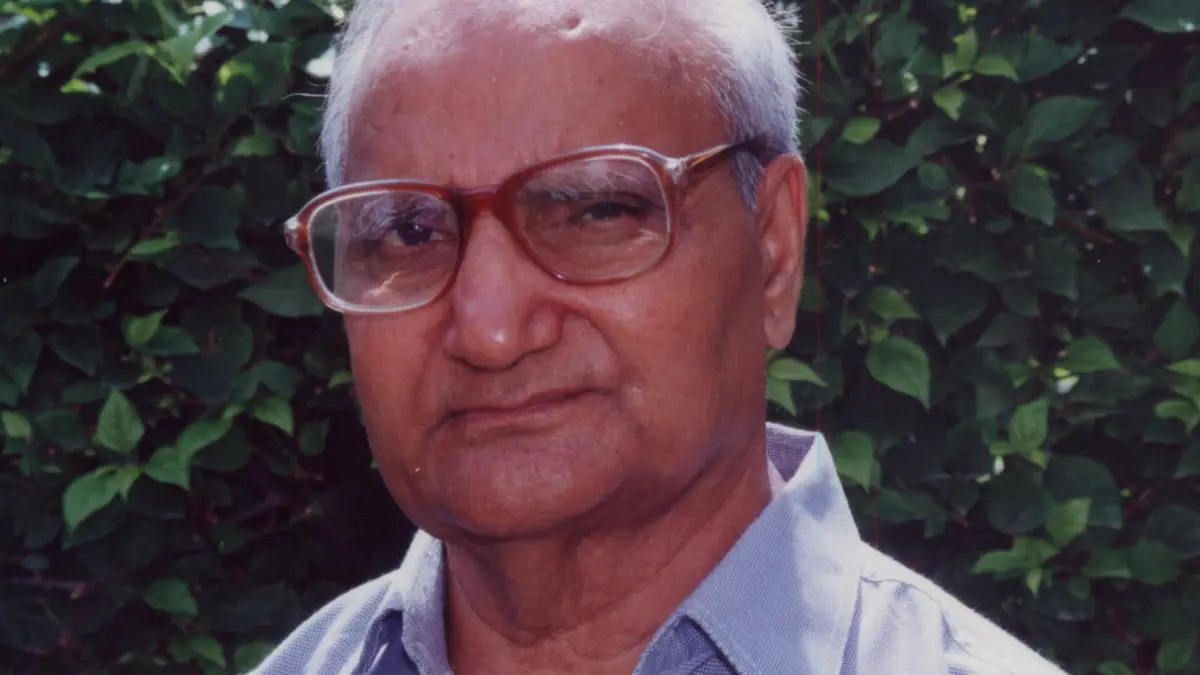
Making sense of India’s socio-political situation is like trying to decode the cacophony of a royal court. Shrilal Shukla probably had this in mind when he named his magnum opus Raag Darbari (1968), literally “the melody of the royal court". As a bureaucrat disillusioned with the unrealised dreams of the nation, Shukla was intimately acquainted with this cacophony. He was a man working within the very system he was mocking. The 10 essays in Raag Darbari: Polity as Fiction, Fiction as Reality examine today’s India against the India of Shukla’s time and, in turn, examine the entire project of this country.
Politics and statecraft are rarely studied through fiction, the assumption being that the novelist has nothing to teach the social scientist. Singh disagrees. In an introduction essay, he notes that unlike a social scientist, who is “constrained by the disciplinary tools and methods”, a novelist can portray reality through “polyvalent elements, factual or imaginary”. A satirical novel is particularly suited to this purpose, cutting past polite prescriptions and pointing out absurdities. In Shukla’s novel, the village is refreshingly shown as the messy centre of the nation, rather than as some undisturbed haven.
Raag Darbari‘s form is as absurd as the world it is set in. That inversion, Ulka Anjaria argues in “The Contemporaneity of Raag Darbari“, makes it all the more relevant today. Where Indian English fiction of the 1980s and 1990s was characterised by cosmopolitan, award-friendly sensibilities, the modern Indian novel of Shukla’s time had “more populist modes and styles”, with “meaning found in metonymy and surfaces”. This is exemplified by the diffused storytelling of Raag Darbari, according to Anjaria.
Given the disproportionate impact of the North Indian States on the nation’s electoral politics, the dysfunctionality of Shivpalganj, a fictional village in Uttar Pradesh, becomes emblematic of the nation’s brokenness. This is Ashutosh Kumar’s argument in “Politics and Government in the Hindi Heartland”. The lack of basic amenities remains, with filth everywhere and people using “open-air toilets”, decades after Independence and the Swachh Bharat Mission. “[T]he rot... has deepened further, even as democracy is supposed to have undergone the process of widening and deepening,” Kumar says.
“Have we turned our democracy into a disguised feudal system, where only the rich, powerful and muscle-flexing person is supposed to rule?” Gunjal Ikir Munda asks in “Adivasi Worldview and Modern Politics”. Paroma Ray follows a similar line of argument in “Women, Formal and Informal Institutions of Governance”, finding the same “value structures, survival instincts, a desire to amass power” in Shivpalganj and present-day India. Fittingly, the novel’s blind spots—the near-total absence of women, the complete absence of Adivasis—reveal much about the social power structures it chooses to discuss.
Raag Darbari does not say much about the local bureaucracy as well. But it deftly captures how policy gets distorted by local politics and power centres—Satyajit Singh explores this paradox in “Raag Darbari and Governance”. In their Eurocentrism, theories of public policy have long treated politics and bureaucracy as separate machines. Singh directs attention to how policy collides with local power centres in Raag Darbari, showing how “rules, as well as institutions, can be subverted”.
A book of 10 essays is bound to have disagreements, which ultimately make it richer. For instance, while Singh argues against separating bureaucracy from the state, Sudha Pai, in “The Enduring Relevance of Raag Darbari“, upholds the opposite. Pai outlines how India’s supposedly autonomous, neutral bureaucracy became a tool in the hands of leaders after coming into contact with political power. She uses the example of Uttar Pradesh, where over 3,000 IAS and IPS officers were transferred between 1991 and 1997 alone, with postings and promotions bought and sold. The result, as she says, was “a severe decline in professionalism” and sycophancy replacing whatever integrity the bureaucracy once had.
Raag Darbari: Polity as Fiction, Fiction as Reality is a collection of 10 essays on Shukla’s novel. | Photo Credit: By special arrangement
Philip Oldenburg is not even convinced that Raag Darbari deserves its reputation as an accurate representation of village life, let alone of India. In “The Folklore of Corruption in Uttar Pradesh Villages, in Fiction and Fieldwork”, he calls out the holier-than-thou gaze of the urban, educated person. He says that Shivpalganj as depicted by Shukla does not match the picture of villages as created by on-ground studies from the 1950s and 1960s that found “social change, resistance, and progress, as well as social, economic and governmental cooperation”. He warns that the “magnificently written dystopic fiction” might come to “replace careful observation and analysis as the ‘true’ portrait of village life.” Oldenburg’s concern is legitimate and his argument is persuasive.
Six decades on, Shivpalganj’s discordant royal court still plays the same tune, only louder, with newer instruments having joined in. Through its agreements and disagreements, Raag Darbari: Polity as Fiction, Fiction as Reality ends up studying more than the novel it sets out to analyse. It studies the kilometres India has travelled beyond Shukla’s novel and the distances yet to be traversed. In doing so, it makes a broader case for fiction as a window to our world, beyond literature, into disciplines such as sociology, gender studies, and political science. Raag Darbari, in the end, is still playing.
Amritesh Mukherjee is a reader, writer, and editor fascinated by the stories that shape our world.
Also Read | Shrilal Shukla: The unsparing eye
Also Read | Sarita, Maya, and the hidden pleasures of “lowbrow” lit
Related Stories
 India
India
Will not be in active politics from next month, says TIPRA Motha party founder
19 minutes ago
 India
India
Tinubu hails Indian PM Modi for 25 years in political power
2 hours ago
 India
India
'Fighting for retaining democracy': Congress leaders hit back at FIR over INDIA bloc protest
3 hours ago
 India
India
World Juniors: UAE Stun India to Enter Quarterfinals
5 hours ago
 India
India
India's opposition protests pile pressure on Modi government
7 hours ago
 India
India
THE BOND BEYOND BORDERS MODI AND THE INDIAN DIASPORA
7 hours ago
 India
India
From Gujarat to Centre: NDA allies highlight PM Modi’s continuity, coalition politics | India News
9 hours ago
 India
India
World Juniors: UAE Stun India
11 hours ago