
How the NFL uses customer journey technology
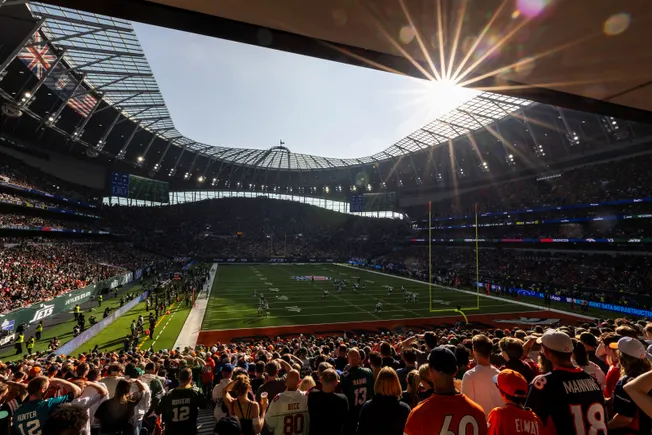
When the National Football League released its schedule five years ago, fans received several nearly identical text messages, including “three from your favorite club, and one from the league,” said Amit Khare, director of marketing technology at the NFL.
The problem was particularly acute because about 60% of the NFL’s fans follow more than one team, Khare said.
The league now runs a “fan engagement engine” built on Adobe’s real-time customer data platform, journey optimizer and customer journey analytics, according to Adobe. It integrates with the existing tech stacks for each of the NFL’s 32 teams through more than 80 external systems, unifying fan activity across NFL.com, the NFL App, ticketing and live events. When a schedule drops, an orchestration layer decides which team sends what to whom — and, increasingly, when.
The NFL’s project is one example of a broader shift in customer journey mapping: moving from static visualization to real-time orchestration, and eventually to predicting what a customer will want before they know it.
“That is absolutely the next frontier for enterprises,” said Katie Costanzo, president of customer experience at CSG.
Journey mapping technology exists on a spectrum. According to Daniel O’Sullivan, senior director analyst within Gartner’s global customer service and support research group, that spectrum from least to most sophisticated is as follows:
For organizations lacking the infrastructure necessary to carry out real-time journey analytics and orchestration, digital collaboration tools and other middle-tier solutions can deliver value by allowing brands to connect data from other business systems to the journey map.
But the analysis is “still fundamentally reactive,” O’Sullivan said.
Real-time journey analytics and orchestration platforms, on the other hand, plug into live event streams and generate journey visuals directly from customer behavior — then act on them.
“There’s no longer the concept of people building out a journey map. Here you’re just piping in a huge stream of data, and it’s creating a Sankey diagram that looks like spaghetti,” O’Sullivan said.
Sankey diagrams visualize the flow and direction of the stages in a journey.
The NFL’s fan engagement engine sits in the top tier of journey mapping technology. While the clubs already had their own sophisticated data platforms, they weren’t connected or coordinated.
“The missing part was the orchestration layer,” Khare said.
Rather than migrate all 32 teams to a single platform, Khare’s team designed one integration framework, piloted it with four clubs, then rolled it out in phases — updating earlier deployments with learnings from later ones.
During games, the system uses in-stadium signals to time communications around the action. A fan watching the third quarter won’t get a marketing text mid-play, but they may during halftime.
“Real-time orchestration is about finding out the right moment to send out the communication,” Khare said.
Fan opt-outs declined once the messaging overlap disappeared. Draft registrations rose 91%, while ticket conversions jumped 215%, according to Adobe.
Most organizations don’t have the data foundations that real-time journey mapping and orchestration platforms require, and large organizations tend to overestimate their state of readiness. The hardest piece is identity resolution, such as figuring out that someone browsing a website is the same person who was on the mobile app five minutes earlier.
“There’s a tendency to think that these big companies have got it all figured out, but they often don’t,” O’Sullivan said.
Experts recommend picking a single business problem, such as cart abandonment or subscription churn, and tailoring the data to that use case rather than building a comprehensive foundation first.
“Start small. You do not need to boil the ocean,” Costanzo said.
But even when organizations get the data right, the path to real-time journey mapping and orchestration can stall because of internal politics. That’s because it cuts across customer service, product, digital and marketing, leading to gridlock when it comes to purchasing and implementation.
“These are really horizontal activities that cut across multiple different teams,” O’Sullivan said.
But for organizations that clear both hurdles, the payoff can be substantial when brands move from understanding the customer experience to dictating it.
“The question that we need to start asking is: How do we influence the next best experience for each customer in real time?” Costanzo said.
Related Stories
 Technology
What's Going On With Marvell Technology Stock Tuesday?
48 minutes ago
 Technology
Feature Article: Biometrics at the Border
1 hour ago
 Technology
How ZS democratized secure ad
1 hour ago
 Technology
Are you going to make that green light? A new, Kitchener
2 hours ago
 Technology
Here's what's been breaking OC Transpo fare readers
3 hours ago
 Technology
Whatfix cofounder and CEO Khadim Batti passes away
3 hours ago
 Technology
Nigeria’s Defence Tech Star Talks Sovereignty
3 hours ago
 Technology
Whistleblower raises concerns about untested USPS election technology
3 hours ago