
In America’s classrooms, AI and VR prompt calls for new guardrails for students
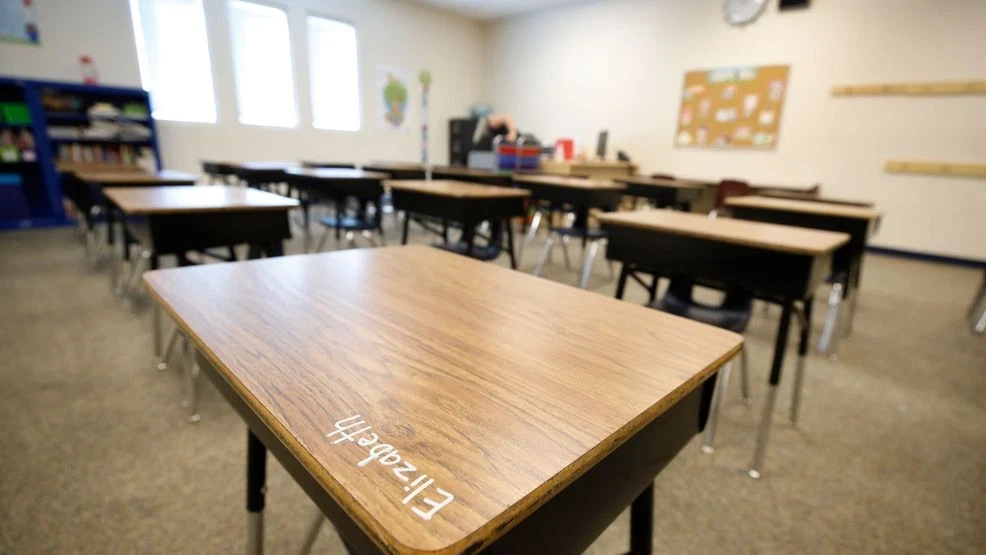
Artificial intelligence is rapidly reshaping America's classrooms, leaving educators and parents with a growing challenge: how to teach students to use powerful new technology without allowing it to do the thinking for them.
As schools increasingly experiment with artificial intelligence and virtual reality, Optima CEO Adam Mangana says keeping emerging technology away from children entirely may not be the best solution. Instead, he argues students need to learn how to use the tools responsibly and with appropriate supervision.
Mangana, who co-founded what Optima describes as the world's first virtual reality school, said he understands why parents may be concerned about introducing even more technology into children's lives.
"Parent anxiety is valid," Mangana said. "The danger itself isn't the technology, but it's passive consumption."
He said problems can arise when students rely on artificial intelligence to complete assignments without engaging with the material themselves.
Rather than using AI as a replacement for learning, Mangana said schools should treat the technology as another educational resource. He suggested AI could act as a personalized tutor or guide that asks questions and challenges students to develop their own answers.
"If we can use it as something interactive, acting as a personal tutor or a Socratic guide, it can really be a force multiplier for our students," he said.
That distinction could become increasingly important as AI tools make it easier for students to generate essays, solve problems and summarize information in seconds.
Mangana said teachers should focus more heavily on how students arrive at an answer rather than simply evaluating the final product.
"That line is really drawn by focusing on the process of learning, not just the outcomes," he said.
He described AI as a potential "sparring partner" for students rather than a substitute for human thought.
He also argued that technology could provide more personalized educational experiences for students who may not otherwise have access to individualized instruction.
"Technology is not designed to replace the struggle," Mangana said. "But it can really offer access to so many kids who've never had the opportunity for kind of hyper-personalization in their learning."
Optima has taken that approach beyond traditional computer screens by incorporating virtual reality into its educational model.
Students use VR headsets while still receiving instruction from live teachers, allowing lessons to incorporate immersive environments. Instead of simply reading about a historical location, for example, students could virtually enter a recreation of it.
Mangana pointed to Independence Hall as one example.
"Students are able to put on a VR headset, use AI not to replace learning, but to be able to interview historical figures," he said.
The goal, Mangana said, is to transform lessons into experiences that increase student engagement while maintaining academic structure.
Students are already familiar with immersive digital environments through games and platforms such as Roblox and Fortnite, he noted. The difference in an educational environment, he said, is establishing clear boundaries around how those technologies are used.
For parents concerned that children already spend too much time looking at screens, Mangana said schools should be able to clearly explain why they are introducing a particular technology and what educational purpose it serves.
"They should demand transparency and intentionality," he said.
Mangana argued skepticism toward new educational technologies is nothing new, pointing to the ancient Greek philosopher Socrates' concerns about the written word and its potential effect on human memory.
"The skepticism is healthy," Mangana said.
But he stressed that introducing AI and virtual reality should not simply become an excuse to increase students' screen time.
"Education shouldn't be about more screen time just for the sake of screen time," he said. "It should be about better outcomes."
As artificial intelligence becomes increasingly accessible to students both inside and outside school, Mangana believes educators will need to focus on teaching children how to use it effectively rather than pretending the technology can be kept out of their lives.
"When schools are transparent and purposeful with these tools, it can be an incredible force multiplier," he said.
Ultimately, Mangana believes AI and virtual reality could help make individualized education available to more students regardless of where they live.
"We're in an era now where no matter where you're born in the United States, you can get access to a world-class education," Mangana said, "and one that's tailored to your student."
Related Stories
 AI News
Stowers Institute expands Artificial Intelligence Initiative, appoints second AI Fellow
11 minutes ago
 AI News
Why the threat from the rampaging AI machine went ignored | Letters
11 minutes ago
 AI News
Artificial Intelligence As It Once Was
1 hour ago
 AI News
South African AI Startup Verascient Raises $1.2m to Scale Enterprise Platform
2 hours ago
 AI News
Meta rolls out AI game
2 hours ago
 AI News
UK and Ukraine sign AI defence partnership
2 hours ago
 AI News
Google's AI Chip Business Is Booming. Why Gemini 4 Matters More For Google Stock.
2 hours ago
 AI News
Australia's music industry bans AI
2 hours ago