
In the News: Manjeet Rege on AI and Cybersecurity Threats
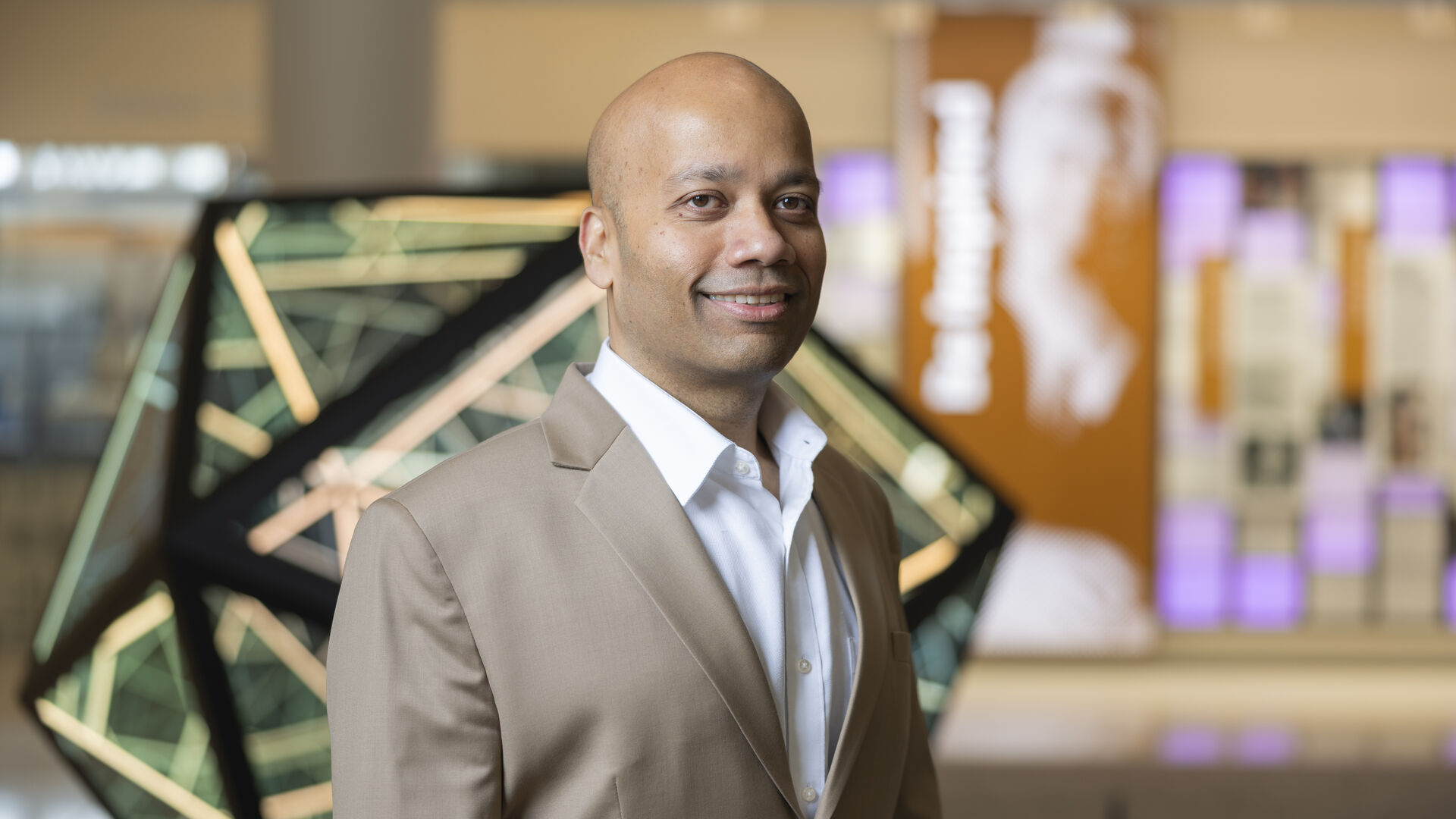
Manjeet Rege, director of the Center for Applied Artificial Intelligence at the University of St. Thomas, recently spoke with WCCO Radio about how artificial intelligence is reshaping the global cybersecurity landscape. Rege said AI is accelerating cyberthreats by giving bad actors the ability to carry out attacks faster and at a much larger scale.
From the conversation:“I’m concerned, but in a specific way. I’m not worried that the machines are about to take over. What I’m focused on is the speed and scale that AI gives to people who already want to do harm. A cyberattack that used to take a skilled team weeks can now happen in hours,” Rege said.
“Cyberattacks are decades old. So, you know, that part is not new at all. What is new is who can carry them out and how fast,” Rege said.
Rege also explained that AI is being used on both sides of cybersecurity, helping organizations defend their networks while also giving attackers new tools.
“AI can be used for defending. So you now have AI agents defending a network. But at the same time, AI in the wrong hands, you can have AI agents also attacking a network,” Rege said.
He said small and medium-sized businesses may face heightened risk because they often have fewer resources to protect themselves from cyberthreats.
“Small and medium-sized businesses are often more vulnerable than large corporations because they just have fewer cybersecurity resources. And cybersecurity is one of those things where until you’re attacked, you just don’t know whether you are doing enough,” Rege said.
“Attackers don’t necessarily target the biggest company. They target the easiest company. And AI may allow criminals to identify and exploit those easy targets much more efficiently now,” Rege said.
Rege urged individuals and organizations to focus on basic cybersecurity practices, including using unique passwords, enabling multifactor authentication, keeping devices updated and verifying requests for money or sensitive information.
“AI-generated phishing messages are becoming more convincing. So people need to rely less on, ‘This looks suspicious,’ and more on verification,” Rege said.
Related Stories
 AI News
Experts weigh costs, benefits of using artificial intelligence in education
10 minutes ago
 AI News
PRESS RELEASE: European Union Begins Enforcing Sweeping Artificial Intelligence Act
1 hour ago
 AI News
AI
2 hours ago
 AI News
No, AI doesn’t mean the end of mathematics
2 hours ago
 AI News
AI is revolutionizing weather forecasting
2 hours ago
 AI News
Dartmouth to Host AI at 70 Conference in October
3 hours ago
 AI News
Stowers Institute expands Artificial Intelligence Initiative, appoints second AI Fellow
4 hours ago
 AI News
Why the threat from the rampaging AI machine went ignored | Letters
4 hours ago