
India’s Youth Protests Echo France’s May 1968 Student Uprising
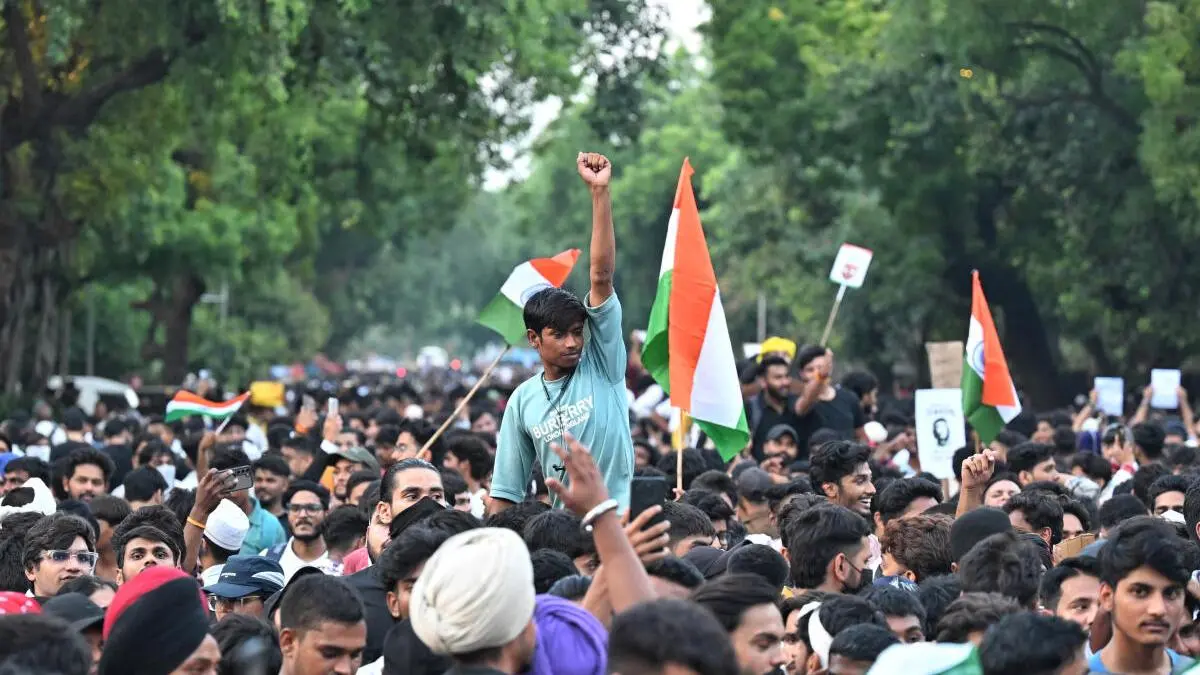
Am I the only one hearing the reverberations of the French student movement of May 1968 in the ongoing protests by students and youth across India—not only in Delhi but also across several States? I ask this question not because history repeats itself in any mechanical sense, but because certain moments in history seem to converse across time. They speak through similar anxieties, similar aspirations, and a comparable moral impatience with institutions that have ceased to respond to the concerns of those who inherit the future.
Every generation of young people invents its own grammar of dissent; the slogans change, the technologies of mobilisation evolve, and the political contexts differ. Yet the fundamental question remains remarkably constant: what happens when institutions lose the trust of those they are expected to serve? That question animated the streets of Paris in May 1968. It also animates the roads, campuses, public squares, and protest sites of contemporary India.
The French student movement of 1968 has often been remembered through its iconic images; the occupied Sorbonne, the barricades in the Latin Quarter, walls transformed into canvases carrying unforgettable slogans, and millions of workers eventually joining students in what became the largest general strike in French history. Yet reducing that movement to its spectacular moments misses its deeper significance. It was never merely about university reforms. It became a critique of authority itself: of rigid bureaucracies, hierarchical social relations, and a political order that appeared incapable of accommodating the aspirations of a changing generation.
One of the most perceptive interpreters of those events was the French sociologist, Alain Touraine. Unlike many commentators who viewed May 1968 either as youthful romanticism or political disorder, Touraine recognised it as evidence that modern societies were entering a new historical phase. He argued that the principal social conflicts of advanced societies were no longer confined to factories or workplaces. Increasingly, struggles revolved around culture, education, knowledge, communication, identity, and democratic participation. Movements were no longer simply seeking redistribution of material resources; they were contesting the very production of meaning within society.
Touraine’s sociology shifted our attention from institutions to actors. Society, he argued, is not merely governed; it is continually produced and transformed through collective action. Movements become historically significant when they challenge the dominant principles by which society organises itself. They are not simply reacting to injustice; they are proposing alternative ways of imagining the future.
Seen through this lens, the ongoing protests by students and youth in India deserve to be understood with greater seriousness than they often receive. It would be intellectually inadequate to dismiss them as episodic unrest or partisan mobilisation or under the control of someone. Their immediate grievances may concern examination irregularities, paper leaks, unemployment, institutional opacity, or administrative failures. But beneath these specific demands lies a more profound anxiety: the fear that the promise of governance itself is being systematically eroded.
For millions of young Indians, education has long represented the most legitimate route towards dignity, mobility, and citizenship. Families invest extraordinary emotional and financial resources in that promise. Competitive examinations are not merely administrative procedures; they are symbols of fairness in an unequal society. When examination systems repeatedly fail, when paper leaks become routine, when recruitment processes remain indefinitely delayed, or when transparency appears absent, the crisis extends far beyond administration and so, it becomes a crisis of public trust.
And trust, once fractured, cannot be repaired through official assurances on social media posts or press statements by a battery of government ministers and officials. It requires institutions capable of demonstrating fairness through their conduct rather than merely proclaiming it through press releases. This explains why the protests have acquired a resonance that exceeds the immediate issues. They are increasingly about the relationship between the citizen and the state. They express an insistence that accountability cannot remain selective and that the burden of institutional failures cannot endlessly be transferred onto the shoulders of students.
Touraine repeatedly reminded us that democracy cannot survive merely through elections. It also depends upon the vitality of autonomous movements capable of questioning power without seeking immediately to replace it. Such movements perform an indispensable democratic function because they prevent institutions from confusing legality with legitimacy.
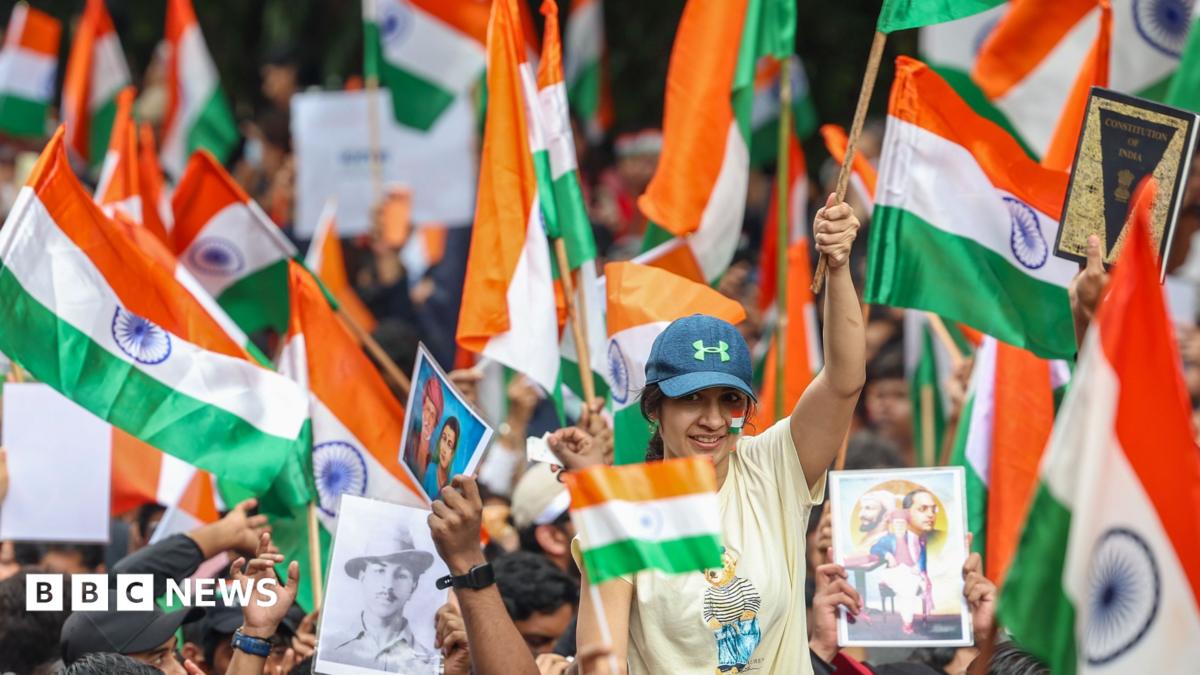
The remarkable feature of the present protests is not only their persistence but also their creativity. Across protest sites one encounters songs, poetry, street theatre, visual art, satire, handwritten placards, public readings of the Constitution, and forms of collective solidarity that defy conventional political categories. This creative dimension deserves careful attention.
The French movement of 1968 famously transformed walls into public texts. “Sous les pavés, la plage”—beneath the paving stones, the beach—became more than a slogan; it represented the imagination’s refusal to accept the world as given. The occupation of public spaces and spaces of authority became an act of reclaiming democratic agency.
Several youngsters, social activists and artists assembled for a peace gathering with posters expressing solidarity with the ongoing youth-led protests in Delhi demanding the resignation of Pradhan at Manaveeyam Veedhi, in Thiruvananthapuram on Thursday, July 23. | Photo Credit: Nirmal Harindran
Similarly, today’s Indian youth have demonstrated that protest need not always speak through anger alone. Humour, irony, music, digital creativity, and symbolic performances have become powerful political languages. Creativity is not ornamental to democratic movements; it is one of their greatest strengths because it enlarges the moral imagination of society. It invites participation where fear seeks silence.
There are, of course, important differences between France in 1968 and India today. France was confronting the contradictions of an affluent industrial society, while India grapples simultaneously with developmental aspirations, demographic pressures, educational expansion, and profound economic inequalities. The social composition of protesters differs and so does the institutional contexts.
History should never be approached through superficial analogies. Yet historical comparison remains valuable because it helps illuminate recurring democratic dilemmas. In both cases, young people refused to remain passive recipients of decisions affecting their future. In both cases, institutional authority discovered that legitimacy cannot be sustained indefinitely without responsiveness. In both cases, public spaces became classrooms where democracy itself was debated.
Perhaps the greatest lesson from Touraine is that societies are healthiest when they listen to their social movements rather than merely policing them. Protest should not automatically be interpreted as evidence of national weakness. Quite the contrary. Peaceful democratic mobilisation often reflects the continuing vitality of democratic citizenship. The real danger emerges when legitimate grievances cease to find democratic expression.
Every generation inherits unfinished democratic tasks. Young people often become the first to recognise emerging crises because they have the greatest stake in the future. Their impatience is therefore not merely emotional; it is historically consequential. Democracies flourish not by demanding unquestioning obedience from their youth but by cultivating the confidence to hear uncomfortable questions.
Whether the present movement ultimately succeeds in achieving its immediate demands remains uncertain. Movements rarely accomplish all that they seek. Yet they often transform public consciousness in ways that become visible only years later. The importance of May 1968 did not lie solely in the concessions immediately won. Its enduring legacy lay in altering how subsequent generations thought about authority, citizenship, education, culture, and democracy itself.
Perhaps something similar is unfolding before us. The question before the country is not simply how these protests will end. The more important question is what they reveal about the condition of our institutions and about the aspirations of a generation that refuses to surrender its future to administrative failure or political indifference.
History’s echoes are never identical, but they are unmistakably invitations to listen more carefully. I say this not merely as a student of politics, but as someone who has taught and reflected on social movements at the University of Delhi for over two decades. Time and again, I have seen that what appears to the powerful as disorder often turns out, in retrospect, to have been democracy’s most vital conversation with itself.
Alain Touraine reminded us that social movements are not disturbances external to democracy; they are among the principal ways through which democracy renews itself. They are not aberrations to be contained but democratic energies seeking recognition. When young people gather to defend the integrity of education, the fairness of opportunity, and the credibility of public institutions, they are doing far more than protesting. They are participating in the continuous making and remaking of society itself.
If we fail to hear those voices, we may discover too late that what was dismissed as youthful impatience or conveniently reduced to the conspiracy of a few was, in fact, democracy calling upon itself to become more worthy of its own promise. Every society is ultimately judged not by the obedience it extracts from its youth, but by the seriousness with which it listens to their hopes, anxieties, and demands. Because it is often in the restless imagination of the young that the future first announces itself. To mistake such moments for mere disorder is to misunderstand the very grammar of democratic life. For democracies do not renew themselves through silence or conformity; they renew themselves through the courage of those who refuse to let the future be diminished by the complacencies of the present.
Manoj Kumar Jha is a member of the Rajya Sabha from the Rashtriya Janata Dal.
Also Read | What Türkiye’s exam leak scandal means for India’s NEET crisis
Also Read | The police are being turned into a brute force: Vibhuti Narain Rai
Related Stories
 India
India
Rahul Gandhi Ushers a New Style of Youth-Centric Politics in India - The Diplomat
9 minutes ago
 India
India
130+ Indians, 37 NRIs out of reach as Nepal floods toll mounts, Bihar, UP on alert: What is happening? | India News
11 minutes ago
 India
India
Why India is sharing missile secrets with its private sector
12 minutes ago
 India
India
Ukraine’s drone attacks have left Russia desperately scrambling for oil imports
2 hours ago
 India
India
Piyush Goyal proposes India
4 hours ago
 India
India
MIT India’s IRS 2026 Advances 25
6 hours ago
 India
India
Rahul Gandhi questions India PM Narendra Modi's 'culture shock' comment over women swearing at CJP protest
11 hours ago
 India
India
US military kills four in strike on alleged drug smuggling boat in Caribbean
13 hours ago