
Is a technical recession enough to spur the Bank of Canada to cut interest rates?
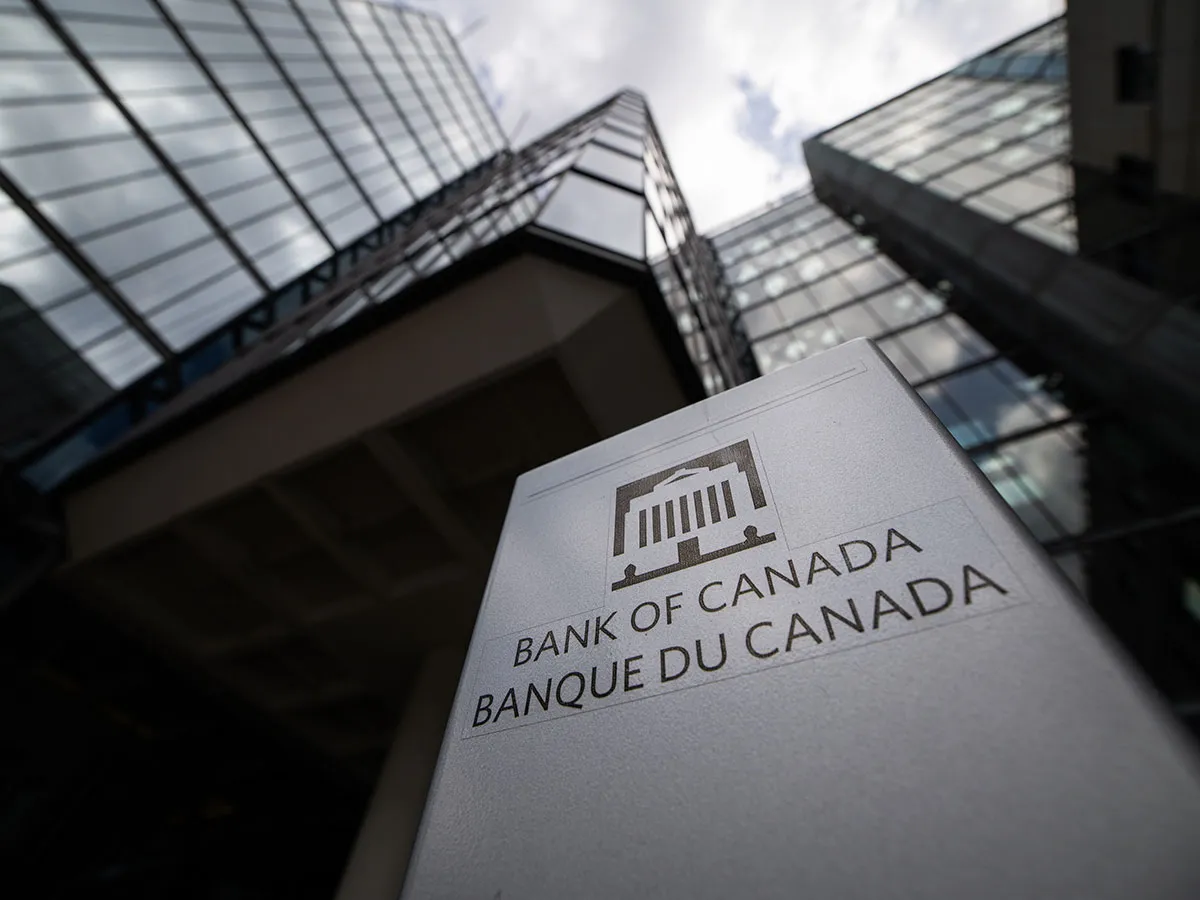
Canada’s gross domestic product unexpectedly contracted for the second consecutive time to trigger talk of recession, but some economists don’t think the situation is as dire as the headline number suggests.
The economy shrank 0.1 per cent annualized in the first quarter following a contraction of one per cent in the fourth quarter last year, Statistics Canada said on Friday.
Economists and the Bank of Canada had expected the economy to expand 1.5 per cent in the quarter.
Despite the negative GDP surprise, markets are still pricing in a rate cut in 2026.
Here’s what the GDP data mean for the economy and the Bank of Canada.
‘Negative terrain’: Rosenberg Research
“This was not just back-to-back real GDP contractions, but three quarters in the past four and taking the year-over-year trend slightly into negative terrain,” David Rosenberg, president of Rosenberg Research & Associates Inc., said in a note on Friday.
Recessions typically arrive alongside year-over-year negative growth, he said, and job losses and rising unemployment are adding to the economic headwinds.
“It was particularly disappointing to have seen that negative headline given the consensus forecast was 1.5 per cent annualized (GDP),” he said.
Rosenberg singled out the big declines in business investment, the housing sector and consumer spending on durable goods. Government of Canada spending fell 2.4 per cent.
The “only silver lining,” he said, was an increase in business capital expenditures and Statistics Canada’s forecast for GDP in April to rebound from March.
“Interest rate cuts and not hikes should be foremost on the Bank of Canada’s mind,” he said. “From a demand standpoint, there was nothing at all inflationary about this broad economic report.”
“While there will be plenty of debate over whether this constitutes a recession (we would say ‘no, not really’), there is little debate that the economy has struggled to make any headway over the past year amid the ongoing trade conflict,” Douglas Porter, chief economist at BMO Economics, said in a note.
He said much of the first-quarter decline was due to a 2.4 per cent drop in federal government spending, which is something he doesn’t expect to continue.
He said consumer spending rose 1.5 per cent quarter over quarter and was up two per cent quarter over quarter, but it’s hard to say if that will hold up in the second quarter given the elevated price of gasoline.
Porter also said much of the GDP weakness can be traced to a 4.1 per cent drop in exports, a 3.6 per cent decrease in business investment in manufacturing and equipment and a 3.3 per cent decline in housing, with the first two areas feeling the effects of the trade war with the United States the most.
Related Stories
 Economy
Fed's Warsh surprised by world economy's 'resilience'
1 day ago
 Economy
Bad news for Trump ahead of the midterms: it’s still the economy, stupid
2 days ago
 Economy
The global economy is muddling through against the odds. But a storm is coming | Larry Elliott
2 days ago
 Economy
How high inflation is hurting Trump's Republicans in U.S. midterm campaign
2 days ago
 Economy
‘Clear and present danger’: fuel prices could rise by 30c a litre across Australia under IMF scenario
5 days ago
 Economy
IMF warns global economy ‘could soon test the limits of resilience’
5 days ago
 Economy
Nobel memorial prize in economics awarded to Robert E. Hall and Michael Woodford
5 days ago
 Economy
Nobel Prize for economics awarded to 2 U.S. academics
5 days ago