
Japan’s travellers have already embraced AI. Its travel brands are still catching up
In Japan, artificial intelligence has quietly become part of how people approach travel. Consumers have absorbed the technology into their planning with little fanfare, even as many of the businesses they ultimately book with have been slower to respond.
That divergence between travellers who have moved quickly and an industry that has not is arguably the most important dynamic shaping the market today.
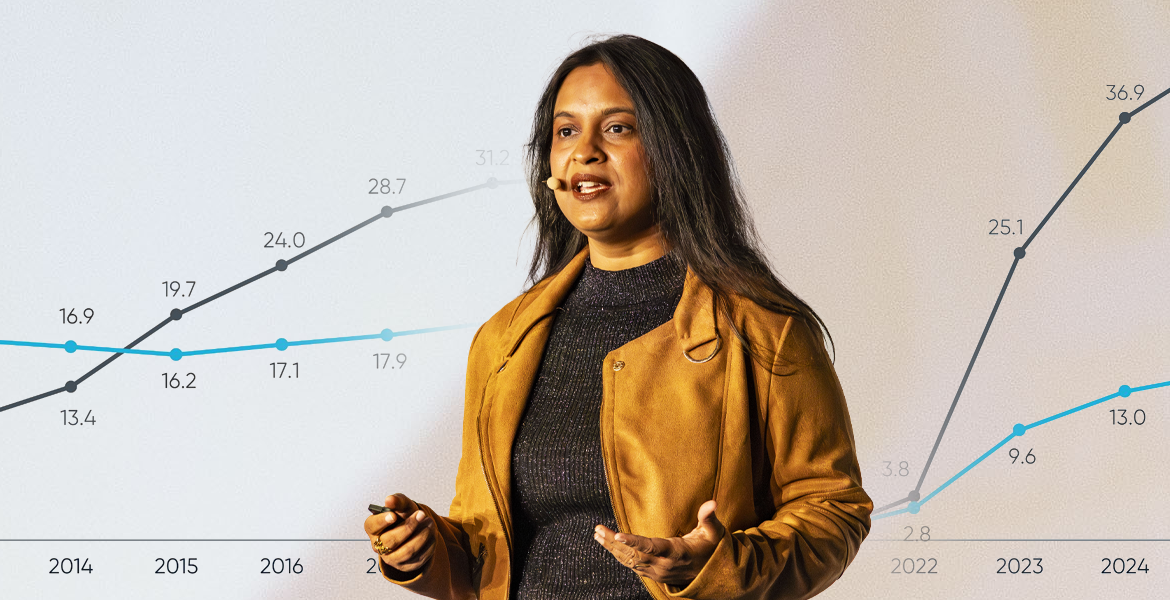
Consider the travellers first. Close to nine in ten Japanese travellers are now aware of AI, roughly a third have already used it to plan a trip, and among Gen Z that proportion rises to one in two. More telling than the level of adoption is the nature of it: travellers are turning to AI for substantive decisions, from researching hotels and gathering destination inspiration to building complete itineraries. Much of this activity, moreover, takes place on general-purpose tools such as ChatGPT and on search engines, rather than within the websites and apps of the travel brands themselves.
Top uses of AI for trip planning in Japan. Source: Phocuswright’s Japan Consumer Travel Report 2026.
The supply side tells a very different story. Corporate adoption of AI in Japan stands at roughly 47%, trailing most other major economies, and within travel the technology has so far been confined to a narrow band of uses. Almost all deployments fall into one of two categories: operational efficiency, such as analytics, reporting and data analysis; or traveller-facing content and assistance, such as chatbots, multilingual support and model itineraries. What is conspicuously missing is any real translation of AI into the booking itself. Travellers are already transacting with its help, while the companies that serve them have yet to build for the booking behavior.
This is not playing out against a weak backdrop. Travel is rated as the highest discretionary spend category among Japanese consumers, ahead of categories such as dining, electronics and home improvement, a reflection of how high a priority households place on getting away. The market has more than recovered in step with that appetite: total travel gross bookings returned to pre-pandemic levels in 2023 and reached ¥14.1 trillion in 2025, up 7% on the year, with further growth to ¥16.3 trillion projected by 2029. In short, this is a market with both the demand and the resources to invest in meeting travellers where they now are.
“Close to nine in ten Japanese travellers are now aware of AI, roughly a third have already used it to plan a trip, and among Gen Z that proportion rises to one in two.”
Behind that headline, the market is splitting three ways.
Domestic travel is the steady base. In 2025, 72% of Japanese travellers stayed within the nation’s borders, taking 554 million trips that tend to be shorter, closer and easy to book.
Outbound is the laggard. Overseas trips reached 14.7 million in 2025, still under three-quarters of where they were in 2019. A weak yen, down about 40% against the U.S. dollar between 2019 and 2024, alongside falling real wages and a jittery world has kept many would-be international travellers grounded. The ones who do go are valuable, though, spending more and engaging more across digital, social and AI.
Inbound is the story everyone knows. Japan welcomed a record 42.7 million international visitors in 2025, the latest peak in more than a decade of near-relentless growth.
Source: Ministry of Land, Infrastructure, Transport and Tourism, Japan.
The significance of that inbound surge, however, reaches well beyond tourism receipts. As Japan’s population ages and domestic consumption softens, foreign visitors have become one of the country’s more dependable engines of growth, a source of demand that does not rest on a shrinking domestic base. Policy has shifted accordingly. The government is targeting 60 million annual visitors and ¥15 trillion in inbound spending by 2030, while deliberately steering toward higher-value travellers and dispersing them beyond the familiar circuit of Tokyo, Kyoto and Osaka. The foundation keeps widening, too: in 2025, Australia became the seventh market to send more than a million visitors in a single year.
Social media, from inspiration to decision
If AI is the emerging force in Japanese travel, social media is the established one, and its influence has quietly become difficult to overstate. Nearly four in five travellers used at least one social platform to plan a trip last year, with YouTube and Instagram the most prominent. The behavior is no longer generational: almost all Gen Z travellers rely on social media, but so do 64% of those aged 62 and over. Its role, crucially, has moved beyond inspiration; more than two-thirds of travellers report making a firm trip decision on the strength of social content. The line between discovery and transaction is thinning as well, a shift underscored by TikTok’s rollout of in-app booking through TikTok GO in several markets, Japan among them.
Japan presents an unusual combination: strong and growing demand, a public that has readily embraced the tools now reshaping how trips are imagined and chosen, and an industry that has been slower to follow. The advantage will accrue to the businesses prepared to close that distance, those willing to meet travellers in the channels they already occupy, whether a social feed or the conversational window of an AI assistant. With demand this resilient, the more pressing test is whether the industry can move at the pace of the traveller who has already moved ahead of it.
Coney Dongre is a Research Manager at Phocuswright. She is a travel research and foresight professional with 15+ years of experience across market sizing, travel-trend intelligence and strategic research.
Related Stories
 AI News
Madonna Says AI Is “Opposite Of Making Art,” Prefers “Connecting To Nature”
2 minutes ago
 AI News
World Cup 2026: Steve Clarke resigns with strong legacy
56 minutes ago
 AI News
Danger Tree is ‘the whole story of World War One,’ says N.L. historian
56 minutes ago
 AI News
Iran soccer team leaves after narrow loss, denouncing ‘disaster World Cup’
56 minutes ago
 AI News
Biden calls Trump ‘a loser’, portraying him as incompetent, corrupt and vain
56 minutes ago
 AI News
Storms flood parts of Regina, nearly 100 mm of rain recorded in southern Saskatchewan
57 minutes ago
 AI News
Active weather builds across Prairies with severe storm threat
57 minutes ago
 AI News
Annual Pride Parade set to march through Toronto's downtown streets
57 minutes ago