
Keeping faith with the truth: Pope Leo on why AI won’t make universities obsolete
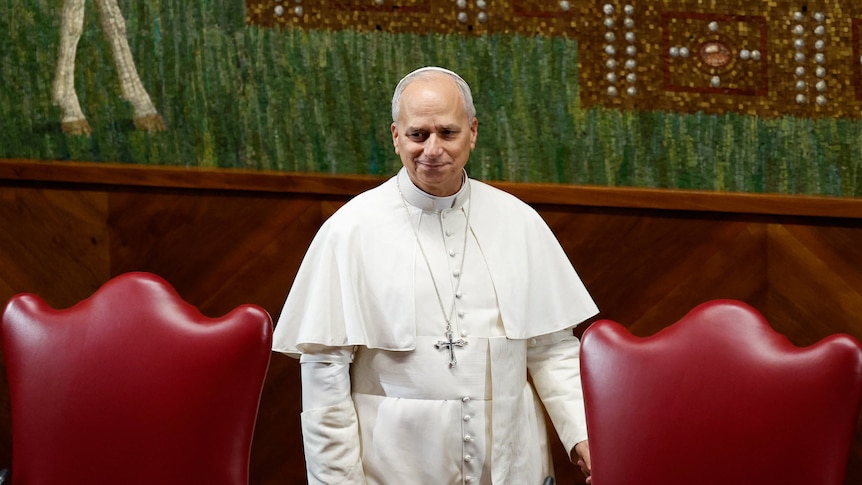
Late last month, Pope Leo XIV released his long-awaited encyclical Magnifica Humanitas, on what it means to remain human in an age of technological disruption. It arrived in the same week that the university I lead launched a collection of the pope’s own writings on education and artificial intelligence (AI) at our campus a short distance from the Vatican. In the time since, Pope Leo’s encyclical has generated an astounding amount of commentary across the globe. It is arguably the first papal letter to “go viral”.
Of everything in Magnifica Humanitas that caught my attention, one passage has lingered because it speaks directly to people like me, who run educational institutions.
Having spent the opening chapter describing the history of modern Catholic social doctrine, from Leo XIII’s 1891 Rerum Novarum onwards, Pope Leo turns to the principles of these teachings, to “help us interpret the ‘new things’ of our time”. He then calls on academic institutions and universities to “give fresh impetus to these principles”. As a university vice-chancellor, I took this as a call to action.
Much of the early commentary on Magnifica Humanitas in our sector has focused on how we respond to the rapid take-up of AI among our students. As two American academics, Eric Spina and Tim Driscoll, put it:
Higher education must offer what AI cannot: shared time, trustworthy relationships and the slow work of teaching students to connect ideas across fields, to make sense of complexity and to tell what is true from what is not.
I agree wholeheartedly with this sentiment. Across the history of humankind, our challenges have never been met by tools alone but by the human qualities behind them: the willingness to be present for one another, to share in the pursuit of knowledge and truth. Simple as they sound, these qualities are so profoundly human that they never age or lose relevance.
The question Pope Leo puts to educational institutions is more than how we teach or which courses or parts of the curriculum we protect. It is whether the university still knows what it is for.
Sign up for our weekly newsletter.
For hundreds of years, universities have been among the primary places in society where knowledge was kept. The emergence of digital technologies has made information more abundant and more accessible. If our chief claim on the world ever rested on being the holders of knowledge, then the digital technology that now holds so much of it would, eventually, make universities obsolete.
But universities are not just holders of information. We are sites of exploration, interaction, socialisation and personal growth. Students acquire so much more at university than skills and credentials. They gain a transformative experience that shapes character, broadens perspective and cultivates wisdom — the shared human work of learning that no technology can replicate.
In Magnifica Humanitas, Pope Leo shows us why this endures. Our challenge is to continue to be “the place where new generations can learn to seek and love the truth, to reflect on the meaning of life and to recognise the dignity of every person”. For a Catholic university, there is nothing novel about this. These are the very principles on which the Catholic approach to education rests. But when the pope talks of places where people learn to seek and love the truth, he isn’t only speaking to Catholic universities. This is the work of all institutions that are serious about education.
Toward the end of the encyclical, Leo places his most direct challenge to our sector. In schools, he tells us, there’s “a growing need for new educational awareness and for formation concerning the proper and critical use” of artificial intelligence. This includes teaching students “to decide when and for what purpose it ought not to be used”. The pope adds:
In universities, the principal challenge lies in the integration of knowledge, cultivating both the capacity to connect and synthesize knowledge in order to grasp complexity, and the skills necessary to verify facts.
This conjures a world in which we can know a great deal but are no longer able to assemble it into a coherent picture. One of the university’s defining duties is to be the place where that picture can still be made. Where students learn to grasp complexity, where claims are tested, where arguments are had in good faith, and where young people can learn the discipline of changing their minds for good reason.
Universities are not, and never were, the sole repositories of knowledge. But we can be custodians of slow learning and careful judgement against a culture of quick and easy answers.
It might be tempting to read all this defensively, to wall off our campuses from the technology. Some serious people are arguing exactly that. I understand the instinct, but I do not share it. A university should engage with the world it is part of, not retreat from it. Pope Leo has said as much since the beginning of his pontificate, long before the publication of Magnifica Humanitas. His teaching is open to the benefits of this new technology, while emphasising that its chief purpose should be to serve humanity:
The task laid before us is not to stop digital innovation, but rather to guide it and to be aware of its ambivalent nature. It is up to each of us to raise our voice in defence of human persons, so that we can truly assimilate these tools as allies.
For all the warnings in Magnifica Humanitas, it does not end in despair. Rather, it calls on us to act. “Let us invest in education”, Pope Leo writes, “beginning with ourselves!”
If universities are to respond to his call, we must be the place where society keeps faith with the truth, and teaches the next generation to do the same. That task has no expiry date, and the technology — no matter how advanced it becomes — cannot do it for us.
Professor Zlatko Skrbis is the Vice-Chancellor and President of Australian Catholic University.
Related Stories
 Education
Airtel Africa Foundation Opens Technology Scholarships for Zambian Students
21 hours ago
 Education
Education gap between N.B. and Canadian average growing
2 days ago
 Education
N.B. plan to build nationally leading education system by 2026 ends in failure
2 days ago
 Education
NSW to put strict caps on screen time in classrooms while pushing for ‘pen and paper’ learning
3 days ago
 Education
Special school process feels like a 'complete lottery'
6 days ago
 Education
US reading scores hit near-25
1 week ago
 Education
Families' interest in their kids' education is falling around the globe as scores drop, test shows
1 week ago
 Education
Ghana partners 11 universities to integrate One Million Coders certifications into academic programmes
1 week ago