
Korea Autonomous Driving Startups Head for KOSDAQ After Record Venture Year: Market Is Slipping
South Korea's deep-tech venture cycle has entered its payout phase. On Thursday, SBI Investment Korea — one of the country's oldest and most active venture capital firms — announced its portfolio companies are now at various stages of the KOSDAQ listing process, spanning autonomous driving, AI data infrastructure, and semiconductor precision manufacturing. The announcement arrives as the country's longest IPO queue for autonomous driving and AI chip companies begins to clear the Korea Exchange's evaluation gates.
What makes this moment complicated is the market they are walking into. South Korea's venture investors deployed a record ₩8.87 trillion (approximately $6.43 billion) in the first half of 2026, a 54.3% jump from the same period a year earlier and the highest first-half figure since ₩7.64 trillion (approximately $5.54 billion) was deployed during the 2022 boom. Much of that capital went into AI semiconductors, autonomous vehicles, humanoid robotics, and the enabling infrastructure that connects them. That wave of investment is now aging into its fourth and fifth year inside funds formed between 2020 and 2022, and Korean VC managers have one dominant exit mechanism: the public market. The KOSDAQ fell 2.7% in a single session in late July, part of a broader market correction that investment bankers say is complicating the timelines for precisely the companies that are now filing.
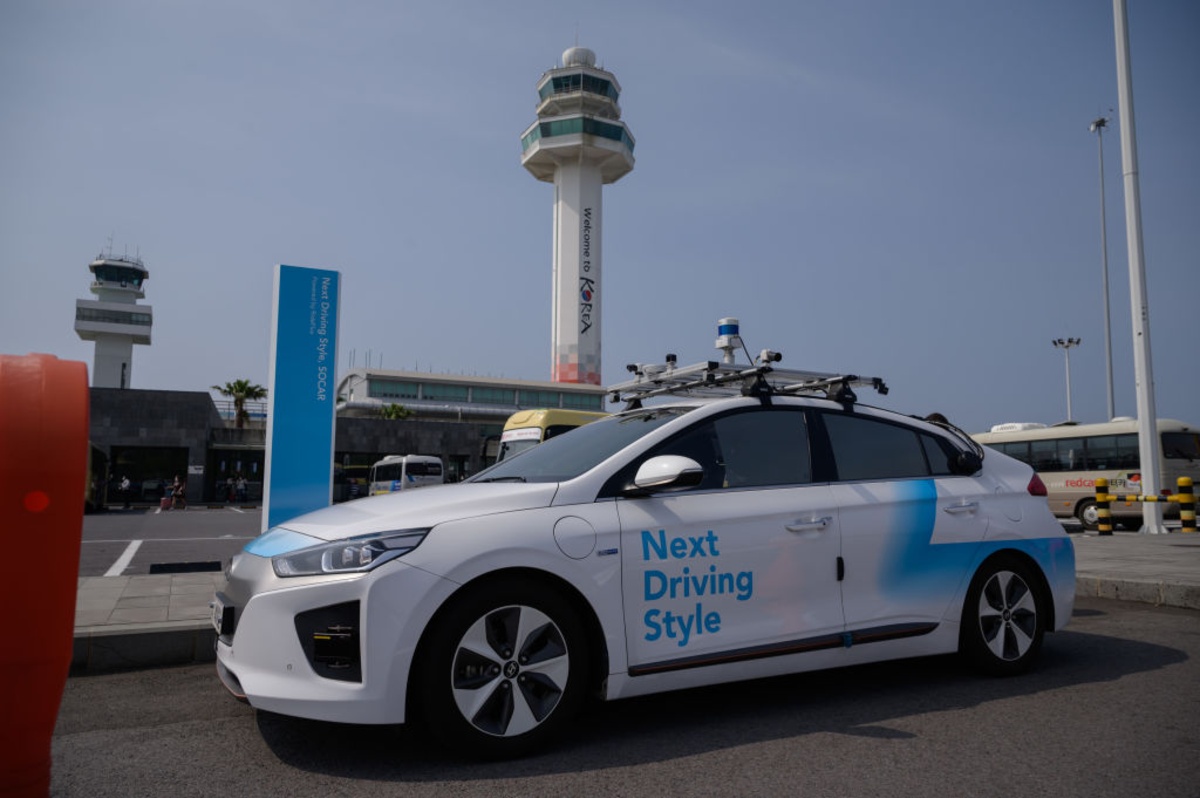
The company furthest along in the current IPO wave is RideFlux, a Jeju-based autonomous driving software firm founded in 2018 that filed its preliminary listing review application with the Korea Exchange on August 14, 2026, with Korea Investment & Securities and Woori Investment & Securities as joint lead underwriters. The company had passed the Korea Exchange's dual technology evaluation gate in May, receiving an A grade from both designated specialized evaluation agencies — a prerequisite for listing under the technology-exception pathway, which allows pre-revenue or early-revenue deep-tech firms to list without meeting conventional financial thresholds.
RideFlux's core product is a software architecture called RideFlux Driver, a full-stack Level 4 autonomous driving system covering five interlocking modules: perception and localization (processing LiDAR, camera, and radar data to determine the vehicle's precise position and the location of other objects), decision-making and control (the planning layer that determines speed, path, and behavior without human input), high-definition mapping (centimeter-precision pre-built maps of operating environments that allow the vehicle to function even when sensor data is ambiguous), remote operations (a monitoring layer that allows safety managers to observe and intervene from a command center while the driver's seat remains empty), and a cross-vehicle-type abstraction layer that allows the same software stack to drive a passenger car, a bus, or a 25-ton freight truck by swapping only the low-level vehicle controller.
What sets RideFlux apart from every other Korean autonomous driving company is a single regulatory distinction: it is the only company in Korea to hold an unmanned autonomous driving temporary operation permit from the Ministry of Land, Infrastructure and Transport, allowing its vehicles to operate with the driver's seat literally empty. Since June 2024, RideFlux has accumulated more than 3,300 hours of real-world validation data in Seoul's Sangam district under that permit — data that functions as the core training corpus for a physical AI system, and that competitors cannot replicate without the same regulatory clearance.
The company has also moved beyond demonstration. Since July 2026, RideFlux has been running paid cargo transport services — 25-ton autonomous truck runs connecting logistics hubs — in commercial partnerships with Hanjin and Lotte Global Logistics, having received Korea's first paid autonomous freight permit in April. Total cumulative funding stands at ₩88.2 billion (approximately $63.9 million).
Pursuing RideFlux to the finish line is Autonomous A2Z, an Anyang-based company founded in 2018 by four engineers who left Hyundai Motor to build autonomous driving vehicles from the chassis up. Where RideFlux is a software company that commands any vehicle, A2Z has developed its own prototype vehicle platforms — an engineering investment that makes it one of a small number of autonomous driving companies globally that owns both the vehicle hardware architecture and the AI stack that runs on it.
In March 2026, A2Z closed a pre-IPO funding round of ₩40.5 billion (approximately $29.4 million) led by DS Investment Partners, bringing its total funding to ₩122.5 billion (approximately $88.8 million) — the largest aggregate capital raised by any Korean autonomous driving startup. The company has filed for a preliminary technology-exception listing review with the Korea Exchange, with KB Securities and Hana Securities as co-lead underwriters, and is targeting a KOSDAQ debut before year-end.
A2Z operates autonomous bus services in 13 cities and provinces in South Korea and holds export approval for its autonomous driving technology, classified as a national core technology by the Korean government — a legal designation that makes transfer of the technology to foreign entities substantially more difficult. Active international pilot programs are running in Singapore, Japan, and the United Arab Emirates. CEO Jihyung Han has framed the IPO as the foundation for mass production of Level 4 vehicles and construction of a global autonomous driving data ecosystem.
Behind the autonomous driving listings, a parallel queue of fabless AI semiconductor companies is advancing toward public markets — companies whose product is not autonomous vehicles but the chips inside the server racks and vehicle computers that make AI economically viable at scale.
Understanding why this category matters requires a distinction the consumer press routinely collapses: training versus inference. AI training — the process of teaching a model its weights through billions of gradient updates — runs on large GPU clusters consuming kilowatts of power per chip. Nvidia dominates this segment entirely. AI inference is different: it is the process of running a fully trained model on new data in real time, and it happens billions of times per day at every company that has deployed AI in production. For inference, energy per operation matters more than raw computational throughput, and this is the technical space where specialized silicon — neural processing units, or NPUs, using architectures designed specifically for inference — can outcompete general-purpose GPUs.
Rebellions, the Samsung-backed chip startup that merged with Sapeon Korea in 2024, has built its ATOM and ATOM-Max chips on a Coarse-Grained Reconfigurable Array architecture — a programmable dataflow fabric that maps neural network inference graphs onto reconfigurable processing elements, bypassing the shader-dispatch overhead that limits GPU efficiency on inference workloads. The company's chips run Korea's largest commercial AI service, power telecom AI assistants handling 50 million API calls per day, and have been deployed in Saudi Arabia's sovereign AI infrastructure. CEO Sunghyun Park told CNBC in July that Rebellions is targeting an IPO in the first or second quarter of 2027, leaning toward the main KOSPI board rather than KOSDAQ — a reflection of the company's scale, which exceeds most of the tech-exception pathway candidates. Total funding raised stands at approximately ₩1.17 trillion (approximately $848 million) including a ₩550 billion (approximately $399 million) pre-IPO round closed in March 2026 led by Mirae Asset Financial Group and the Korea National Growth Fund.
BOS Semiconductors, a 2022-founded fabless chip designer, represents a different technical bet: not data center inference but automotive inference. Its Eagle-N chip targets the specific engineering constraints of AI inference inside a vehicle — real-time latency requirements (the inference loop must complete within milliseconds to feed the driving decision stack), ISO 26262 functional safety certification (the automotive safety standard that governs what happens when a chip fails), and severe thermal limits (vehicle environments cannot dissipate heat the way a data center can). These constraints make general-purpose GPUs impractical as vehicle compute and create a dedicated market that edge-specific AI chip designers like BOS are building toward. BOS Semiconductors closed a $60.2 million Series A in February 2026 — described by Korean financial media as one of the largest early-stage rounds in the country's startup history — with backers including Korea Development Bank, KB Investment, Smilegate Investment, and Atinum Investment.
Also in the chip queue: HyperAxel, targeting large language model inference with a reported Series B round targeting a ₩1 trillion (approximately $725 million) IPO valuation; Mobilint and FuriosaAI, both AI accelerator chip designers whose investment cases rest on energy-efficiency-per-inference metrics that they claim outperform data center GPUs on specific workloads; and AIO, a NAND controller chip designer founded in 2011 that reportedly crossed unicorn status in mid-2026 at a ₩1.2 trillion (approximately $870 million) valuation after posting ₩150 billion (approximately $108.75 million) in first-half 2026 revenue.
For SBI Investment Korea — a listed venture capital firm that KOSDAQ-listed itself in 1989, the first VC to do so — the current IPO wave represents the beginning of a distribution phase for funds deployed in the 2020 to 2022 vintage years. The firm manages approximately ₩1.5 trillion (approximately $1.09 billion) across 27 funds, has invested in more than 1,000 companies over its history, and has produced more than 220 IPO-stage exits. Its first investments in both RideFlux and Youngkwang YKMC — a semiconductor and display equipment precision-machining firm that filed its own KOSDAQ preliminary review in July — were made in 2020, placing both companies in the age range where fund managers begin facing LP pressure to show return.
The firm's Japan-connected structure — it is affiliated with SBI Holdings, one of Japan's largest financial conglomerates — gives its portfolio companies access to Japan's autonomous driving and semiconductor markets as a natural international expansion path, a distinct advantage for companies like RideFlux whose paid freight operations have cross-border logistics implications.
What Korean VC fund managers face structurally is a market dependency with no easy alternative. Unlike US and European VC markets, where acquisitions by large technology companies are a frequent exit mechanism, Korean VC has historically been IPO-dependent. That concentration creates risk when the public market weakens: an Asia Economy analysis of Korea's 17 listed VC firms found that eight recorded zero performance fees in the first quarter of 2026 as IPO market activity thinned. The current deep-tech wave — with genuine global demand signals from AI and autonomous driving — is seen by the industry as a higher-quality class of IPO candidates than the 2020 to 2022 vintage. Whether the market agrees is the open question.
The Korea Economic Daily examined 95 tech-exception KOSDAQ companies that listed between 2020 and 2022 and found that 89 of them achieved only 45.3% of their target sales during the review period. Among those, 11 companies posted revenues less than 10% of their projections. One biosimilar contract manufacturer that listed in March 2021 at a ₩530 billion (approximately $384 million) market cap had projected ₩130 billion (approximately $94 million) in annual revenue; it posted ₩16 million (approximately $11,600) instead, with ₩36.6 billion (approximately $26.5 million) in operating losses.
The Korea Exchange has responded by raising listing thresholds, and investment banking sources told Korean financial media after the January 2026 withdrawal of Seoul Robotics' application that the Exchange had hardened its stance since the Fadu case, placing greater weight on business continuity and revenue trajectory. RideFlux and Autonomous A2Z can both point to commercial revenue — RideFlux from paid freight contracts; A2Z from government demonstration programs and international pilots — but neither is profitable, and neither has the revenue scale that a conventional IPO pathway would require.
The broader market context adds pressure. KED Global reported on July 30, 2026 that South Korean startups in AI and robotics were enjoying record capital inflows even as the country's tech-heavy KOSDAQ market sank. For fund managers whose 2020 and 2021 vintages are entering mandatory exit windows, a narrow IPO market and an active investor preference for private-stage AI deals creates a structural pressure test that record first-half investment volumes alone cannot resolve.
Three early indicators will determine whether Korea's deep-tech IPO season produces returns commensurate with its record funding levels.
First, KOSDAQ market conditions in September through November. The Korea Exchange's preliminary review process typically takes two to three months, meaning RideFlux could receive its listing approval — and set its offer price — by October or November. The index level and sector sentiment at that point will materially affect whether the offering clears at a valuation that returns meaningful capital to early investors, including the 2020 and 2021 vintage funds whose LPs are watching.
Second, the Rebellions prospectus. If and when Rebellions files its KOSPI prospectus ahead of a 2027 IPO, it will be the most transparent AI chip business in Korea's public market history — disclosing revenue mix, customer concentration, software roadmap risks, and gross margin at scale. That document will function as a benchmark that sets market expectations for every smaller AI chip startup in the queue behind it.
Third, whether Autonomous A2Z's international pilots convert to revenue. The company's pre-IPO narrative centers on global expansion — Singapore, Japan, UAE — and its national core technology export designation. If any of those pilots produce contracts before the listing, the revenue trajectory changes materially. If they do not, the company faces the same gap between demonstration capability and commercial scale that has defined Korea's autonomous driving sector for the better part of a decade.
Exchange rate as of September 3, 2026; conversions are approximate.
The KOSDAQ technology-exception pathway allows pre-revenue or early-revenue deep-tech companies to list on Korea's junior stock exchange without meeting the conventional financial thresholds — revenue minimums, profitability requirements — that a standard IPO demands. To qualify, a company must receive an "A" grade from both of the two specialized technology evaluation agencies designated by the Korea Exchange. The pathway was created to allow companies like autonomous driving software developers and fabless AI chip designers — whose value is in their intellectual property and engineering teams, not their current revenue — to access public capital earlier in their development cycle. The tradeoff is that public market investors assume a higher technology and commercialization risk than they would with a conventional IPO candidate. Korea's experience with the 2020-to-2022 wave of tech-exception listings — where 89 of 95 companies fell dramatically short of their revenue projections — illustrates what that risk looks like in practice.
South Korea has issued a government permit allowing RideFlux to operate autonomous vehicles with the driver's seat literally empty on public roads in Seoul's Sangam district — a regulatory clearance that most US states have not yet granted to any company, including Waymo, for unrestricted commercial operation in urban environments. In the US, autonomous driving permit structures vary by state and typically require either a safety driver or a rigorous petition process for each operational zone. Korea's Ministry of Land, Infrastructure and Transport issued RideFlux a "driverless temporary operation permit" that enables commercial service with remote-only human oversight. This regulatory head start explains why Korean AV startups are at the KOSDAQ filing stage when comparable US companies are still in permit-extension cycles.
Nvidia dominates AI chip revenue by commanding the hardware required for AI model training — the computationally intensive process of teaching a model its weights. That market depends on raw computational throughput, where GPU clusters excel. AI inference is different: it is the process of running a trained model on real data, and it happens billions of times per day across every company with AI in production. For inference, energy per computation matters more than peak throughput, because inference chips must run continuously at scale without burning prohibitive amounts of power. Korean startups like Rebellions (with its CGRA-based ATOM architecture) and FuriosaAI are building chips specifically optimized for inference efficiency — targeting the segment where domain-specific design can outperform a general-purpose GPU on the metrics that actually drive total cost of ownership in production deployments.
Three things: the KOSDAQ index level when offer prices are set (likely October-November for RideFlux), which will determine whether listings clear at valuations that return capital to 2020-2022 vintage funds; the Rebellions KOSPI prospectus, which will be the first transparent AI chip income statement in Korea's public market; and whether Autonomous A2Z's international pilots in Singapore, Japan, and the UAE convert to commercial contracts before its listing window closes. For investors evaluating the sector broadly, the Korea Economic Daily's audit of 2020-to-2022 tech-exception listings is the essential calibrating document — it shows precisely what happens when public markets price autonomous driving and AI infrastructure companies before revenue materiality is established.
ⓒ 2026 TECHTIMES.com All rights reserved. Do not reproduce without permission.
Related Stories
 Technology
Richard Valtr, founder of Mews, joins the EU-Startups Summit 2027
44 minutes ago
 Technology
Are 'tech dense' farms the future of farming?
1 hour ago
 Technology
Media Services Modernizes Classroom Technology for Fall 2026
1 hour ago
 Technology
DAZN Media+ Extends Sports Advertising Offering with SureVision
2 hours ago
 Technology
New technology helps Kentucky patients relearn to walk
3 hours ago
 Technology
Mentor Public Library unveils next slate of free technology classes
4 hours ago
 Technology
Film
4 hours ago
 Technology
Redwire's Phased
4 hours ago