
Kristjan Port: The next tech boom needs more than wifi and a laptop
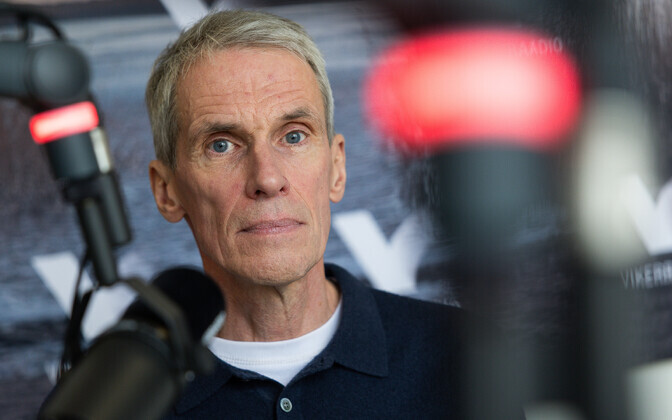
For decades, IT needed little more than wifi and a laptop. Now the future is power plants, chip factories, satellites and data centers, says R2 tech columnist Kristjan Port.
The rise of information technology showed that prosperity could be built with less and less physical infrastructure. Factories with billowing smokestacks gave way to offices with a retro-industrial feel, while national borders became less important as info processing work could be done from anywhere in the world.
Several small countries benefited from that shift. They were small not only in size but also in their lack of space for large-scale industry. A powerful information industry, by contrast, could be built in even a tiny building.
Smaller countries also had the advantage of avoiding much of the political baggage that came with heavy industry. They were spared the shocking impacts of major enterprise closures, while local politics were quick to get behind companies chasing each new IT trend. Estonia was one such country.
It's tempting to think of the digital revolution as having stripped the physical element from the economy. Artificial intelligence (AI) may now be putting it back, however, reviving heavy industry in a new form.
Estonia's government spending totals about €21 billion annually. The country cannot cover all of it through its own revenues, leaving a roughly €2 billion shortfall that must be financed through borrowing. But borrowing only makes sense if we expect to become more productive in the future and earn enough to repay both the debt and the interest.
That means we should already be thinking about where that growth will come from. Will there be an unexpected revolution in agriculture, or can we squeeze more productivity out of the IT sector? Where will the next billions come from?
Looking around the world, the signs are there that the days of economic growth driven by programming and data processing from a laptop and a quiet workspace may be numbered. Industrial infrastructure is making a comeback. The difference is that computing power is now becoming a key part of production: an AI-based economy needs enormous data centers.
This time, however, new industrial projects are facing fierce opposition. Unlike the optimism that once accompanied the building of new factories, excavators clearing land for data centers now represent job losses, higher power and water bills and environmental pollution.
Even when that isn't always necessarily the case, people who grew up in the IT era often trust social media over reality, especially when it gives them an outlet for their mounting everyday frustrations. After 30 years of believing digital prosperity required almost no physical infrastructure, AI is forcing us to rethink that view.
Estonian businesses are trying to capitalize on opposition to large projects in bigger countries by bringing some of those data centers here. The presence of vital digital infrastructure on Estonian soil could also provide some strategic security benefits if the country were ever attacked. The sticking point may prove to be Estonia's economic fundamentals.
Consider industrialist Elon Musk, who has pledged up to $100 billion for a new SpaceX launch facility. The site could eventually support thousands of rocket launches a year, which Musk plans to use to massively expand the Starlink satellite network and build space-based data centers.
Whatever Musk's personal ambitions, SpaceX's nearly $2 trillion market value puts enormous pressure on the company to make its combination of rockets, communications satellites, data centers and AI work as a business.
The hunt for a suitable site reportedly took seven years. A spaceport of this scale comes with a long list of unusual requirements, going beyond environmental concerns to the ability to transport and handle huge quantities of hazardous rocket fuel.
Launching a thousand rockets a year would require enough rocket fuel to equal roughly seven years of Estonia's total vehicle fuel consumption, held at a hazardous industrial site. This gives us some sense of the industrial scale required by the next generation of the digital economy. That is no longer weightless software; it's heavy industry.
AI may well change the formula that drove the past 30 years of economic growth, bringing serious geopolitical challenges with it. While all it once took was a laptop and an internet connection, the next wave of wealth may be found in power plants, chip factories, satellites and giant data centers.
The digital economy isn't disappearing; It's becoming physical again, because the engine driving that next wave of wealth no longer fits inside a laptop.
Follow ERR News on Facebook and X and never miss an update!
Editor: Jaan-Juhan Oidermaa, Aili Vahtla
Related Stories
 Technology
When Tech Companies Die, What Happens To The Products They Leave Behind?
2 days ago
 Technology
Two Finns supplying Russia with missile tech worth tens of millions
2 days ago
 Technology
Drones with pepper spray, four
2 days ago
 Technology
Micron Technology stock pre-market at EUR 800.50: memory storage - ad
2 days ago
 Technology
TAIEX Ends at 4
2 days ago
 Technology
ZAWYA: Technology, start-ups can double India
2 days ago
 Technology
Czech government to consider CZK 1 billion fund for startups
2 days ago
 Technology
GDIN Supports Eight Startups at CEATEC 2026 in Japan, Opens Door to Local Investor Collaboration
2 days ago