
Lister Fellows Pursue Research with Real

Four Hofstra University students spent their summer tackling scientific questions with implications for forensic science, medicine, and chemistry as recipients of the 2026 Dr. Bruce and Doris Lister Endowed Fellowship in Chemistry Research.
The annual fellowship provides undergraduate chemistry, biochemistry, and forensic science students with the opportunity to devote 10 weeks to full-time research alongside faculty mentors.
Morgan Christopherson ’27, Anchorage, AlaskaMajor: Forensic Science
For forensic science major Morgan Christopherson, preventing DNA contamination in crime laboratories means taking a closer look at something deceptively simple: cleaning.
Christopherson became interested in contamination prevention while taking Quality Assurance in Forensic Science, taught by Special Instructor of Chemistry Katie O’Connor.
“I was intrigued by the backbone of forensic science: quality and credibility,” Christopherson said. “I knew that contamination was a major issue in forensic science, and I wanted to help reduce it in any way.”
Working with O’Connor, Christopherson examined the effectiveness of abrasive wiping as a method for removing DNA from tools commonly used in forensic laboratories. He contaminated metal tools with DNA, then cleaned them for varying amounts of time with Kimwipes (used with delicate laboratory instruments) saturated with a diluted bleach solution. The remaining DNA was extracted and measured to determine how effectively it was removed.
“I like to explain my research as ‘focused cleaning,’ because I am taking apart the idea of something simple – cleaning tools – piece by piece, isolating and optimizing each step,” he said. “I enjoy the ‘microscopic view’ this research gives me into a fundamental part of the field.”
The Lister Fellowship also allowed Christopherson to conduct research while he was completing an internship with the New York City Police Department Crime Lab.
“I can confidently say that being a Lister Fellow provided me with the best summer in my college career,” he said. “It was incredibly educational and fun.”
Rachel Green ’27, Chester Springs, PennsylvaniaMajor: Forensic Science
Rachel Green and Professor Ling Huang used a technique known as “dirty” two-dimensional nuclear magnetic resonance (2D NMR) to identify cannabinoids in designer drug products. Their research, which involves legally sourced products, could eventually provide crime laboratories with alternatives to traditional testing methods.
“A lot of cannabis products don’t explicitly say what they are, so we work to identify what they have in them,” Green said. “They aren’t just the plant or the edible gummy material. There are THC seltzers, dog treats, as well as random oils and things like that.”
The experience helped Green clarify her career goals. After taking Huang’s forensic chemistry course and conducting research in his lab, she plans to pursue forensic drug chemistry.
“I really homed in on wanting to do forensic chemistry, specifically the drug side of it,” she explained. “At one point I was thinking about pursuing toxicology, but that is studying drugs when they’re in the body and metabolizing. Forensic drug chemistry is looking at substances outside of the body and analyzing those, and that’s something I’ve really found a love for. It’s what I want to pursue.”
Green added that Huang – while an attentive mentor – gives his research students a lot of freedom to explore new techniques and interests.
“Dr. Huang actively encourages his students to pursue their own research questions. He’ll give you the foundation and the groundwork for it, but then he pushes you to go further and to really think for yourself,” she said. “He is genuinely so easy to talk to and to work with. I’m very glad to be able to do research with him.”
Kimmy Sun ’28, Massapequa Park, New YorkMajors: Chemistry and Physics
As a teenager, Kimmy Sun became interested in the chemical formulas behind the skin care products she used to keep her complexion blemish-free.
Upon entering Hofstra and taking biochemistry with Professor and Department Chair Scott Lefurgy, Sun wanted to learn more about living systems at the molecular level. She connected with Professor Mary Rooney, whose research on GHK-Cu – a copper-bound tripeptide found naturally in the human body – intrigued her.
GHK-Cu has been linked to reduced inflammation, wound healing, and skin regeneration, and levels of the peptide decline with age. It is also used in some skincare products. But scientists don’t fully understand how the peptide produces those effects.
Through the Lister Fellowship, Sun has been working with both Rooney and Daniel Johnson, associate professor of physics and astronomy, to examine how GHK-Cu interacts with cell membranes and other cellular components. The interdisciplinary project combines Rooney’s expertise in biochemistry with Johnson’s work in biophysics and optical imaging.
Sun is also assisting Johnson on the development of a custom-built polarized total internal reflection fluorescence (pTIRF) microscope. The instrument will allow them to study the movement and orientation of small peptides within lipid membranes.
“I am truly enjoying the eclectic set of skills involved in this project, going from milling metal parts one day to modeling optical systems the next,” Sun said.
This summer was the first time Johnson served as a Lister Fellowship mentor, and he valued the experience.
“Kimmy is a great student who has a strong work ethic. She works hard, independently seeks out background knowledge on her topic and is able to adjust to unexpected results,” he said. “I enjoy working with students who are truly interested in the research and who take ownership of a project, which Kimmy has fully done.”
After graduating from Hofstra, Sun plans to pursue a PhD in biophysics or biochemistry.
Liam Tsou ’28, Jericho, New YorkMajor: Biochemistry
Liam Tsou is exploring one of chemistry’s most fundamental questions: Can certain molecules pass through an energy barrier instead of going over it?
Working with Assistant Professor of Chemistry Tim Schleif, Tsou is synthesizing an unstable molecule known as a diazo compound and using ultraviolet light to trigger its decay. By analyzing the products that form, he hopes to determine whether the molecule undergoes a rare process known as quantum tunneling.
To explain quantum tunneling, Tsou compared the process to a ball at the bottom of a hill.
“Ordinarily, someone would need to kick the ball with enough force to send it over the hill – an investment of energy,” he explained. “Through quantum tunneling, however, the ball may phase through the hill instead.”
Although the research is highly fundamental, understanding tunneling has broad scientific implications. Similar processes are believed to play a role in biological systems and even in the nuclear fusion reactions that power the sun.
Receiving the Lister Fellowship came as a surprise to Tsou, whose previous research experience was in another field. He said the opportunity has deepened his understanding of chemistry and strengthened his laboratory skills.
“It has really improved my knowledge,” he said. “I’ve really grown in being able to handle these things myself and understand how reactions work.”
After graduating from Hofstra, Tsou hopes to attend medical school and eventually pursue a dual MD-PhD degree.
The Dr. Bruce and Doris Lister Endowed Fellowship in Chemistry Research was established in 2013 to support undergraduate research at Hofstra. Students are selected based on academic achievement, research potential, and their demonstrated interest in pursuing careers in scientific research. The fellowship gives students the opportunity to work closely with faculty mentors while contributing to research with potential applications in public health, forensic science, medicine, and chemistry.
For information on how to apply for the 2027 Lister Fellowship, visit hofstra.edu/chemistry/lister-fellowship.
Related Stories
 World
World
Edmonton teen carjacked during Facebook Marketplace exchange
7 minutes ago
 World
World
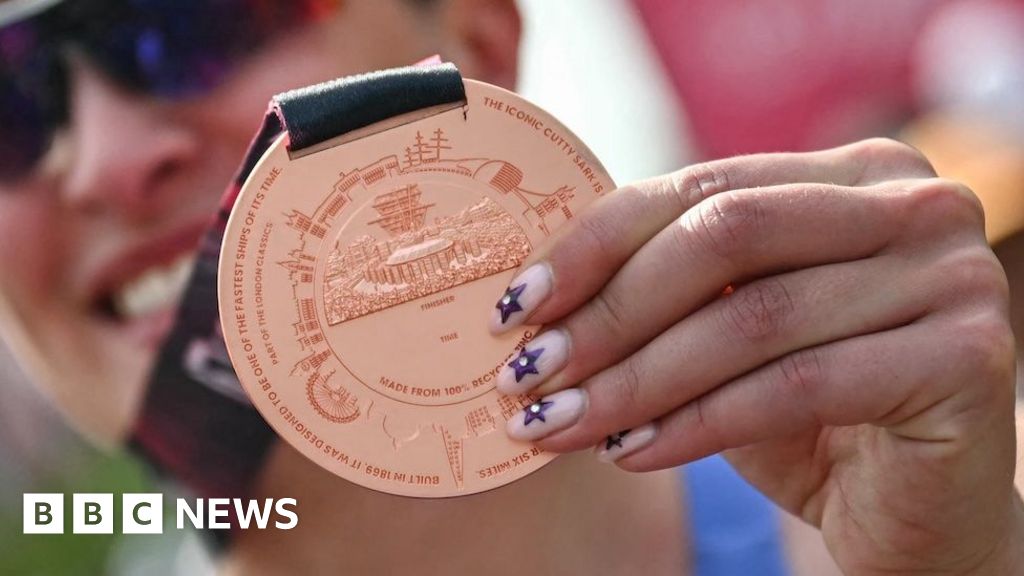
Weekly quiz: How did two champions fight over marathon dates for next year's London races?
1 hour ago
 World
World
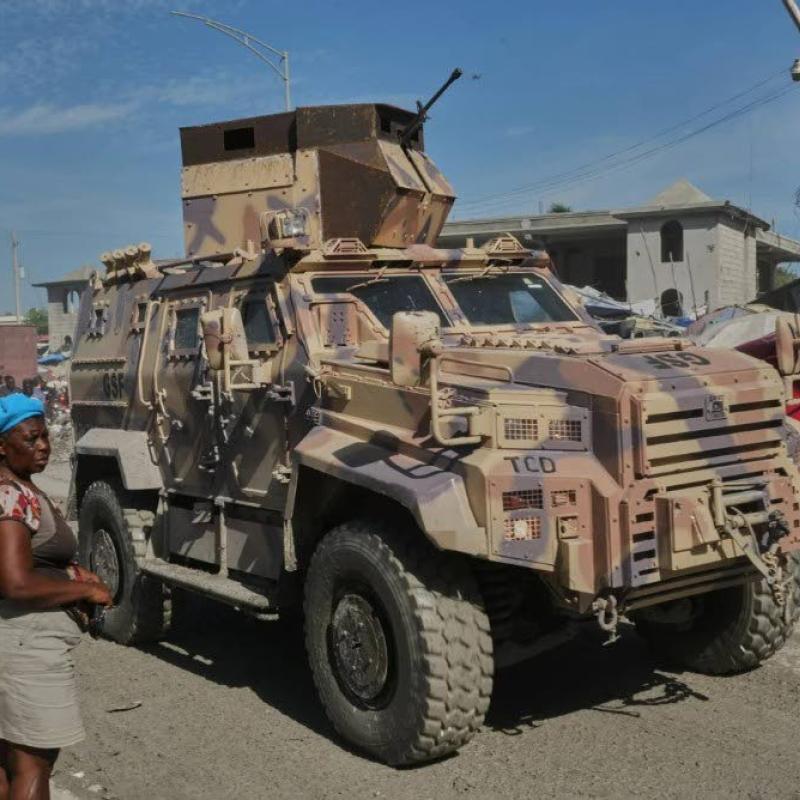
Haiti struggles with rise in kidnappings as general election looms
2 hours ago
 World
World
USA, South Korea targeting six AP1000 and two APR1400 units
2 hours ago
 World
World
Prestigious global ranking places McMaster in the top 5% of universities worldwide
2 hours ago
 World
World
2027 Cricket World Cup draw: England avoid Australia & India in group stage
3 hours ago
 World
World
Russian dissident Garry Kasparov says US warned him of danger to his life
3 hours ago
 World
World
Canadian astronaut reaches International Space Station for six
3 hours ago