
Market Uncertainty Will Continue in 2026. Here’s How Investors Can Cope
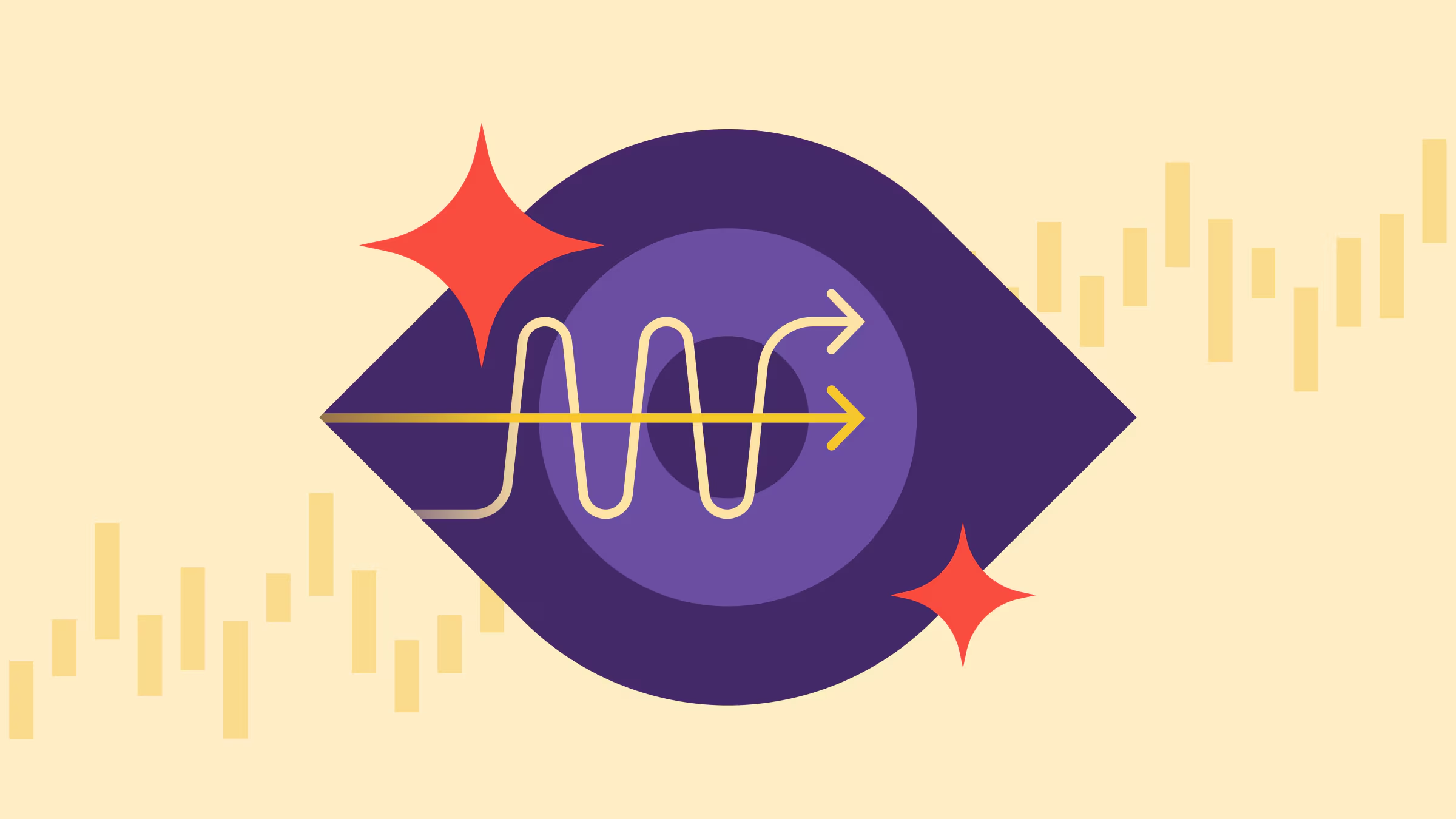
Nobody can predict what 2026 will bring, but investors must be prepared for a wide range of outcomes.
Trade tensions and tariffs remain a key topic. US tariff rates could rise further, affecting sectors such as pharmaceuticals and semiconductors, and new levies on China could cause further disruption. Equally important, our research suggests that the US economy has yet to fully absorb the tariff hikes already implemented.
Alongside trade, the Federal Reserve will continue to influence markets.
The Fed restarted its rate-cut cycle in September after a nine-month pause, prompted by warning signs in the US labor market. Fed cutting comes as other major central banks are expected to cut very little or not at all. While some investors worry about the erosion of Fed independence, the Fed’s commitment to inflation stability is deeply ingrained and is expected to endure any temporary political pressures.
Turning Information Into Knowledge
The year 2026 will test investor discipline in ways both familiar and new.
While it’s tempting to focus solely on investment factors when preparing for volatility, it’s just as important to consider behavioral aspects of how investors make decisions and process information during turbulent periods.
Volatility-related events often prime us to fall into behavioral traps that can lead to costly investor mistakes.
The graph below illustrates how investors reacting to tariff announcements earlier this year by pulling investments from the market would have missed out on strong gains later in the year.
Ways Advisors Can Help During Market Volatility
During these periods, advisors play a key role in helping clients avoid behavioral mistakes, in part by guiding their attention to what truly matters.
Research from Morningstar’s behavioral insights team found that, amid tariff uncertainty, the most common support clients wanted from advisors was market education—something many advisors provided. That education helped, as advisors said clients were more comfortable enduring volatility when given historical context and long-term data.
Market education goes beyond just providing more information about current volatility. It instills the knowledge investors need to make sense of events and offers an opportunity for advisors to shift the focus from short-term headlines toward long-term investment principles, emphasizing full market cycles and the value of staying invested over time.
How Investors Can Navigate Uncertainty With a Time-Tested Playbook
Investing requires grappling with structural uncertainty—dealing with outcomes that are unknowable ahead of time. We believe investors are best served by sticking to time-tested investment principles when navigating these episodes.
Morningstar’s investment team follows this approach:
Uncertainty Is Always Part of Investing
Uncertainty is nothing new. Humans are naturally wired to act at the wrong time.
The best approach is to recognize biases, prepare for a wide range of economic outcomes in 2026, and ground investment decisions in a disciplined, time-tested framework.
Related Stories
 Stocks & Markets
Iwai Cosmo Securities: 4,611 Customer Records Leaked Due to Unauthorized Access at Outsourced Partner
2 days ago
 Stocks & Markets
Stocks to Watch Today: ICICI Bank, HDFC Bank, Axis Bank, GPT Infra, RailTel, ACME Solar, Yes Bank, Urban...
2 days ago
 Stocks & Markets
Japanese Stocks Slide Amid Tech Selloff
2 days ago
 Stocks & Markets
Oxford spin-out OMass Therapeutics lands €275 million to bring novel small-molecule therapies closer to patients
4 days ago
 Stocks & Markets
Tech stocks erase $1 trillion of wealth as oil surges to $110 for the first time since May
4 days ago
 Stocks & Markets
Tech stocks tumble as AI debt fears rattle Wall Street
4 days ago
 Stocks & Markets
Stocks rebound after tech sell
5 days ago
 Stocks & Markets
Sensex Edges Higher on Tech Gains
5 days ago