
Massive cost of states’ uranium ban revealed following new Indian export deal
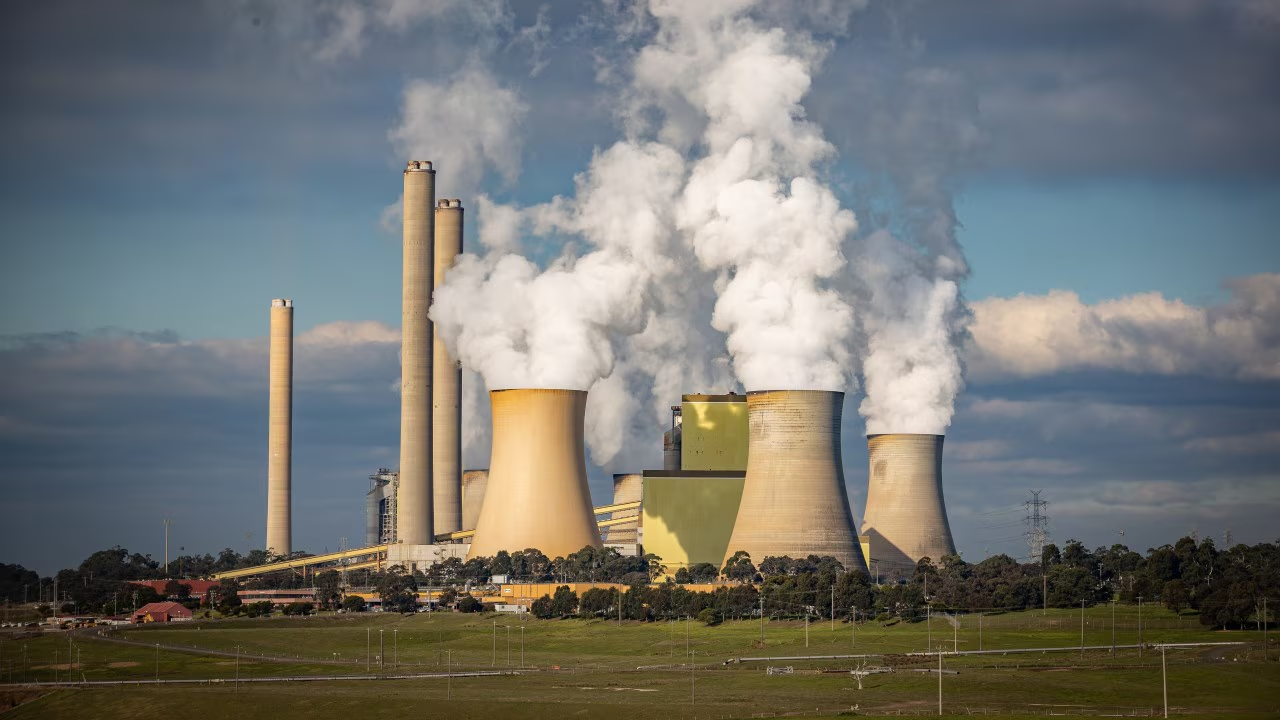
The federal government’s historic deal with India to export uranium could be worth billions of dollars to the Australian economy, but blanket restrictions on mining the commodity across much of Australia mean it could be a lost opportunity.
The centrepiece of Indian Prime Minister Narendra Modi’s visit to Australia this month was a landmark deal to supply the world’s fastest growing economy with uranium as it ramps up its plans to produce 100 gigawatts of clean nuclear energy by 2047.
Australia is the world’s third largest producer of uranium products such as yellowcake and sits on the world’s largest uranium deposits but just one state produces the commodity for export markets.
South Australia’s Olympic Dam mine produces the lion’s share of Australia’s almost 6,500 tonnes of uranium extracted annually, with other states banned from mining uranium under a moratorium on its procurement.
The deal inked by the Albanese government to sell uranium to India has reignited the debate over whether the ban should be lifted, especially in resource-rich states like Western Australia.
Peak mining bodies including the Minerals Council of Australia are calling for an end to the ban.
“You’ve got to get the basics right, and that’s lifting the prohibitions within our biodiversity and conservation act that doesn’t allow nuclear energy in Australia,” Chief Executive of the Minerals Council of Australia Tania Constable told Sky News.
“We have 30 per cent of total reserves of uranium here in Australia and can see more exploration across our states, South Australia is great, but the rest of the states are not doing their bit.”
To meet India’s uranium demands, MCA estimates suggest Australia would need to double its current production capacity of uranium – to more than 11,000 tonnes a year.
Former Labor cabinet minister Joel Fitzgibbon said it’s time for the government to rethink its policy on uranium mining, telling Sky News it would also help with energy security at home.
“We really need to lift those prohibitions in Australia, it’s embarrassing that we’re sending this stuff to the rest of the world but at the same time refusing to contemplate using it here, now some will say it’s not economical, that’s fine, lift the prohibition and let the market decide whether its economically viable or not,” he said.
Western Australia has some six per cent of viable uranium deposits but the development of new mines there has been banned since 2017.
There are four approved projects in that state, but mining has not commenced and that state’s Chamber of Minerals and Energy says uranium mining could boost revenue.
“It is estimated that it could generate around 9,000 jobs and around $1 billion in economic activity if those 4 projects go ahead,” the chamber’s chief executive Aaron Morey said.
Any change would require repealing state and federal laws and under current rules Australia only exports uranium to countries that use it for clean energy development and medical use.
Uranium use for weapons development is strictly prohibited.
Australia’s Resources Minister Madeleine King said South Australia’s Olympic Dam mine has enough uranium to meet India’s future demand.
Related Stories
'Jhooth ki Goonj deflated': Patra says ABVP’s DUSU win exposes ‘hollowness’ of Rahul’s narrative
2 hours ago
 India
India
Indian Right Has Not Built The Power That Will Outlast The Government
16 hours ago
 India
India
DUSU election 2026 | From Arun Jaitley to Rekha Gupta: Ex
19 hours ago
 India
India
'Black chapter in Indian democracy': KC Venugopal on Milan Pradhan's arrest ahead of Nandigram bypoll
20 hours ago
 India
India
Cabinet recommends ambassadors to 13 countries including India, China and US
23 hours ago
 India
India
Delhi University freshers get their first taste of campus politics
1 day ago
 India
India
Woman killed in Summerside remembered as doting mom and friend
1 day ago
 India
India
The politics of leverage
1 day ago