
Meet The Startup Hoping To Change The Way The World Uses Technology
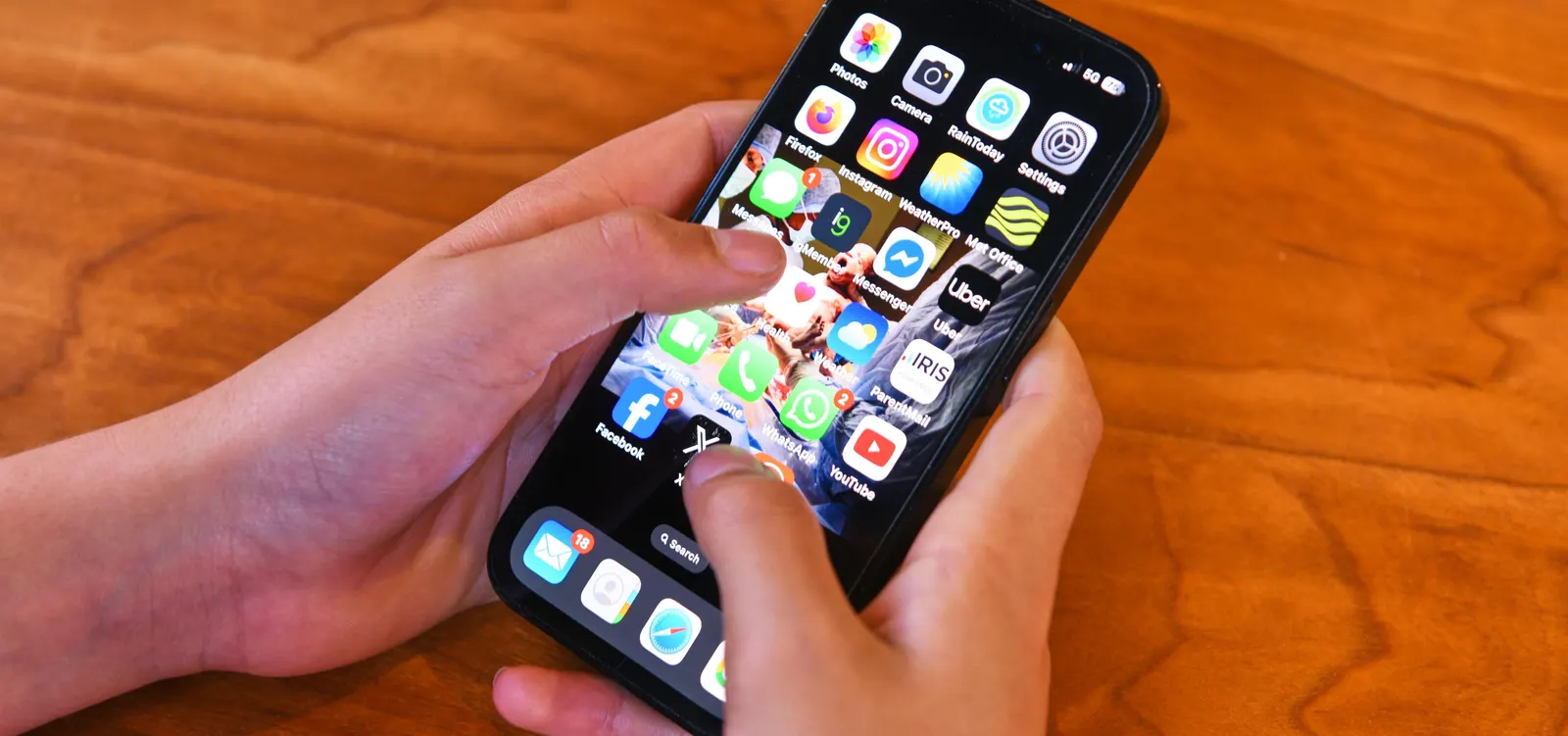
The artificial intelligence (AI) revolution is in full swing. For now, however, it is exclusively a software revolution. Apoorv Shankar, the founder of Aina, wants to change that. The Indian-US start-up is today announcing it has raised $5.5 million of funding to develop the hardware needed for the AI world. Shankar thinks Aina’s innovation could prove to be as groundbreaking and transformative as the launch of the iPhone.
Shankar has been obsessed with hardware for as long as he can remember, and spent much of the past decade at Ultrahuman, the company behind the health and wellness rings that millions of consumers now wear. Now he has his eyes on an even bigger prize. “We need a new interface designed specifically for the way we use phones and computers today,” he says. “That’s what we’ve set out to do.”
On paper, Aina’s thesis makes perfect sense. On the one hand, AI and AI agents are changing the way people interact with technology – we are constantly asking devices and tablets to carry out complex tasks comprising multiple steps, and working across a string of software applications all at once. On the other, we’re still managing those interactions through traditional interfaces – keyboards, mouses and touchscreens. Joining a virtual meeting, say, requires a string of clicks through several windows; calling a cab requires us to open an app, type in a destination and then follow a booking process.
Shankar thinks there has to be a better way. Aina has already developed Dune, a small device comprising just three keys that interacts with the software users are working with and provides access to common instructions through that much simpler interface. And now the company has the funding it needs to build on those foundations – to develop an even smarter piece of hardware that could fundamentally change the way we all use technology.
For all that, however, delivering on that thesis will be a big ask. Reimagining something as ubiquitous as a computer keyboard is quite the challenge; coming up with something simple but sophisticated enough to persuade millions of people worldwide to use technology in a different way will be even tougher.
Then there’s the competition to worry about. Many of the giants of the AI industry also have ambitions to disrupt the hardware market. Open AI, for example, has appointed Jonny Ive, the designer of the iPhone, to build a new generation of hardware for managing AI. Earlier this month, it launched GPT-Live, the latest generation of its voice model; the firm’s Atty Eleti told journalists: “Over time, we think this will also unlock the ability to use voice as a kind of primary interface to computing, and to manage increasingly complex long-running agentic work".
Still, Shankar professes himself unconcerned about the competition – and up for the challenge of developing hardware that can win the interface race. “I’m excited that we have an opportunity to build something which potentially puts us in the same league as those competitors,” he says. “If we get it right, we’ll be legendary.”
Time will tell. Aina rolled out three experimental interfaces at this year’s Consumer Electronics Show in Las Vegas, with Dune unveiled shortly after. It is now inviting people to join the waitlist for its next new launch, with a pilot scheme due to begin before the end of the year. Shankar is remaining tight-lipped on what this new interface will look like, other than to say it will build on the context-based approach the company pioneered with Dune.
“Today’s interfaces put everything in front of you and ask you to you figure out what you need; when you're doing hundreds of tasks a day, every moment spent navigating instead of acting adds up to real cognitive load,” Shankar argues. “The missing piece today is this context-aware layer paired with an easier way to capture human choice.”
Aina’s investors clearly believe Dune can pull it off – or perhaps that the company can develop something attractive enough to be salable to a larger player. Today’s fundraising gives the company $5.5 million to get the pilot scheme up-and-running, with Aina already equipping a small-scale production facility at its offices in Bangalore.
The funding round is led by Redstart Labs and 360 ONE, with participation from MIXI Global Investments, Antler, Blume Founders Fund and a number of business angels.
“We inherited the assumption that computers are tools – that you instruct, and they execute – but AI is quietly dissolving that line,” says Redstart Labs investor Vibhore Sharma. “One of the key questions that matters is how the relationship changes when software starts to understand context and the interface disappears; that's where new categories like Aina are born and where part of the future is hiding.”
At 360 One, head of venture capital Abhishek Nag adds: “Every leap in computing has demanded a new hardware interface, from punch cards to the GUI to the smartphone. As AI agents become the primary way for people to interact with computers, the world once again needs a new generation of interfaces built for how we’ll actually compute.”
Related Stories
 Technology
French Entrepreneur: Saudi Arabia is a Launchpad for Technology into Global Markets
15 minutes ago
 Technology
Apollo chief economist says ‘China Shock 2.0 is here’ and it’s bad news for American companies
15 minutes ago
 Technology
AI
2 hours ago
 Technology
NIST Researchers Supersize Quantum Technology to Help Detect Faint Photons
2 hours ago
 Technology
DTI Names Tina Donbeck Chief Technology Officer
2 hours ago
 Technology
USask signs agreement with Auckland University of Technology
4 hours ago
 Technology
Feature Article: Testing New Technologies that Help Law Enforcement ‘See’ Through Walls
4 hours ago
 Technology
Saab Seaeye SR20 eWROV Successfully Completes Inland Water Trials
4 hours ago