Meta, Microsoft and Amazon Test Limits of Investor Appetite for AI Spending

19th-century Parisian Opera crowds were so notoriously hard to please that companies hired paid sycophants, known as claqueurs, to clap, hoot and holler. AI hyperscalers might want to revive the tradition.
Last week, Alphabet reported the biggest quarterly profit in its history, with the $112.1 billion take almost quadrupling what it made a year earlier. The company’s shares fell more than 7%: Investors, racked by anxiety over the company’s massive capital expenditure plans, paid more mind to the Google parent hiking its 2026 spending forecast by $15 billion. Tough crowd. This week, Microsoft, Meta and Amazon get their turns.
To find out why higher AI capex has deepened investor worries about hyperscalers’ returns on investment, look no further than the $700 billion in combined capex Alphabet, Microsoft, Meta and Amazon are on track for this year. Wall Street forecasts that figure could top $1 trillion in 2027.
In a research note last week, Moody’s analysts warned capex plans could “threaten credit quality” at Alphabet, Microsoft, Amazon, Meta, Oracle and CoreWeave as they make the costly transition from asset-light models built around software, IP and cloud services to asset-heavy models requiring “unprecedented levels of investment and capital raising.”
“These companies are very large established players with, in many cases, pristine balance sheets, but they’re embarking upon almost unprecedented capital investment,” Moody’s vice president Kevin McNeil said on the ratings firm’s Credit Currents podcast. “And this increase in capital intensity is likely going to pressure credit metrics and is going to lead, in some cases, to negative free cash flow or at least diminished free cash flow.” Moody’s estimates direct debt at the six companies is roughly $460 billion, and McNeil said debt financing “could lead to increasing leverage and additional risk being borne on their balance sheets.” Meanwhile, UBS Global Wealth Management, in its commentary, suggested investors could be alarmed again this week:
Bad Omen: Moody’s emphasized that Alphabet, Amazon, Meta and Microsoft currently have rock-solid balance sheets, meaning their investment grade ratings are in little doubt for now. But Baa2-rated Oracle, to which Moody’s assigned a negative outlook, is only two notches from junk status. Last month, rival ratings firm S&P Global downgraded Oracle to one notch above junk.
Related Stories
 AI News
Bill Gross bets AI can help mass
1 day ago
 AI News
Nigeria records 93% rise in AI micro
1 day ago
 AI News
The Italian gelato maker using AI to invent new flavours
1 day ago
 AI News
Closing the Gap Between Agentic CX Pilots and Production
1 day ago
 AI News
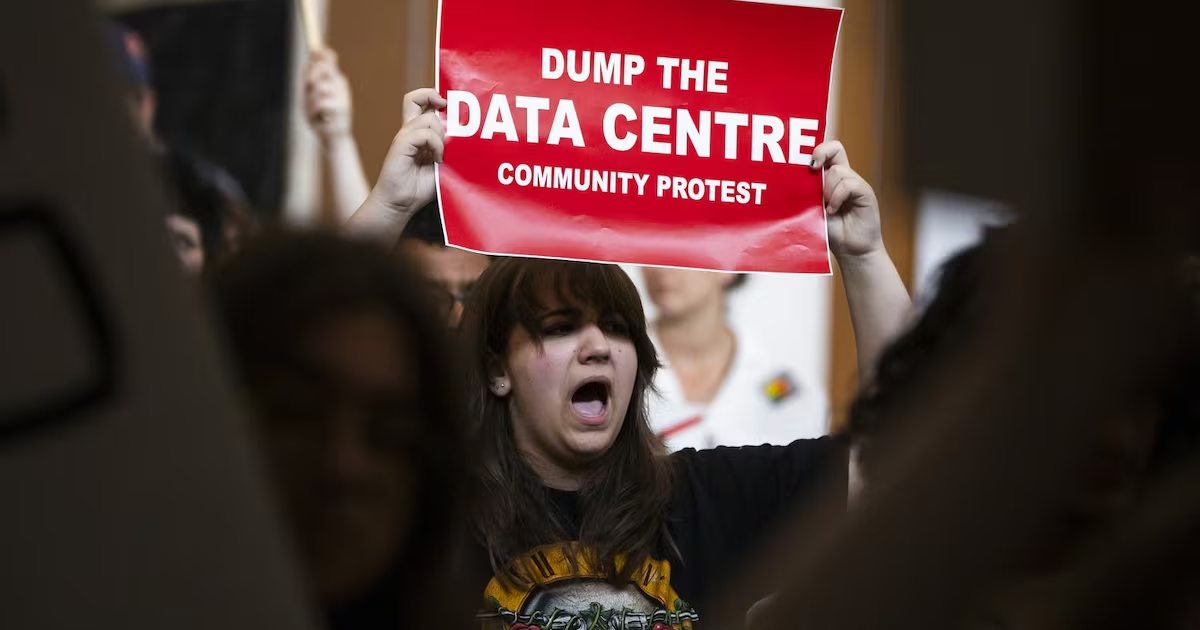
New Brunswick data centre debate highlights cross
2 days ago
 AI News
How to Structure an AI Agent Referral Fee Agreement Between Startups
2 days ago
 AI News
No, AI didn’t delete a Swedish reality TV series
2 days ago
 AI News
There is no AI in Armageddon. Artificial intelligence is a tool, not an apocalypse
2 days ago