
Moncton has 3rd highest per
Moncton has 3rd highest per-capita methamphetamine levels in wastewater study, data shows
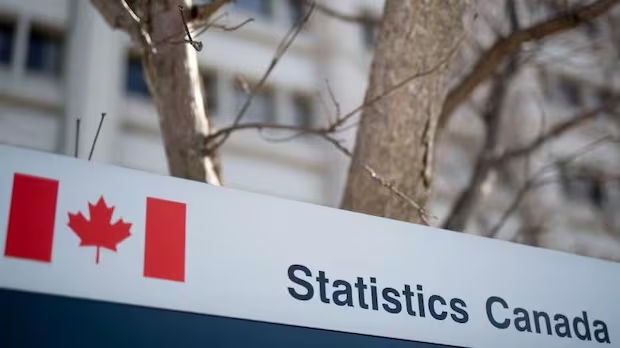
Statistics Canada survey measured levels in 8 Canadian cities
Results from a new study on wastewater in several Canadian cities show Moncton rating highly when it comes to methamphetamine traces found in samples.
The study by Statistics Canada covers the period from January 2024 to March 2026 and tracked traces of digested drugs within the wastewater of eight Canadian cities.
Results showed that Prince Albert, Sask., had the highest methamphetamine levels per capita, followed by Saskatoon and then Moncton.
A news release said that the “relatively elevated levels” in Moncton were consistent with data indicating that methamphetamine was involved in 63 per cent of stimulant toxicity deaths in New Brunswick in 2024, “the highest proportion among the Atlantic provinces.”
Sianne Kuang, an analyst with Statistics Canada, said in an interview that the study is done by measuring metabolites, which are chemical byproducts created when the body breaks down drugs before it is excreted.
“And then the amount of drug metabolized in the wastewater is a pretty good proxy of drug consumption within the area serviced by the wastewater treatment plant that we're collecting at,” Kuang said.
Data is 'pretty difficult' to obtain
She said the study is not perfect. The study used population data, but that can miss temporary changes in population such as commuting, tourism, or large events that bring an influx of people into a city, she said.
“And because of all this, it’s important to keep in mind that all data released today should be interpreted with caution and should not be taken to represent consumption perfectly.”
“What it can actually be is a really important and unique public health tool in that it provides rather objective population level information on the presence and trends of substances such as opioids, stimulants and other drugs,” Kuang said.
She said the data is "pretty difficult" to obtain in other ways because people are often hesitant to accurately report their illegal drug use.
The study, titled "Opioid and stimulant consumption patterns in select Canadian cities", then calculated the metabolite measurements against the population served by the wastewater treatment plant to get a per capita number for the results.
“Importantly, the values presented are estimates of the excreted amount of drug metabolites in the wastewater and do not correspond directly” to drug consumption, the study said.
Moncton recently added to study
The substances measured in the study include amphetamine, cannabis, cocaine, codeine, fentanyl, ecstasy, methadone, methamphetamine, morphine and oxycodone.
The study included Halifax, Moncton, Montréal, Toronto, Prince Albert, Saskatoon, Edmonton, and Metro Vancouver.
The monthly data shows that the Moncton data was only available for six months from March 2025 to January 2026, while most other cities had data from January 2024 through March 2026.
Kuang said this is because Moncton was the most recent addition to the study, so it’s difficult to speak to trends over time for that city.
But for the six months of available data from Moncton, the per capita readings, which the study called “daily loads per capita,” were the highest of all surveyed cities for five out of those six months.
CBC News requested interviews with both the City of Moncton and the provincial health department about the study results but did not receive an interview from either on Tuesday afternoon.
Sam Farley is a Fredericton-based reporter at CBC New Brunswick. Originally from Boston, he is a journalism graduate of the University of King's College in Halifax. He can be reached at sam.farley@cbc.ca
Related Stories
 Canada
New play space opens in park
23 minutes ago
 Canada
Motorcyclist dies after crash with car
23 minutes ago
 Canada
Saskatoon city hall gets bird friendly ahead of fall migration
23 minutes ago
 Canada
Residents prepare as Hurricane Polo threatens Mexico's southwestern coast
23 minutes ago
 Canada
Amid campaigns to loosen nicotine pouch rules, Canada’s health minister responds
23 minutes ago
 Canada
Heather Exner
1 hour ago
 Canada
France rebukes world over Gaza as Canada, UK back Palestinian state at UNGA
1 hour ago
 Canada
Search for Parker Wells was delayed by 911 issues: City of Calgary
2 hours ago