
NEET
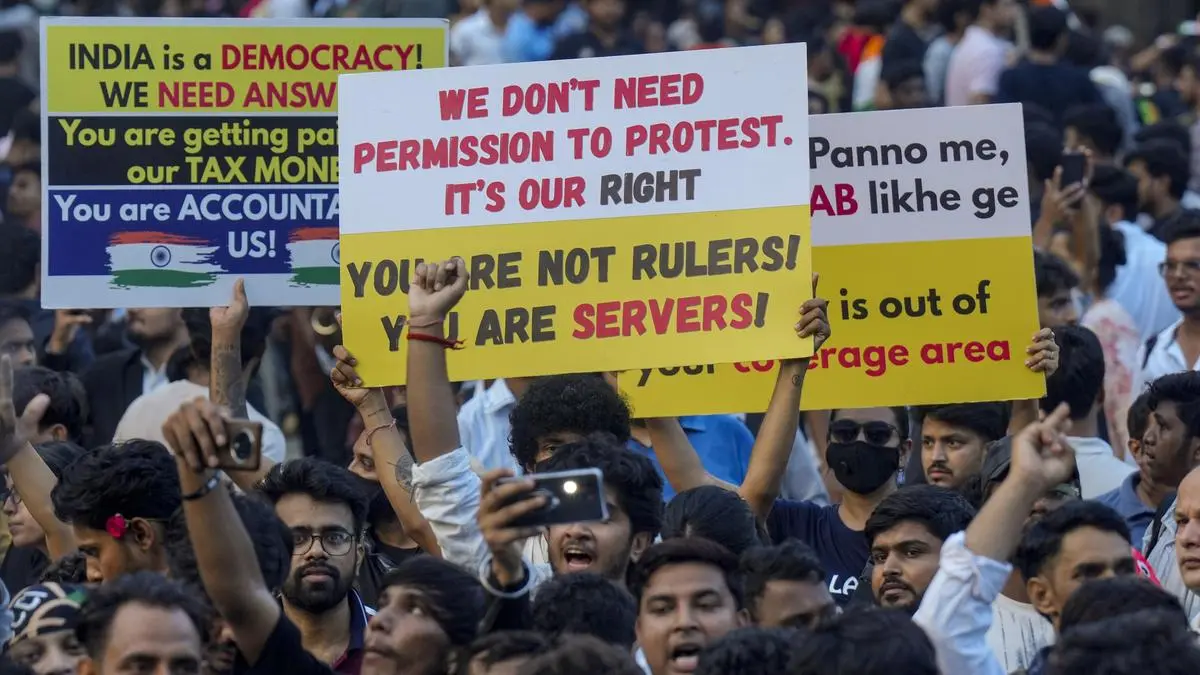
There is a time for everything, as it is said in Ecclesiastes. The time to fast has ended, and a new time has emerged. The stage of politics on the NEET-UG protests has shifted. When Sonam Wangchuk and the young left activists were fasting at Jantar Mantar from 28 June to 18 July, it was a moment of generating moral leverage through corporeal suffering, intensifying people’s sentiments, and creating a resilient atmosphere of resistance. It was the first step of a nonviolent civil disobedience movement. It had the desired effect when local citizens and civil society groups responded and gathered around the protest site to share their solidarity to the fasting activists.
The Delhi police removing Wangchuk from the protest site by stealth on 18 July was seen by people as highhanded and abrasive behaviour by the state. The outpouring of young students during the protest march to Parliament on 20 July was a ground-shifting moment. The movement that was spearheaded by the Cockroach Janata Party (CJP) and their leader Abhijeet Dipke had now spilled over into a wider cross-section of people. The original hunger strike managed to generate enough moral steam for the new generation to react.
It was India’s Gen Z moment, and while there were the immediate and obvious comparisons with Bangladesh and Nepal, the differences were more striking: students here did not participate in the march to topple a government or create anarchy, but to make their dissatisfied and dissenting voices heard by the government and the nation. There was shock and disbelief that the state responded to their demands with lathi charges and tear gas shells. State violence is paternal paranoia, a method to control disobedient citizens. In this case, the government’s radio silence on the CJP’s protest reeked of political indifference, a sign of authoritarian deafness. It could only mean one thing: protecting the Education Minister, whose resignation was the central demand of the CJP, had become paramount for the state.
The government miscalculated not just public anger, but also the spirit of the young. Generational idealism is at its peak in the 20s, and how far it is prepared to go, what risks it will take for a cause is difficult to predict. The important difference between the people and the government in this instance is that the people risk their lives, while the government risks losing its sovereign power. To clarify, I don’t mean that students protesting in the streets necessarily enter a zone of “bare life”, where they are stripped of political rights and legal protection, but that they enter a zone of risk where they could well face such challenges. Political commentators and activists have been writing about an “undeclared emergency” in India, which in theoretical terms means an undeclared, or suspended, state of exception. It defines a condition where someone’s politico-legal status is uncertain. The game of politics plays out here, in this indistinct zone between life and sovereignty.
Meanwhile, some interesting shifts have taken place in the last 24 hours. Wangchuk issued an appeal or suggestion to the CJP from Medanta Hospital in Gurgaon that the CJP “halt the movement for now and enter into a dialogue with the government”. Wangchuk should not assume that just because he graciously lent himself to the CJP movement and added his moral weight to it by his hunger strike, that he can now dictate his own wishes to the young activists. It is their movement, not his. Wangchuk is an ally, not the supremo. He cannot decide the direction of the CJP’s movement. And sure enough, that very night, Dipke announced at Jantar Mantar that while the students respected Wangchuk immensely and considered him their hero, they would continue the protest until Dharmendra Pradhan resigned. The crowd responded with a roar.
In a similar vein, in a television conversation, Wangchuk’s wife, Gitanjali Angmo, cast aspersions on the “sincerity” of the opposition’s strategy to protest outside the Prime Minister’s house on 22 July, asking the opposition to join hands with the students at Jantar Mantar instead. This sudden shifting of the onus on to the opposition appears to deflect the protest’s main concern, which is around government inaction and insensitivity. If there needs to be any criticism of the opposition’s role in the movement, it needs to come from the protesting students and not their real, or imagined, patrons. The most striking image of the opposition protest was Rahul Gandhi, as the Leader of the Opposition, being forcibly dragged off the street by policemen. Angmo had nothing to say about that.
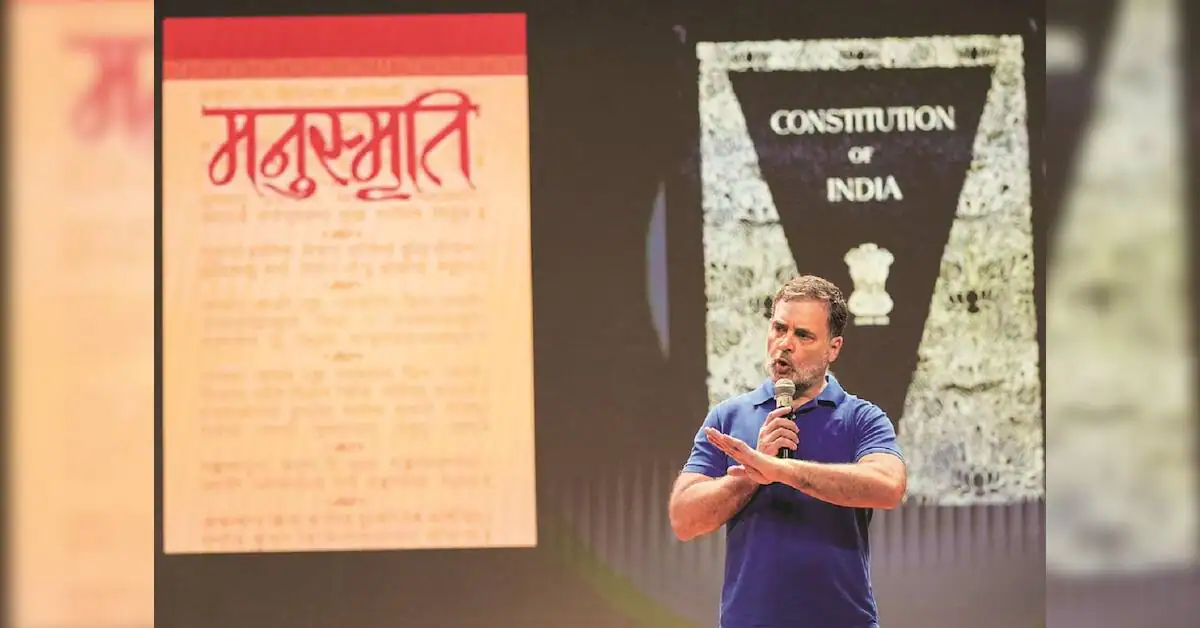
In his press conference yesterday, Rahul Gandhi clarified that he is happy to play second fiddle to the students’ protest. He said his task is twofold: one, to “express the will of the people”, and two, to “bring attention to where pain is felt”. This is a testament to genuinely non-paternalistic language. Gandhi seems to suggest that he is willing to be the ambassador of the people’s and, in this case, the youth’s aspirations. Since the politics of representation is a prerequisite to democracy (except the populist kind), Gandhi’s motivations and articulations are well within that grammar.
In this regard, I find the connection drawn between “will” and “pain” interesting. If the general will of the people associated with the common good takes us back to Jean-Jacques Rousseau’s 1782 treatise, The Social Contract, where does collective pain figure? I am reminded of Emmanuel Levinas here, who wrote in Otherwise than Being, or Beyond Essence (1974), of holding oneself “hostage” to the call of others’ suffering. Levinas uses the term “substitution” to explain the ethical impulse that is defined by an inescapable and pre-voluntary sense of responsibility towards others. This responsibility is of a sensuous nature hence corporeal, subjective, and open to vulnerability. The state and its institutions are incapable of this substitution. In politics, it requires a leader who cultivates empathy.
It is the time for clarity and for realising the exact nature of what is at stake. I would like to affirm here that political language will be the key. Governmental language is tactical and evasive at the same time, never open and forthcoming. It is part of the nature of modern sovereignty, which Giorgio Agamben described in Homo Sacer (1995) as force without substance. The government’s doors, like the door of the law in Franz Kafka’s parable Before the Law, are always open for you, but keep you forever abandoned as you seek entry to it. The dialectical language of the state survives by postponement, and is managed by violence. The language of the people is instinctively opposed to this, as it demands resolution and closure. The time has come for a democratic contest between power and people.
The writer is the author of Gandhi: The End of Nonviolence.
Also Read | Beyond Sonam Wangchuk
Also Read | Delhi Police crackdown turns CJP protest into a national challenge for Modi
Related Stories
 India
India
Sonia Gandhi: What will Congress leader's memoir reveal about India's most powerful political family?
1 hour ago
 India
India
Durban's Indian Diaspora: How KwaZulu
1 hour ago
 India
India
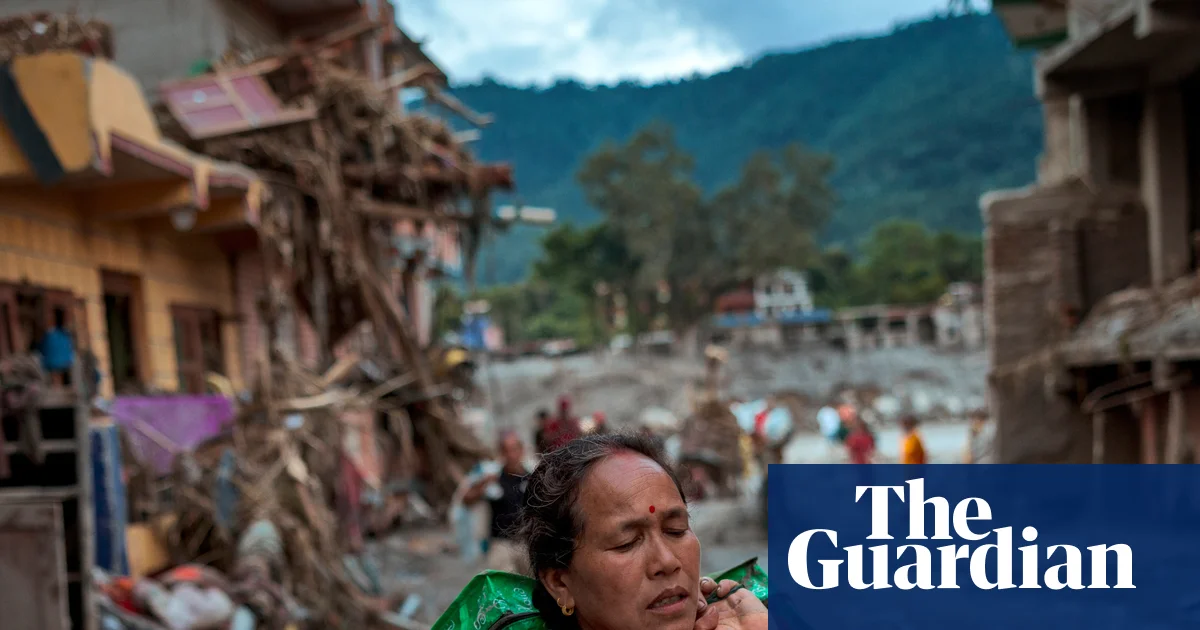
Chinese officials: Nepal glacier collapse triggered flash floods
3 hours ago
 India
India
The missing votes and the politics of electoral deletion
4 hours ago
 India
India
Nepal
6 hours ago
 India
India
"From Bharat to Bishkek": PM Modi accorded special welcome by Indian diaspora after arrival in Kyrgyz Republic
6 hours ago
 India
India
Hindu nationalist leader spurs protests and calls for sanctions ahead of New York City speech
7 hours ago
 India
India
Rahul Gandhi's new Gen Z playbook: Less script, more spontaneity
7 hours ago