
NP View: Alberta is already changing Canada
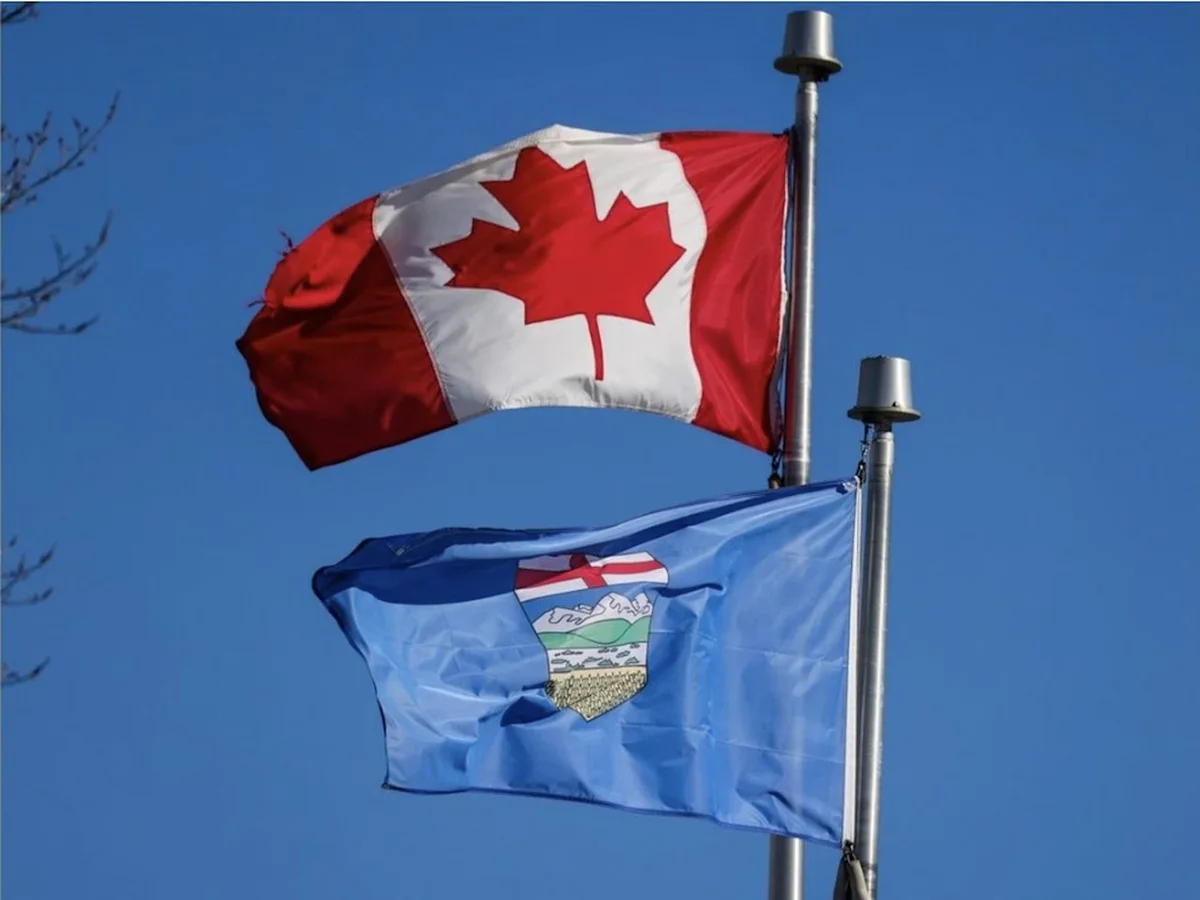
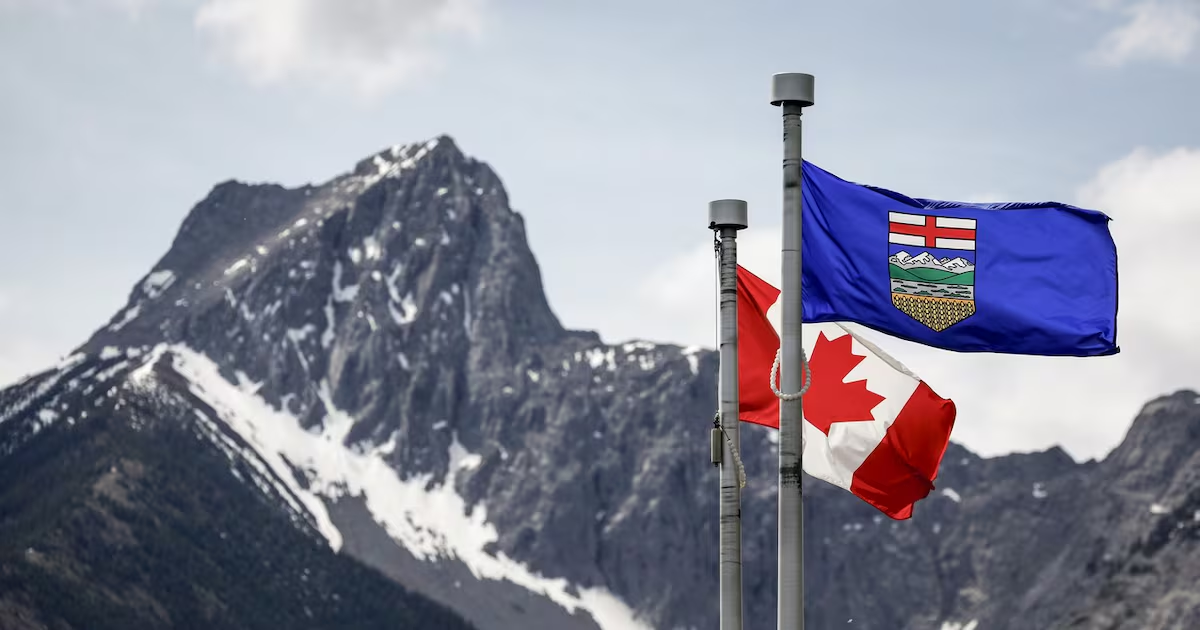
Alberta is claiming its place in Confederation. When polls open on Monday, we encourage Albertans to vote to remain in Canada, and reject the second option to begin pursuing a separation referendum. Alberta's challenges within the country are very real, but ultimately solvable — even if they involve some compromise, as is always the case in a democracy.
A strategy of changing the country from within is already working. The Impact Assessment Act was again found unconstitutional last Friday by the Alberta Court of Appeal, part of a successful effort by Premier Danielle Smith's government to challenge Ottawa whenever it steps out of its constitutional lane.
Smith also deserves credit for bringing Prime Minister Mark Carney closer to her view on the resource sector, even though we are still hesitant to celebrate a pipeline.
There is much more that should be done, but the prime minister has jettisoned, or watered down, or created workarounds for, several destructive policies brought in under his predecessor. We believe Carney should go much further, but that Ottawa has come this far is a testament to what Alberta can achieve when it applies appropriate pressure.
There has even been some positive movement on judicial appointments, which we doubt would have happened without the Alberta government raising the quality of judges as a central issue. In June, Carney appointed to the Supreme Court Manitoba Justice Glenn Joyal, who has a long history of criticizing judicial overreach. Similarly, just this month, lawyer and academic Malcolm Lavoie, who is respected among those skeptical of judicial activism, was appointed to the Alberta Court of King's Bench.
We hope to see more appointments like this and for Alberta to be more routinely heard.
It might be tempting to say that these successes were only possible because of the pressure provided by a looming referendum, and in one sense, it has been some time since Alberta has been this influential in national affairs. However, the province has successfully advanced its interests right from its inception. Alberta political leaders lobbied for provincehood, which was granted in 1905. Later, in the 1930s, and more directly in the 1980s, Alberta succeeded in gaining constitutional control over its resources.
The Smith government's approach today is a continuation of that legacy. It also helps that Mark Carney's support is drawn in part from moderates, even some conservatives, who want a clean break from the Justin Trudeau years. And despite the prime minister's penchant for big government solutions, he seems to recognize that Canada's resource sector is a key part of absorbing any trade damage inflicted by the United States.
Whatever role the possibility of a referendum has played, what matters is a government in Edmonton successfully making its case to Ottawa, building relationships with other provinces, and going to court whenever the federal government attempts to centralize a piece of provincial responsibility.
That said, the growth of a separatist movement in Alberta could have been predicted. Trudeau brought in policy after policy to suppress economic growth in the province, uniquely singling it out for the twin objectives of punishment and extraction. Across a range of economic indicators — bankruptcies, investment, wage growth — Canada, and specifically Alberta, is worse off than it otherwise would have been.
This wasn't an accident. When Liberal politicians have claimed that there is no business case for oil and gas, or for a new pipeline, it was because of choices the government made under Trudeau to suppress such a case, including the Impact Assessment Act, multiple carbon taxes and fuel regulations and the now-withdrawn threat of an emissions cap.
Albertans are also net contributors to federal social programs, paying more per capita, when accounting for transfers it receives back, than any other province. This state of affairs might not be so bad if the rest of the country didn't sometimes seem hell-bent on treating the province like little more than a piggy bank and a target for faddish environmental regulations. Though Albertans are wealthier on average, they shouldn't be exploited for it.
It is a relief that there has now been a break in hostilities, but the challenge remains to ensure things improve from here. We believe it is up to Albertans to make their case and it is up to Ottawa to recognize that what is good for Alberta is good for the whole country. The best vehicle for achieving this is through the Conservative Party of Canada, which has substantial representation in the West, but Alberta needs to work with whoever is in power.
Independence wouldn't just bring uncertainty and great cost; it would also make Alberta vulnerable, as a very small country, to foreign manipulation and pressure. If you think Canada is susceptible to foreign interference, imagine a country a tenth the size.
Separation is also not as straightforward and orderly as some independence advocates claim. While the Supreme Court's 1998 secession reference recognized an obligation on Ottawa and the provinces to negotiate in good faith with a province that votes to separate, there is no obligation to allow separation. Any unilateral declaration of independence would be unlawful, or "unconstitutional," according to the court.
Apart from that, Albertans are Canadians, with a shared history and culture that must be asserted more than it is — just as we must do a better job recognizing our brethren from across this great nation.
Carson Jerema: The separatist rebellion brewing in downtown Calgary
Rob Breakenridge: The economics of Alberta separation would be disastrous for everyone
Related Stories
 Canada
Cause of fiery Calgary bus crash that killed 3 passengers, injured 16 under investigation
28 minutes ago
 Canada
Waymo is coming to Toronto. Will its self-driving cars be winter
28 minutes ago
 Canada
Canada war
28 minutes ago
 Canada
Why Canadian Starlink subscribers (probably) shouldn't worry about U.S interference
1 hour ago
 Canada
Support for remaining in Canada rises ahead of Alberta referendum, new poll finds
1 hour ago
 Canada
In Canada's drone
1 hour ago
 Canada
How lost police evidence derailed a historic P.E.I. cold case murder prosecution
1 hour ago
 Canada
Canada’s Wonderland provides update on Behemoth and Leviathan roller
2 hours ago