
One Year In: Korea’s MSS Reports Record Venture Investment and SME Export Surge
One Year In: Korea’s MSS Reports Record Venture Investment and SME Export Surge
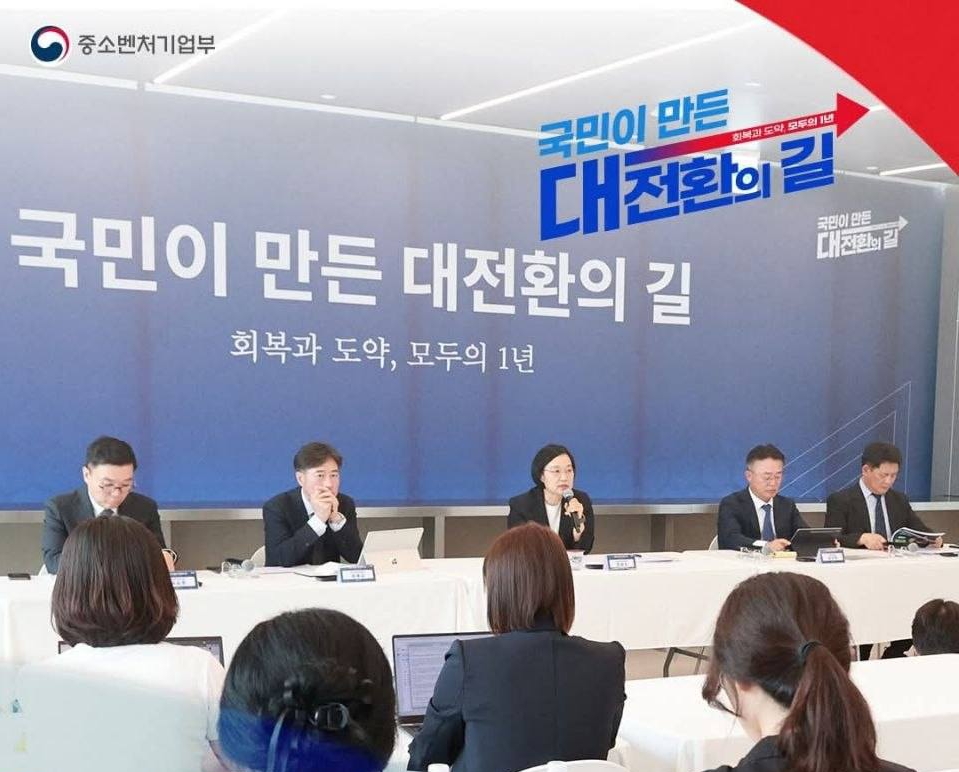
Korea’s Ministry of SMEs and Startups (MSS) has reported significant achievements in its first year under the Yoon Suk Yeol administration, with SME exports reaching an all-time high and venture investment maintaining robust growth despite global economic headwinds.
The ministry announced on January 20 that SME exports hit a record $137.8 billion in 2024, marking a 7.9% increase from the previous year. This growth came even as overall national exports remained flat, demonstrating the increasing competitiveness of Korea’s small and medium-sized enterprises in global markets.
“We’ve shifted from a subsidy-focused approach to one that emphasizes market-driven growth,” said MSS Minister Oh Young-joo during a press conference. “Our goal is to create an environment where SMEs can thrive through innovation and global expansion rather than relying solely on government support.”
The ministry’s new direction includes several key initiatives aimed at fostering sustainable growth. The government plans to increase support for AI-powered smart factories, helping SMEs adopt advanced technologies to improve productivity. Additionally, MSS will expand its K-Startup Grand Challenge program, which has successfully attracted international startups to establish operations in Korea.
Venture investment showed remarkable resilience, totaling KRW 6.8 trillion ($5.1 billion) in 2024, down only 3.7% from the previous year. This performance significantly outpaced other major markets, where venture funding declined by 30-40% on average. The number of newly established ventures also reached 1.89 million, the highest level in five years. Korea’s Venture Market Hits Second-Highest Q1 on Record
The ministry highlighted several success stories from its first year. Korean SMEs secured major contracts in emerging markets, including a $200 million deal with Indonesia for smart city infrastructure and a $150 million agreement with Saudi Arabia for renewable energy systems. These achievements demonstrate the growing global recognition of Korean SME capabilities.
Looking ahead, MSS plans to focus on three strategic priorities: expanding SME participation in global supply chains, accelerating digital transformation through AI and automation, and strengthening support for deep-tech startups in sectors such as biotech and advanced materials.
The ministry also announced plans to streamline regulations that have historically hindered SME growth. This includes simplifying licensing procedures for export businesses and reducing administrative burdens for startups seeking government funding.
Industry observers note that the ministry’s market-oriented approach represents a significant departure from traditional Korean industrial policy, which has typically emphasized direct financial support. “The shift toward creating a better business environment rather than simply providing subsidies is a positive development,” said Professor Kim Min-seok of Seoul National University’s Graduate School of Business. “However, the real test will be whether these policies can sustain SME growth in the face of intensifying global competition.”
The ministry’s performance comes at a crucial time for Korea’s economy, which faces challenges including slowing domestic consumption and increasing competition from Chinese manufacturers. SMEs account for approximately 99% of Korean businesses and employ 83% of the workforce, making their success critical to overall economic health.
As MSS enters its second year, the ministry has set ambitious targets: increasing SME exports to $150 billion and raising venture investment to KRW 7.5 trillion by the end of 2025. Whether these goals can be achieved will depend largely on global economic conditions and the effectiveness of the ministry’s market-driven approach.
Related Stories
 Business
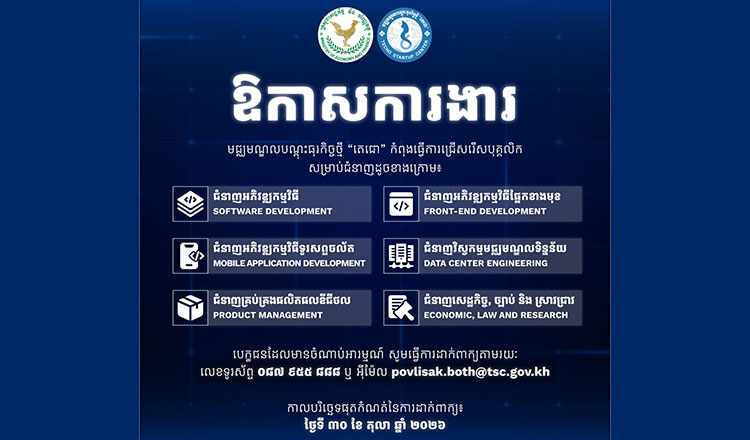
MEF seeks 25 contract staff for Techo Startup Center
1 hour ago
 Business
I left my $200K job before my business had paying customers. Here's why I stopped waiting for validation.
1 hour ago
 Business
'We're busy with vape and mobile phone customers'
7 hours ago
 Business
When a Bengaluru startup founder met a Gujarati businessman. A 10
8 hours ago
 Business
Hanjin Selected for Successive Government Support Programs for Small Businesses... Offers a "Growth Ladder" for Small Businesses
11 hours ago
 Business
ShuruKar: Your next business could start in your hometown
11 hours ago
 Business
Shin Yong-han drives startup-special Chungbuk to become Korea’s second Pangyo
16 hours ago
 Business
UP cabinet approves startup procurement scheme
19 hours ago