
Opinion: Who pays for Alberta’s dual
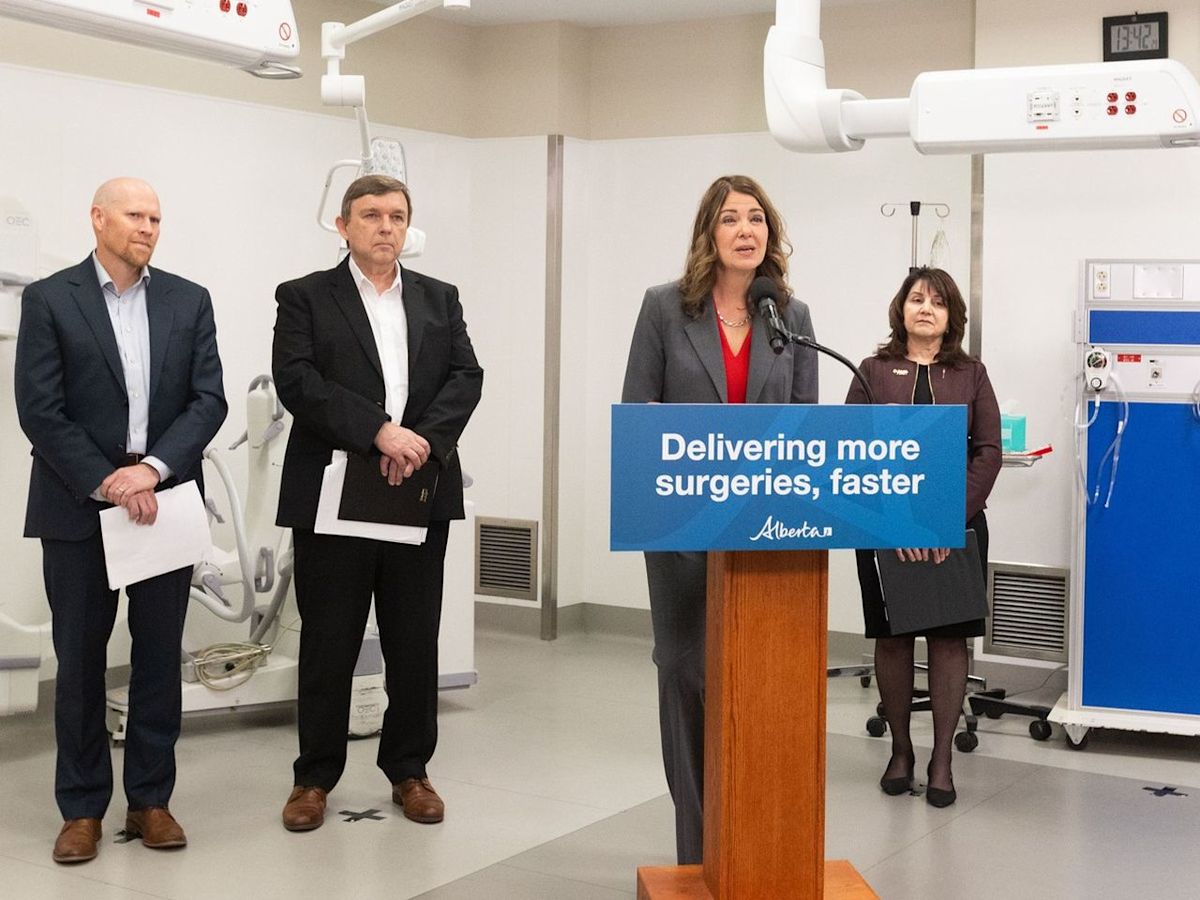
Alberta has moved toward a dual-practice health-care system where physicians can charge patients directly for faster access to care, while also providing care to patients funded by the public system. This is a first in Canada. Supporters claim this will expand choice and increase capacity. Opponents say dual practice undermines Canada's core value that health care should be available based on need, not the ability to pay.
But there is a question that deserves more attention. Who pays for the system required to make dual practice possible, and who bears the risks when it fails?
As a practising anesthesiologist, I was recently asked by the College of Physicians and Surgeons (CPSA) to provide feedback on nine revised or new proposed standards of care governing dual practice. CPSA is a self-regulating body largely funded by physician dues.
Developing, consulting on, implementing, and enforcing these dual practice standards, designed to protect patients from the harms of dual practice, is a huge project requiring substantial resources. These costs are borne by membership fees paid by all Alberta physicians, even though dual practice will involve only three per cent of physicians.
CPSA is not the only organization devoting resources to this new dual-practice system.
The Alberta Medical Association has work to do around dual practice. Physicians require medicolegal protection through the Canadian Medical Protection Association. Acute Care Alberta, a provincial health agency, must assess whether individual physicians are eligible to participate in dual practice. Governments must establish, administer, and oversee the system, including making a half-hearted attempt at monitoring whether physicians continue to work in the public system.
All of this consumes people, time, and money. These are not abstract administrative costs. They are public health-care resources. There's no doubt health-care workers will be diverted from the public-pay system into private-pay practice. But what about all the resources now being diverted into building the infrastructure necessary to create this new private-pay system?
Every dollar spent building this is a dollar that cannot be spent elsewhere. Every hour spent by a physician, lawyer, administrator, or regulator working on the problems created by dual practice is an hour that could otherwise be directed toward improving access in the publicly funded system.
Why should physicians who exclusively serve the public system, and taxpayers generally, bear the costs of building a private-pay system that will serve only those who can afford it? At the very least, these dollars should be recovered from profits derived from private-pay services, rather than absorbed by public resources and general physicians' dues.
The proposed CPSA standards acknowledge that dual practice creates a financial conflict of interest. They also require physicians to resolve conflicts of interest in favour of their patients.
But how does a physician providing preferential access for big money put patients first? That conflict is baked into the system. One proposed standard states that physicians must "consider the patient's ability to pay, including the possibility of waiving or reducing a fee on compassionate grounds."
What does "ability to pay" mean? Can a patient afford surgery because they can borrow money? Use retirement savings or delay retirement? Skimp on food? Where's the line? Those who can't afford to pay will just be sent back to the public system, not "compassionately" kept in the private system.
CPSA's standards also require that surgical records from private-pay care be added to the Alberta medical record within 30 days.
But surgical complications don't follow administrative timelines. A patient may attend a public emergency department days after private-pay surgery. Treating physicians need relevant records immediately to provide safe and timely care, not weeks later.
Fragmenting our system puts private-pay patients at risk, while adding stress to the physicians who care for their complications in our publicly funded hospitals.
CPSA is seeking input from physicians and the public on its proposed dual-practice standards. Albertans concerned about the implications should review the proposal and complete CPSA's survey before Oct. 14.
Albertans should worry about their access to health care. As a physician in the public system, listening to the conversations among my colleagues, I fear my children will not have the care they will actually need. All physicians take an oath to "do no harm." Yet under dual practice, those with money will be treated before those who are very sick and need it most. Tommy Douglas' vision for medicare was to prevent access from being determined by wealth. Dual practice undoes that principle.
Kaylene Duttchen is a practising anesthesiologist at the Foothills Medical Centre in Calgary. Survey: https://cpsa.ca/physicians/standards-of-practice/consultation/consultation-33/dual-practice/#draft-standard
We invite you to write letters to the editor. A maximum of 150 words is preferred. Letters must carry a first and last name, or two initials and a last name, and include an address and daytime telephone number. All letters are subject to editing. We don't publish letters addressed to others or sent to other publications. Email: letters@edmontonjournal.com
Bookmark our website and support our journalism: Don't miss the news you need to know — add EdmontonJournal.com and EdmontonSun.com to your bookmarks and sign up for our newsletters here.
You can also support our journalism by becoming a digital subscriber. Subscribers gain unlimited access to The Edmonton Journal, Edmonton Sun, National Post and 13 other Canadian news sites. Support us by subscribing today: The Edmonton Journal |The Edmonton Sun.
Related Stories
 Canada
Carney says he cannot guarantee India will no longer be involved in crimes in Canada
56 minutes ago
 Canada
FBI adds Bishnoi gang member accused of ordering murder of B.C. Sikh activist to most
56 minutes ago
 Canada
FBI offer US$1M reward for information leading to arrest in Nijjar killing
56 minutes ago
 Canada
Voters want transit fixed. How did we get here?
56 minutes ago
 Canada
Trump says Canada ‘entitled’ as his trade ban on alcohol, other goods nears
56 minutes ago
 Canada
FBI adds man accused in Nijjar assassination to most wanted list
1 hour ago
 Canada
How Canada used the Indian Act to target Indigenous leaders
1 hour ago
 Canada
MLT Aikins advises on acquisition of 13 orthodontic clinics across Canada
1 hour ago