
Provost Urges DTU as Technological Anchor Amid Uncertainty
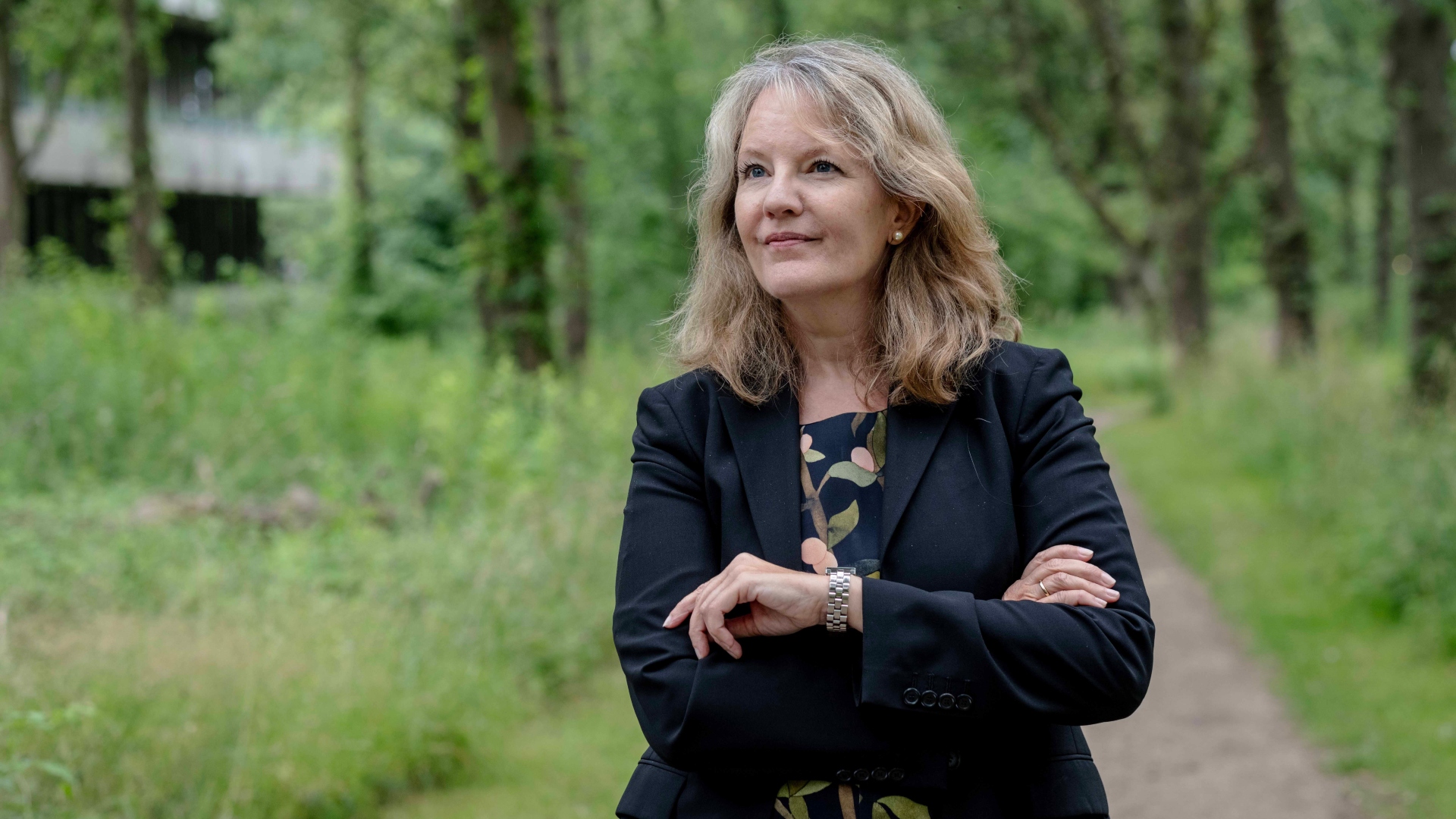
As one of Europe's leading technical universities, DTU works every day on education, research, and innovation that drive growth, prosperity, and sustainable change in Denmark and Europe.
At the same time, DTU develops technology that has significant societal impact, and with that comes a responsibility to speak openly about the technology's possibilities and ethical dilemmas, says DTU's provost Christine Nellemann.
She is the driving force behind the fifth focus area in DTU's strategy for 2026–203 1: Scientific leadership and democratic responsibility. Here, Christine Nellemann elaborates on what these concepts mean and how DTU plans to put them into practice.
What does it mean for DTU to take scientific leadership and democratic responsibility?
In a world where technological development is advancing faster than ever before; where technology has become an even more central part of people's academic, professional, and personal lives; and where critical technologies such as artificial intelligence and quantum technology have become a key factor in international competition that affects security policy and the balance of power, there is a need for knowledge and insight.
Both regarding the potential of these technologies and the risks of misuse and ethical dilemmas.
We have that knowledge and insight at DTU, and we need to go out and put it to use to an even greater extent. Among other things, by saying: We understand the technology; we know its potential, but we also see some dilemmas that society will have to address.
This may involve the development of new technology or its actual application, so that we ensure the technology benefits society and supports democratic values such as freedom, equality, the rule of law, tolerance, and respect for human rights.
In this way, we demonstrate scientific leadership and take democratic responsibility for the technology we help to develop.
Why should DTU be the one to take on that role?
It is a fundamental principle that universities should be as open as possible about the research that society helps to fund.
Openness and knowledge about the technologies that dominate our society have become even more important as the world has grown more unpredictable and large tech companies with a closed-door approach have gained power and influence.
DTU serves as a counterbalance to this. The university holds a strong position as one of Europe's leading technical universities and has a long tradition of benefiting society through, among other things, collaborations with government agencies, companies, and organizations.
DTU's research encompasses current, socially critical areas such as energy, digitalization, food safety, climate resilience, infrastructure, and defense, and involves work on critical dual-use technologies that can be used for both civilian and military purposes.
Consequently, DTU's research has significant societal and political relevance, which gives us both the opportunity and the responsibility to be a prominent voice in the public debate. This means that DTU takes an active stance on the application of new technology to ensure it supports democratic values.
When is it necessary for DTU to step in and take on that responsibility?
There are two paths that DTU is already pursuing and must intensify going forward.
One involves providing advice and recommendations to the authorities so that our decision-makers can more proactively regulate and establish a framework for the use of new technology based on knowledge and evidence.
The other involves educating the general public about ethical issues, dilemmas, and solutions, so that DTU helps ensure the public discourse on new technology is shaped by knowledge rather than gut feelings.
In this regard, DTU must stay ahead of the concerns and issues that matter to the public, so that we can prevent misconceptions, enrich the democratic discourse, and offer insights and solutions to technological challenges.
How can DTU researchers help take on scientific leadership and democratic responsibility?
First and foremost, by communicating their knowledge to the outside world and by having the courage to speak up when ethical issues arise. Only through open discussion of technology's possibilities and limitations can we prevent misuse and elevate ourselves as a society.
In addition, DTU emphasizes that researchers should consider and integrate ethics, social understanding, and critical reflection into the research design from the outset, so that DTU develops new technology with an awareness of the risks of misuse and exploitation from the very beginning.
It is also important to incorporate diversity into the research team and to engage in interdisciplinary collaboration with researchers from other fields, so that blind spots are identified and the relevance, societal impact, and accountability of the research are enhanced.
Finally, DTU's researchers can demonstrate scientific leadership by having the courage to ask the questions that no one else is asking. These may be questions that help close gaps in knowledge or questions that challenge the way an experiment has always been conducted.
Just because something has always been done in a certain way doesn't necessarily mean it's the most appropriate approach.
Doesn't DTU make itself vulnerable to criticism by speaking so openly about dilemmas and ethics?
Yes, there is a risk of being seen as those who are spreading technological fear. Or that the knowledge DTU disseminates conflicts with powerful interests.
On the other hand, there are also numerous benefits for DTU and individual researchers, including increased visibility, democratic influence, political attention, and credibility in the public eye.
Should a researcher who has participated in the debate within their field be subjected to public criticism, it is important to emphasize that he or she has an entire organization behind them, ready to offer support.
How will DTU educate engineers who can assume scientific leadership and democratic responsibility?
DTU's students are not only to be educated to become Europe's best engineers. They must also be prepared to assume scientific leadership in the companies that hire them after graduation.
The Danish business community needs top executives with technical expertise, which is why DTU will place a focus on leadership in its degree programs. The goal is for more of DTU's engineers to be equipped to assume strategic leadership roles in companies.
What is DTU's goal for this overall initiative?
DTU aims to disseminate technological knowledge and insights to the wider community so that decision-makers, businesses, and the general public are able to make decisions and form opinions on an informed, evidence-based foundation.
At the same time, DTU itself must adopt a reflective and critical approach to the development of new technology, ensuring that blind spots and ethical dilemmas are addressed from the outset—both when new research groups are established and when research designs are formulated.
In this way, DTU enhances its value as a proactive and credible knowledge partner. DTU becomes a technological anchor that the surrounding society can count on amid all the unpredictability.
Related Stories
 Technology
Startups, Small Businesses Will Drive Job Creation In AI Era: Nandan Nilekani
45 minutes ago
 Technology
MTN Ghana Launches DigiFest 2026 With Three
46 minutes ago
 Technology
Danish IT company secures £215m NHS screening technology contract
1 hour ago
 Technology
ZAWYA: Bapco Energies deploys Andium tech to strengthen emissions monitoring
1 hour ago
 Technology
Chhattisgarh: NIPUN Mission to integrate startups, skills, emerging technology and employment
5 hours ago
 Technology
Mercedes-Benz Korea Begins 100
8 hours ago
 Technology
First Focus boosts NZ presence through Resolve Technology buy
8 hours ago
 Technology
Time to plug chip design gap as Semicon 2.0 seeks to boost startups
9 hours ago