
Recent history shows mountain flying brings unique dangers, risks
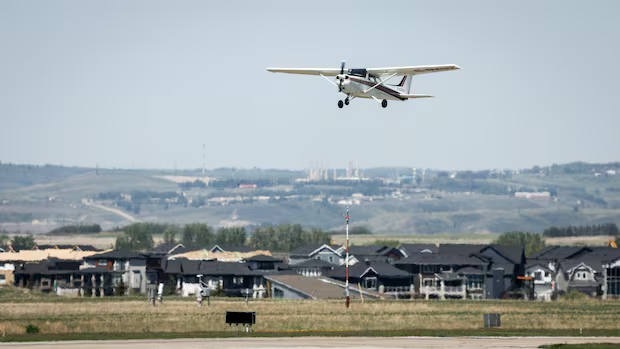
Recent history shows mountain flying brings unique dangers, risks
14 people have died and five injured in aircraft crashes close to the Bow Valley since 2003
A series of recent incidents involving aircraft in the Canadian Rockies is highlighting the difficulty that can come with flying in the mountains.
Since 2003, 14 people have died and five were injured in aircraft crashes close to the Bow Valley.
David deJong, a professor at University of Alberta’s mechanical engineering department, said route planning and weather forecasting are critical.
“They’re flying among the mountains as opposed to above the mountains. In clear weather, that’s great. If you get in a situation where the weather deteriorates or it’s not as forecast and you can’t see as well, that becomes quite dangerous,” the long-time pilot said.
Kathy Fox, the former chair of the Transportation Safety Board of Canada (TSB), said mountain weather can quickly change.
“Depending on the winds, you can get quite a bit of updraft and downdraft, which depending on the aircraft may be difficult to compensate for,” she said.
Recent incidents in mountain terrain
Two people were killed earlier in September when their plane hit Mount McDougall close to Kananaskis Village. The TSB is continuing to investigate.
And on Sept. 22, a small plane landed on the Trans-Canada Highway in Banff National Park.
David From, the pilot, told CBC's The Eyeopener Sept. 24 he was flying from Chilliwack to Red Deer when fuel pressure dropped because of an issue with the fuel pump.
“Just wheeled her around and landed it where I did and no problem with traffic,” he said, adding he was a long-time crop-duster and has landed or taken off from roads about 3,000 times.
A small plane also landed at the grass airfield near the Banff townsite in July near Cascade Mountain. The airfield is only used for emergency and diversionary landings since wildlife is frequently in the area.
In 2023, a plane hit Mount McGillivray and killed six people. The TSB determined the cause was bad weather and the pilot choosing to continue to fly in reduced visibility.
According to Parks Canada rescue data from 2017 to 2025, crews responded to 13 aircraft incidents in the Canadian Rockies, which were primarily minor helicopter incidents. In the same timeframe, Kananaskis Mountain Rescue responded to eight.
Fox said forecasted weather “can often change,” meaning the route of a flight is “quite important.”
Mountains long dangerous for flights
The Canadian Rockies have been the site of several aircraft tragedies dating back to the Second World War.
In 1941, a Royal Canadian Air Force plane hit Mount McDougall after it was flying too low and got caught in a canyon. Two people were killed.
The most infamous airplane crash in Kananaskis was in 1986 and known as the rescue 807 crashes. A plane with two people on wildlife research crashed into Mount Kidd, leading to a rescue mission. A rescue plane then hit Mount Lougheed, killing all three people on board.
A subsequent rescue plane from the Canadian Armed Forces crashed with eight people on board after an illusion from the sun and lack of shadows on the surrounding landscape left the pilot believing the mountains were farther away than they were, investigators concluded.
In all, 13 people were killed in eight days and Memorial Lakes near Kananaskis Village was renamed in remembrance.
‘There’s no straight line routes in the mountains’
The majority of aircraft flying in the mountains are small planes and helicopters.
A light aircraft without a turbocharged engine gets its best performance at about 2,450 metres above sea level, said deJong. The highest peak in Kananaskis is Mount Joffre at 3,450 metres. However, Kananaskis mountains typically range from 2,000 metres upwards.
Both Fox and deJong said pilots will fly through valleys and follow roads, rivers and rail lines.
“Typically we’re flying in between the mountains. In the Prairies, we don’t have to think about that,” he said.
Transport Canada’s Aeronautical Information Manual has a specific section on flying in mountainous areas. The federal department also has a pamphlet to further help pilots.
Most small planes are also unpressurized, necessitating flying at lower altitude. The air flow can be faster in the mountains and change drastically, impacting instruments and creating more turbulence, said deJong.
He said flying at higher altitudes can impact both the plane and the pilot since there’s less oxygen. The plane would need to fly a bit faster to create more lift, but since the air is less dense, the engine has to work harder.
“There’s no straight line routes in the mountains. It’s really awkward going from Springbank to anywhere in lower B.C.," said deJong. "All the mountain ranges are basically perpendicular to the routes, so there’s lots of zigzagging needed to traverse the mountains if you’re going through them.”
Greg Colgan is a journalist for CBC in the Bow Valley. He was previously the editor of the Rocky Mountain Outlook in Banff and Canmore. He has also worked for media outlets in Ontario and has experience covering topics such as sports, politics, housing and development, courts and arts and entertainment. He joined CBC in 2025. He can be reached at greg.colgan@cbc.ca.
Related Stories
 Canada
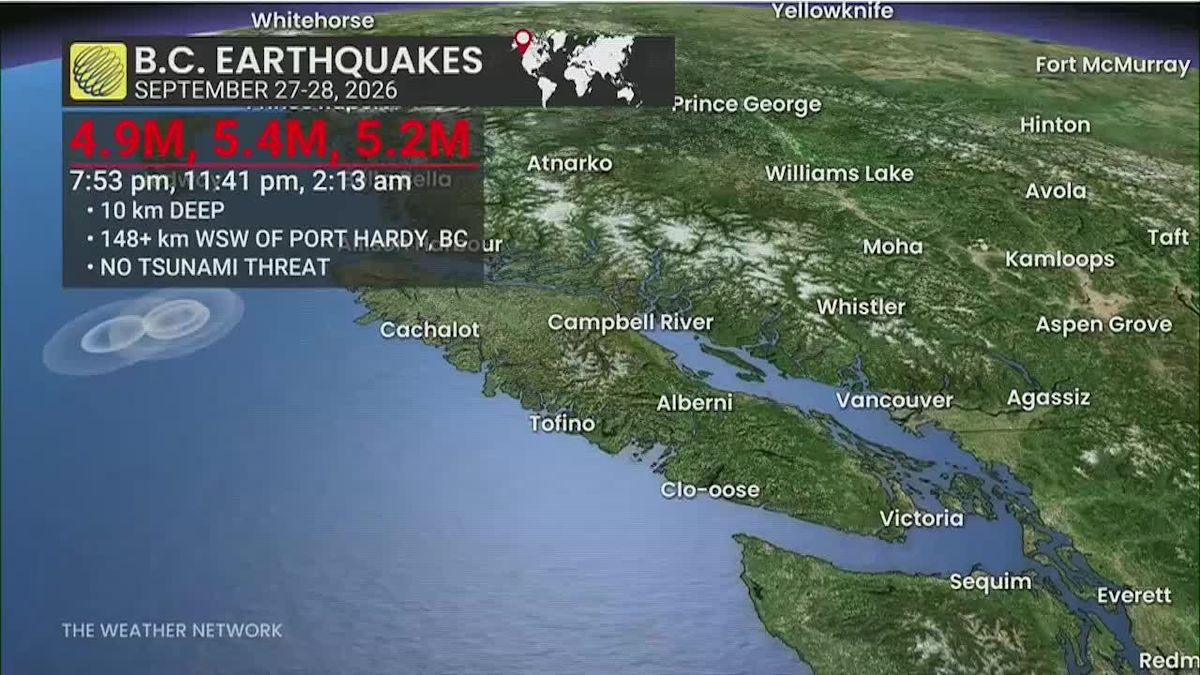
Three Strong Earthquakes Strike Off British Columbia Coast
52 minutes ago
 Canada
Trump asked China’s president if he wants to buy U.S. arms, ambassador says
52 minutes ago
 Canada
LILLEY: Why Carney might gamble on a December election
1 hour ago
 Canada
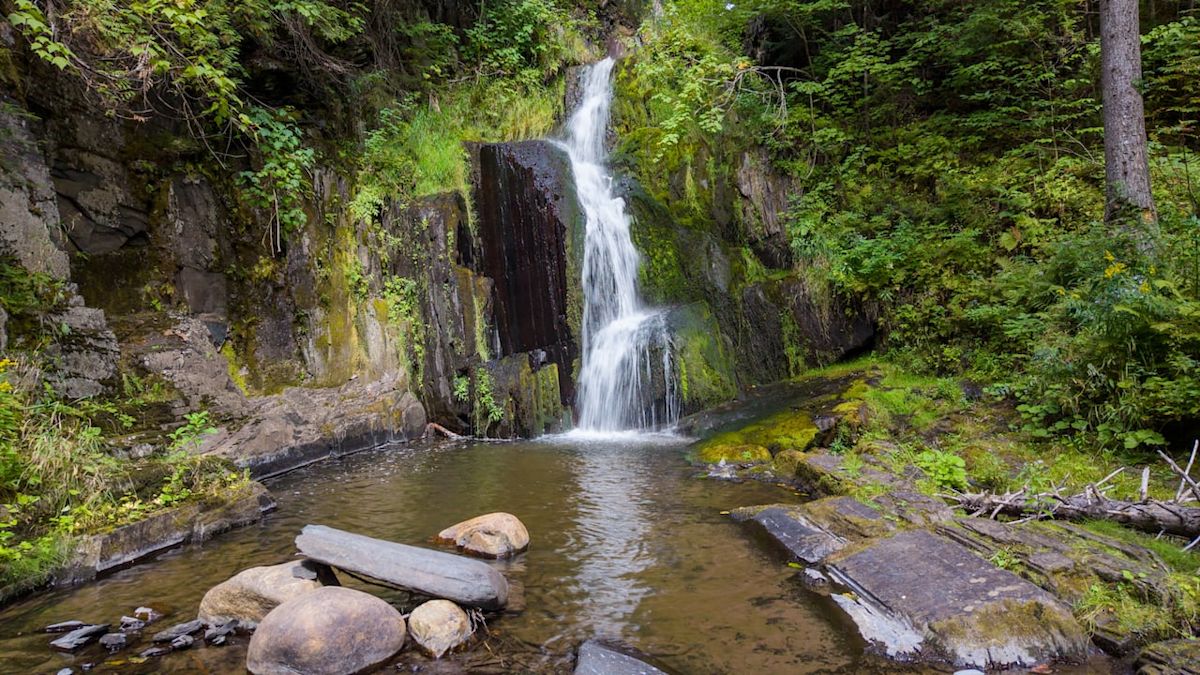
Waterfalls of New Brunswick: Falls Brook Falls
1 hour ago
 Canada
Speed over species? What experts are saying about Ottawa's new major projects bill
1 hour ago
 Canada
Why a plunge in asylum claimants is helping Ontario cities overhaul their strained shelter systems
1 hour ago
 Canada
Some Manitobans waiting years for human rights investigations
2 hours ago
 Canada
Trump's tariffs are unpopular in Maine. A Republican senator may pay the price
2 hours ago