
Saskatchewan government to seek quicker penalties for drunk drivers
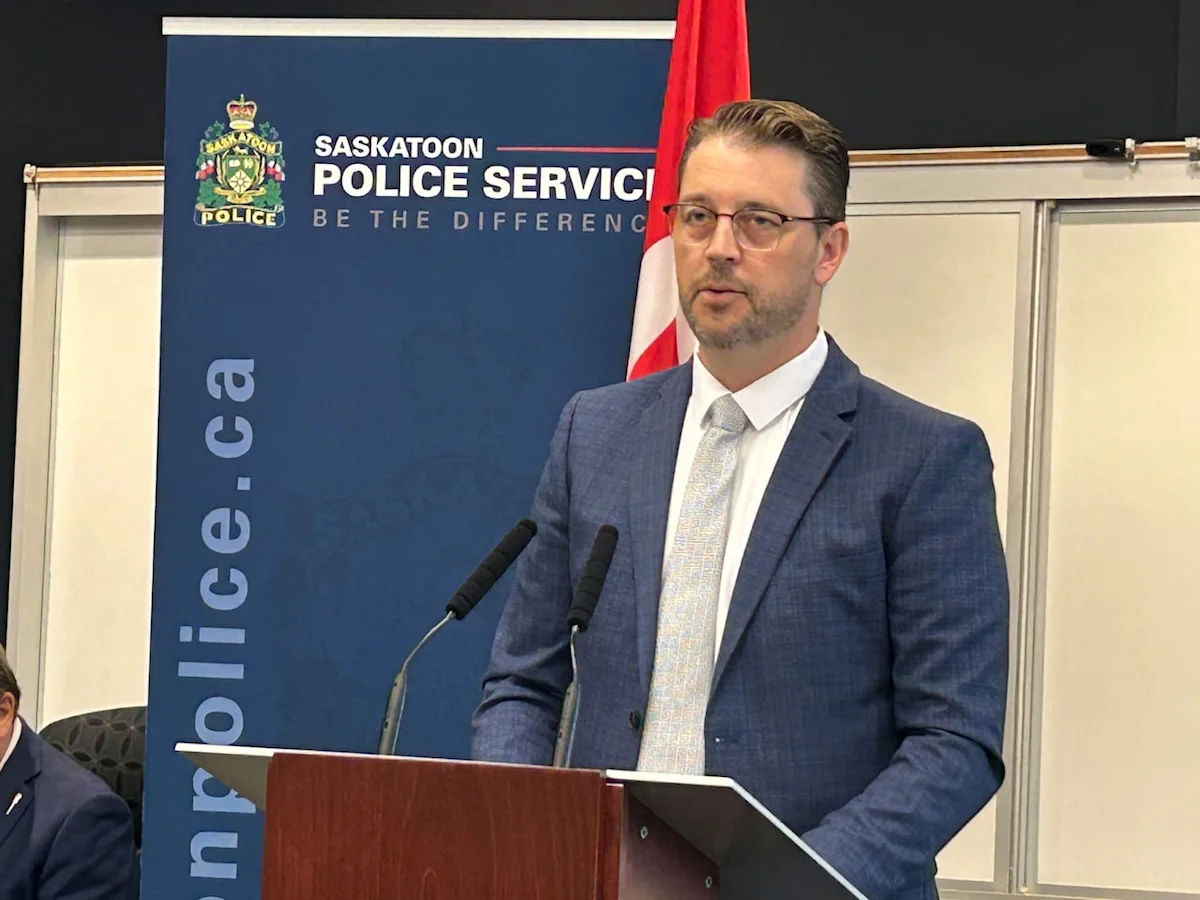
Saskatchewan Justice Minister Tim McLeod is unconcerned with the prospect of fewer criminal charges for drunk drivers if it makes the province's streets safer.
McLeod announced Monday the provincial government intends to move toward administrative penalties for those who fail a roadside breath test to avoid the time and resources it takes to pursue criminal charges. The potential changes would be made to the Traffic Safety Act.
The decision on whether to pursue criminal charges will be made by police officers on the spot, McLeod said, unless drivers are involved in a collision or are transporting someone under 16.
In those instances, Criminal Code of Canada charges would always be pursued.
"Our primary goal is community safety and making sure we get impaired drivers off the streets as quickly as possible," McLeod said. "And the deterrent factor with administrative penalties, making sure that we don't have repeat offenders as well.
"And so, if the added advantage of that is we lighten the burden upon our court system, that's great."
McLeod pointed out administrative penalties are already imposed for those who register a blood alcohol level between .04 and .07 in Saskatchewan.
Under the proposed changes, the penalties that would be imposed for drivers who register .08 or higher but are not charged criminally would include immediate suspension of their licence and the vehicle being impounded.
They would also face using an ignition interlock, taking impaired driving education courses and getting demerits on their licences. A first offence would result in a $1,300 fine, and subsequent offences would mean a $2,600 fine.
Steve Sullivan, CEO of Mothers Against Drunk Driving Canada, said in an email that British Columbia introduced similar administrative penalties in 2010, and that Alberta, Manitoba and New Brunswick have followed suit.
He said the penalties in B.C. were introduced at the same time as other changes, so it's difficult to link statistics directly to them. But Sullivan said B.C. recorded a 50 per cent decrease in impaired driving deaths in the 10 years after the penalties were introduced.
Regina police Chief Lorilee Davies said the new measures will free up time for officers who would have previously spent hours in court if a criminal charge was pursued. She said that's important at a time when police resources are stretched thin.
"The immediate sanctions at roadside will free up time for our members while still ensuring immediate and meaningful sanctions," Davies said at a news conference alongside McLeod at the Saskatoon police station.
"The time at the initial call is just a part of the significant amount of time we spend in impaired driving investigations."
Sullivan appeared at the news conference to lend his support for the new rules, along with Bonny Stevenson, president of MADD Saskatoon.
Stevenson's 17-year-old son, Quinn, was killed by an impaired driver 13 years ago. She said she believes the new approach would help save lives by keeping drunk drivers off the streets.
"My son should be here today," Stevenson said. "We cannot change the choices that took his life, but we can take action to prevent other families from experiencing that same devastating pain."
Several speakers said Saskatchewan continues to have the second-highest rate of impaired driving in Canada and, on average, 37 people are killed and 360 injured in impaired driving incidents in the province each year.
McLeod said the new penalties would only apply to impairment by alcohol. The province expects to introduce legislation in the fall.
Related Stories
 AI News
A Defining Moment in Chicago Sports: Chicago Fire FC Acquires Global Football Icon Robert Lewandowski
40 minutes ago
 AI News
World Cup knockout stage preview: Three intriguing games to watch
40 minutes ago
 AI News
🚨 World Cup embarrassment complete: Germany are out
41 minutes ago
 AI News
Paraguay stuns Germany in penalties, advances to Round of 16
41 minutes ago
 AI News
Germany's biggest World Cup shocks: Where early exit to Paraguay ranks among most disappointing results
41 minutes ago
 AI News
Health Canada approves first generic weight
41 minutes ago
 AI News
Tornadoes, golf ball
41 minutes ago
 AI News
Canadians exposed to hantavirus on cruise ship complete isolation period
42 minutes ago