
Second BRICS Culture Working Group Meeting To Be Held In Varanasi
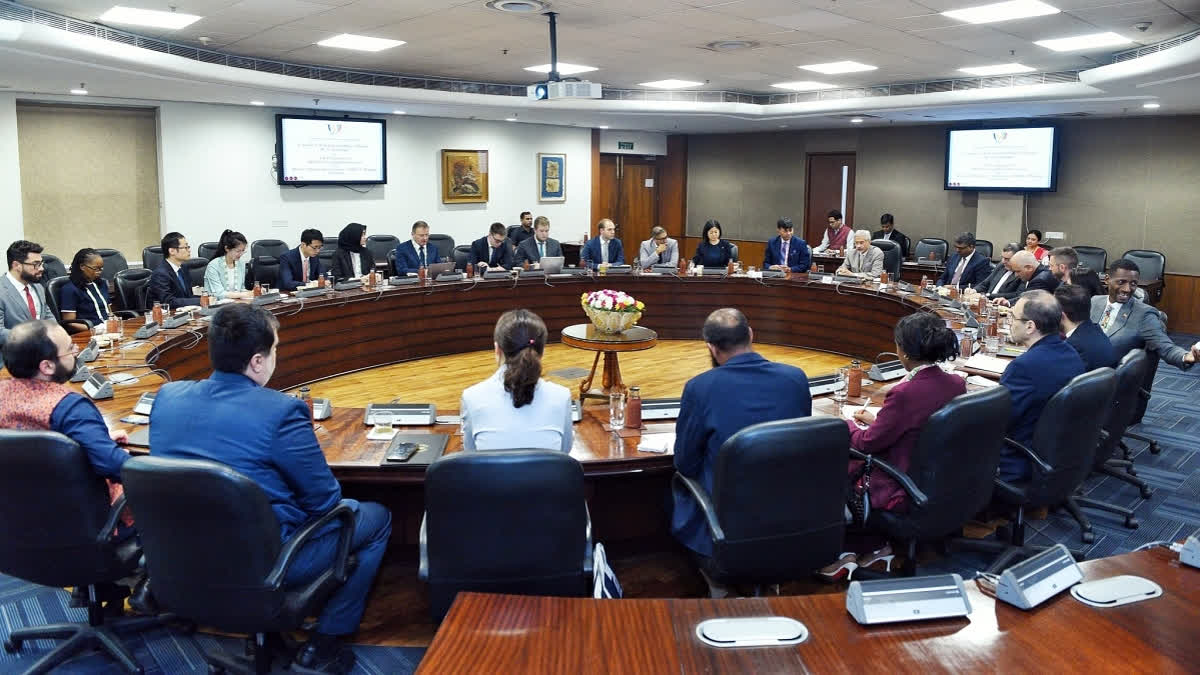
Second BRICS Culture Working Group Meeting To Be Held In Varanasi
Five thematic panel discussions will be held on topics like creative economy, copyright and ethical AI and heritage protection, reports Chanchal Mukherjee
Published : June 1, 2026 at 7:38 PM IST
New Delhi: India will hold the second meeting of the BRICS Culture Working Group (CWG) in Varanasi, Uttar Pradesh reaffirming its commitment to strengthening cultural ties and enhancing people-to-people exchanges among BRICS nations.
The meeting is expected to bring together representatives from member countries to discuss avenues for greater collaboration in the cultural sector, with a focus on preserving shared heritage, promoting cultural and creative industries, and fostering mutual understanding among diverse societies.
Five thematic panel discussions will be held like Creative Economy and People-to-People cooperation, copyright and ethical AI in the creative economy, cultural heritage protection and return of cultural property, collaborative approaches to safeguarding shared heritage, and culture as a driver of sustainable development.
Speaking about the upcoming meeting, the Joint Secretary, Ministry of Culture, Dr Arvind Kumar, said that representatives from member countries will deliberate on five key themes and work towards a consensus document.
“In Varanasi, the member countries will discuss five different topics and try to get an outcome from there and that will be drafted. This draft will be taken to the Bhopal meeting to finalise it,” he said.
The draft prepared in Varanasi will form the basis of discussions at the subsequent BRICS Culture Ministers’ meeting in Bhopal, where member countries are expected to finalise the document and adopt a collective roadmap for cultural cooperation.
The deliberations are expected to focus on strengthening cultural exchanges, safeguarding heritage, promoting cultural and creative industries, and exploring the impact of emerging technologies, including artificial intelligence, on the cultural sector.
As BRICS expands its global footprint, the CWG has emerged as a key mechanism for fostering mutual understanding and strengthening bonds among the peoples of member nations. The Varanasi meeting is expected to lay the groundwork for deeper cultural engagement and collaborative initiatives across the BRICS community.
According to the Ministry of Culture, invitations have been extended to BRICS member countries, including Russia, Iran, Saudi Arabia and the United Arab Emirates, to participate in the meeting.
Responding to a query regarding participation, Secretary in the Ministry of Culture, Vivek Aggarwal, said invitations have been sent to all concerned member nations, though confirmations from some countries are still awaited. “We have sent invitations to the member countries including Russia and Iran, but their confirmation is yet to be received,” he said.
The discussions in Varanasi will also focus on the growing contribution of culture to economic development and the opportunities and challenges presented by emerging technologies such as artificial intelligence.
The official said that member countries are expected to deliberate on how investments in culture, heritage, creative industries and cultural tourism can contribute to economic growth and employment generation.
Highlighting the economic potential of the cultural sector, Aggarwal said culture has become an important driver of growth in several countries. “Culture is helping to grow 5 to 8 per cent of the economy in several countries. The BRICS countries will also discuss and try to get a positive outcome on the use of AI in the current scenario,” he said.
Emphasising the need for a balanced approach towards artificial intelligence, Aggarwal added, “We will ensure that use of AI will be helpful and use it in a positive sense.”
Beyond policy discussions, the meeting will also seek to promote greater cultural exchange among BRICS nations by highlighting their rich heritage, traditions and shared historical experiences.
Aggarwal said the Ministry of Culture plans to collaborate with member countries to document and showcase events of historical significance that connect different nations within the grouping. The initiative is aimed at strengthening cultural understanding and preserving important chapters of shared history for future generations.
Explaining the approach, Aggarwal said the focus would be on jointly documenting landmark historical events with partner countries.
“The ministry will document historically important events with other countries. For example, the Satyagraha movement, which was initiated in South Africa, will be documented with the help of the concerned country to highlight its importance,” he said.
The initiative is expected to encourage collaborative research, documentation and dissemination of historical narratives that have shaped societies across BRICS nations. Officials believe such efforts can deepen people-to-people ties while fostering greater appreciation of the cultural and historical links that bind member countries together.
The Ministry of Culture will use the BRICS platform to showcase India's traditions of sustainable living and nature-centric cultural practices. Officials said the discussions will highlight Indian festivals and traditions that promote harmony with nature and encourage environmental consciousness.
The ministry said India's cultural heritage includes several festivals and rituals centred on the worship of the Sun, Rivers, Forests and other elements of nature, reflecting a long-standing tradition of environmental stewardship and sustainable living.
By highlighting cultural traditions that encourage respect for nature and responsible use of natural resources, the ministry aims to promote greater awareness of the role culture can play in supporting environmental conservation and sustainable development.
Related Stories
 Culture
Zelenskyy: US envoys resumed talk process with Russia
1 hour ago
 Culture
Brandon's Naija Summer fest brings Nigeria to the Prairies
6 hours ago
 Culture
Church's mental health centre conversion rejected
13 hours ago
 Culture
Ramlila, the traditional performance of the Ramayana
2 days ago
 Culture
Indian Heritage Centre Unites Communities for the Indian New Year
2 days ago
 Culture
Royal Enfield partners with UNESCO to promote India's cultural heritage: Details
2 days ago
 Culture
For Independence Day Reception (At Home), Rashtrapati Bhavan to showcase country’s cultural heritage
3 days ago
 Culture
World Heritage Day 2025
3 days ago