
Shameless Politics in India: On the Rise of Public Impunity
An incident that took place in 2023 in the Lok Sabha, the principal constitutional body of Indians, stunned many of us. A BJP MP, Ramesh Bidhuri, subjected a fellow MP from the Bahujan Samaj Party, Danish Ali, to a virulent anti-Muslim tirade. Bigoted slurs had not been uncommon before this, but they were uttered in private, behind the back of Muslims. An abuser caught demeaning a person’s community usually felt shame. But not Bidhuri, who abused deliberately, openly, with aplomb. This shamelessness was unprecedented.
Shame is a complex, relational, and ethically charged emotion. Complex, because unlike a raw feeling—like being startled by a loud bang—shame is culturally acquired, prompted by a desire to conceal rather than to express. Relational, because it always involves significant others: anyone who, in the given context, is important enough to have to hide oneself from. (Parliament, Muslims, the public at large.) And ethical, because shame exposes the person as being in the wrong. The experience of shame is infused with ideas of right and wrong.
Nakedness immediately comes to mind. The Greek word for shame, aidõs, is directly connected to aidoia, a standard term for genitals. One does not want to be caught naked, and if seen, one instantly looks for cover. Conversely, wanting to be seen naked is widely taken as a sign of utter shamelessness. To throw away all inhibition and show oneself in the wrong condition or state is to be without shame.
This reasoning opens up several routes to shamelessness. The first is to make others insignificant, in thought or action, so that one can lie to people because one believes they are not worthy of knowing the truth. The second is to cease viewing others as people at all, treating them not as subjects with a point of view but as mere objects, incapable of thought or action—as kachra, part of a pile of garbage. The third is to become amoral, one who no longer cares about right and wrong and actively destroys the distinction between the two. The fourth is to rid oneself of emotion altogether and become heartless. Completely heartless people are constitutively shameless.
The father of Ria, a 23-year-old NEET aspirant who died by suicide, speaking during a Cockroach Janta Party rally at Jantar Mantar, New Delhi, on July 5. | Photo Credit: Shashi Shekhar Kashyap
We are probably witnessing, before our very eyes, the (partly deliberate) collective reproduction of the conditions for heartlessness, immorality, dehumanisation, and objectification—conditions under which those who hold enough power become entirely shameless. Shamelessness in Indian public life is a calculated, strategic operation upon the very foundations of institutional, public, and political ethic. The operation begins with fortification around the actor, a wall so solid that nothing penetrates it: no rational argument, no judicial stricture, no moral demand. Criticism is defanged before being heard; the critic is not answered but delegitimised, labelled an anti-national, an anti-Hindu, an urban naxal, pro-Pakistan. “I don’t give a damn!” is not an outburst; it is a political technology—a policy executed through the instruments of the state itself—where a stray tweet is followed by an FIR, a speech is followed by a sedition case that will take a decade before it fails in court, by which time the point has already been made. What such episodes display is the rhinoceros skin of the dehumaniser: unresponsive, unaccountable and where invulnerability is worn as a badge of public pride. Caught in the wrong, the shameless actor—the strongman—refuses to resign, explain, or even acknowledge the disapproving gaze. This refusal to acknowledge is the message, transmitted in prime time to millions of viewers.
The brazen, shameless act is not done covertly in the dark but is staged in broad daylight—filmed, in fact, on officials’ phones and released as content—because being seen and going unpunished is itself the demonstration of impunity, and that display is the instrument of domination. Ordinary offenders hide their offence, and in hiding pay a backhanded tribute to the law, conceding that the law still commands authority that they must dodge. The shameless actor, in contrast, offends in full view of the public. He does not evade the tribunal—of law, of conscience, of the electorate’s better judgment. He abolishes it or replaces it with a captured tribunal that will pronounce the verdict he wants. The shameless strongman is not radicalising accountability, pushing it to some fierce extreme. He is hollowing out the word while keeping intact its institutional shell: the court still sits, the commission still convenes, the authorities still issue notices, but all of them now answer to the strongman, rather than to constitutional morality.
This is exactly where the contrast with a very different nakedness is illuminating. The Digambara ascetic of the Jaina tradition refuses clothing itself: sky-clad, he stands naked before the world, flouting the most basic social convention of covering, owning nothing that the state or the crowd could seize as leverage. To untrained eyes this is akin to shamelessness. But the nakedness of the ascetic is the inverse of the strongman’s. He strips not to escape every tribunal but to submit to a higher one. His indifference to the social gaze is obedience to a higher truth the social gaze cannot see. He cannot be blackmailed because he wants nothing the world can give or withhold—his is a shamelessness of renunciation, enacted with the “body as a form of truth-telling”, as Michel Foucault brilliantly put it in his lectures on the Greek Cynics.
Shameless strongmen, too, step outside the ordinary economy of shame, but they renounce nothing and grab everything. Where ascetics cannot be blackmailed because of their surrender of everything the world might hold against them, strongmen become unaccountable because of their capture of every institution that might hold them to account: the investigating agency, the prime-time anchor, the pliant judge, the WhatsApp group that will manufacture tomorrow’s outrage on command. The naked monk makes himself answerable to the highest court by dispensing with all the lower ones; the strongman abolishes the highest court by suborning all the lower ones. One nakedness disarms and liberates; the other weaponises and dominates. The ascetic’s refusal humbles power. The strongman’s refusal consecrates it.
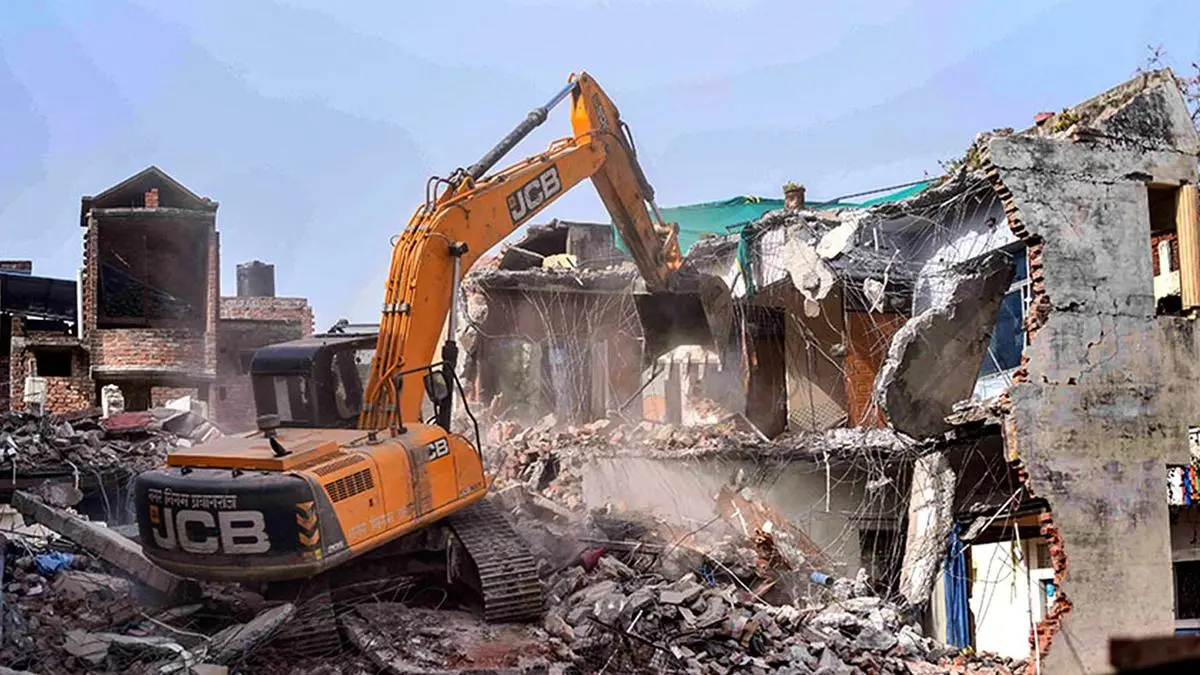
Shamelessness has been growing exponentially in public and political life since 2014 and has been normalised by escalation. Do something wrong; let the shock settle (shoving pork in the mouth of a Muslim). Follow that with a second escalation, on a slightly higher scale, which makes the earlier one seem modest by comparison (the rallying cry, “Goli maro salon ko” [shoot the traitors of the nation], or men in power garlanding murderers and rapists). Then set off a third one, higher still (the official bulldozing of private houses of public protesters), until the people, exhausted, feel something like relief whenever the upward movement pauses momentarily. Each act licenses the next; each act of silence from those positioned to object is read, correctly, as permission. Public cruelty is normalised not by argument but by an ominous cadence.
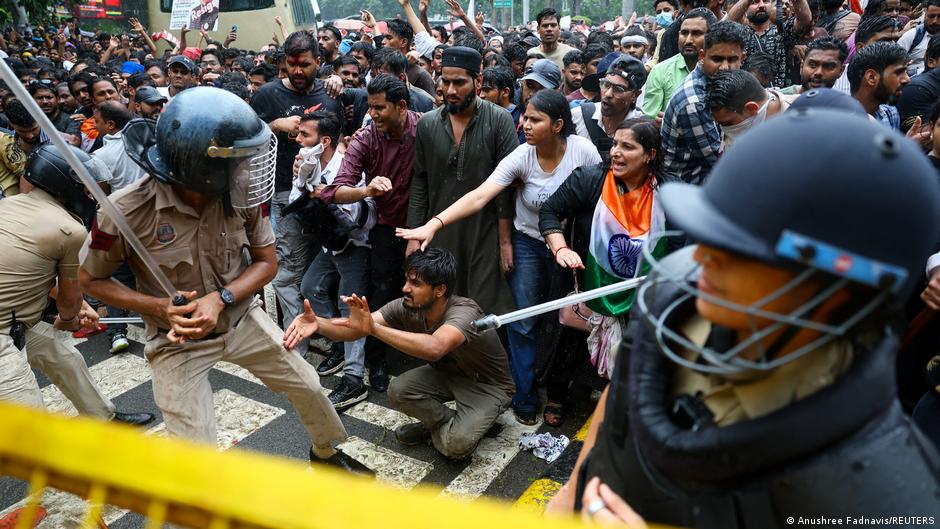
We seem already on the edge of a civilisational precipice, but shamelessness shows no sign of abating. The leak of NEET examination papers has wrecked the lives of millions. Young aspirants have died by suicide. The hunger strikers at Jantar Mantar demanding the resignation of the Education Minister have put their lives in danger, but he is unchastened. Will the naked loot at the “bhavya” mandir, the newly minted temple in Ayodhya, eventually shame those in power? Or will it be covered up, again, by even more spectacular acts of shamelessness?
Rajeev Bhargava, a political theorist, is honorary professor at CSDS, Delhi, and director of the centre’s Parekh Institute of Indian Thought.
Also Read | The time of fasting is over
Related Stories
 India
India
Piyush Goyal proposes India
39 minutes ago
 India
India
MIT India’s IRS 2026 Advances 25
2 hours ago
 India
India
Rahul Gandhi questions India PM Narendra Modi's 'culture shock' comment over women swearing at CJP protest
7 hours ago
 India
India
US military kills four in strike on alleged drug smuggling boat in Caribbean
9 hours ago
 India
India
The question dominating Indian politics: Is it worse when women swear?
9 hours ago
 India
India
What we know about deadly Nepal
11 hours ago
 India
India
India news: Police used 'excessive force' on CJP protesters
12 hours ago
 India
India
24 Canadians among missing in Nepal flash floods: local spokesperson
13 hours ago