
Should Alberta separate? These Inuit think some ties are best left unbroken
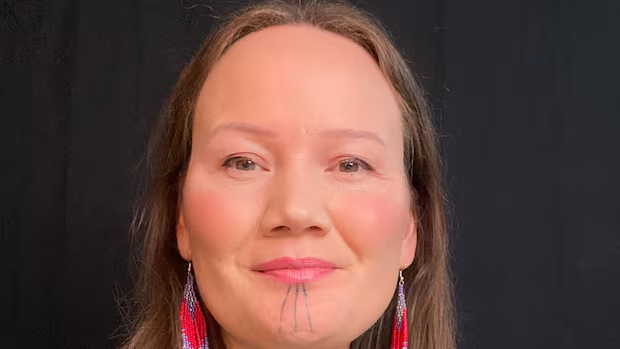
Should Alberta separate? These Inuit think some ties are best left unbroken
Referendum could change the lives of thousands of Inuit in Alberta and the North
As First Nations leaders in Alberta continue their fight against the province’s referendum on separation, some Inuit are wondering what that means for them.
On Oct. 19, Albertans will vote on whether they want to stay in Canada or start the process to hold a second, binding referendum on leaving the country.
Should it come to pass, the outcome of that referendum could drastically change the lives of the roughly 3,000 Inuit in Alberta, including Tupaarnaq Kopeck.
Originally from Kalaallit Nunaat (Greenland), Kopeck is waiting to apply for Canadian citizenship and has bought a house in Edmonton.
But she can’t vote, and her immigration agreement is with the government of Canada — not Alberta. She wonders what will happen to immigrants like herself.
“I think that is definitely something that Inuit don't need at this point,” she said. “We need healing, we need reconciliation and not worry about this.”
Some Alberta residents who support separation say the rest of the country takes more than it gives in its relationship with the province. Others, who want to stay in Canada, say they're Canadian first and are concerned about the rights of First Nations.
Treaty 8 First Nations vow to fight Alberta separatism referendum
Several First Nations leaders have told Alberta Premier Danielle Smith to back off on the referendum and respect court decisions that said separation would violate Indigenous people’s treaty rights.
“I stand with them because as Indigenous people, we know how it is to be not listened to and not respected,” Kopeck said.
A decision to separate from Canada would affect many northerners, including those living in Nunavut’s Kitikmeot region who need to travel to Alberta for health care and other services.
For example, Dennis Kaosoni’s late father had to be flown from Cambridge Bay to Edmonton for cancer treatment.
“We’re so closely knit together and it’s great to be Canadian,” he said.
Meanwhile, Bob Lyall in Taloyoak is about to escort a friend down to Edmonton for medical travel later this week.
“All these ideas popped up in my head. We're going to need a passport now, if Alberta ever separates from Canada,” he said.
Some Inuit have family connections to Alberta because of Canada’s painful history of sending Inuit to residential schools and tuberculosis sanitoriums down south.
Lyall said his eldest sister worked at the Charles Camsell Hospital in Edmonton in the early days, where there have been accounts of physical, mental and sexual abuse, including forced sterilization, shock therapy, and experiments with tuberculosis vaccines on patients without their consent.
“There are many Inuit who are buried, who never did make it home,” he said. “There's always going to be a tie between this part of Nunavut and Alberta.”
Inside the legislative assembly last month, Nunavut Premier John Main called himself a “federalist,” and said he believes it’s important for Canada to stand together amid high tensions with the U.S.
“We are stronger together,” he said. “It is quite poor timing to be talking about looking towards breaking up our great country. We have so much to be proud of as a country."
Cambridge Bay MLA Fred Pedersen, who went to high school in Alberta, told CBC News he’s glad to hear the Nunavut government is monitoring the situation.
He would like to see a contingency plan in the event a referendum does go ahead to ensure Kitikmeot residents have continuity in services like education and health care.
"Before separation happens, this government will have to ensure new contracts signed and agreements reached with other provincial authorities," he said.
CBC News reached out to the offices of both the Alberta and Nunavut premier for further comment but did not hear back by deadline.
Samuel Wat is a reporter for CBC North based in Yellowknife, mostly covering Nunavut's Kitikmeot region. He has also worked as a web writer and producer for CBC, including in Iqaluit and Ottawa, and for public and state broadcasters in New Zealand before that. You can reach him at samuel.wat@cbc.ca
Related Stories
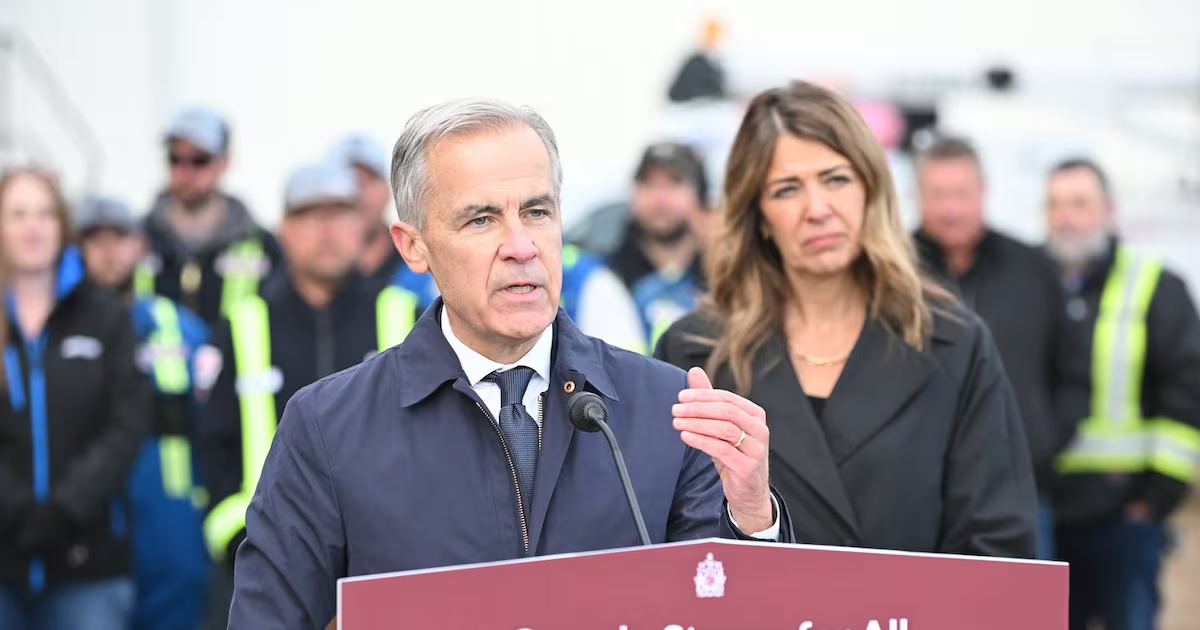 Canada
Albertans head to polls in historic referendum on whether they want to stay in Canada
1 week ago
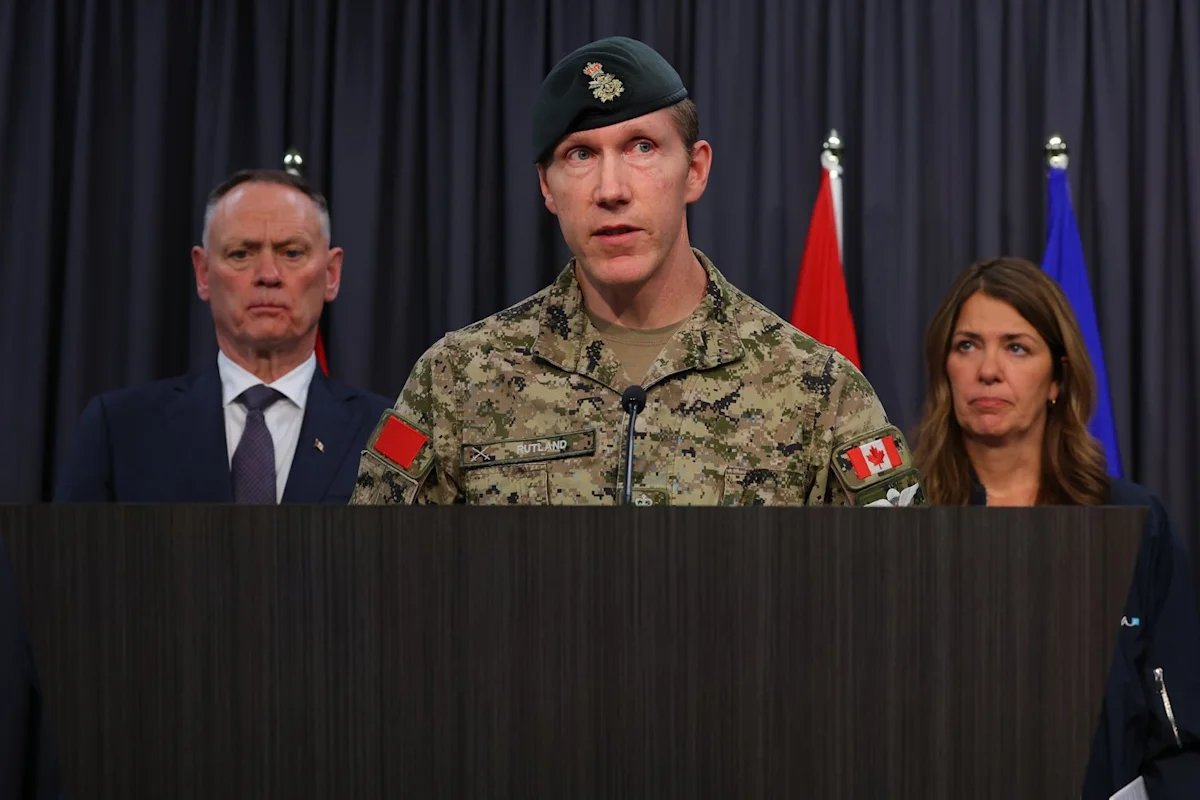 Canada
In the news today: four soldiers killed, Alberta referendum, AI privacy fears
1 week ago
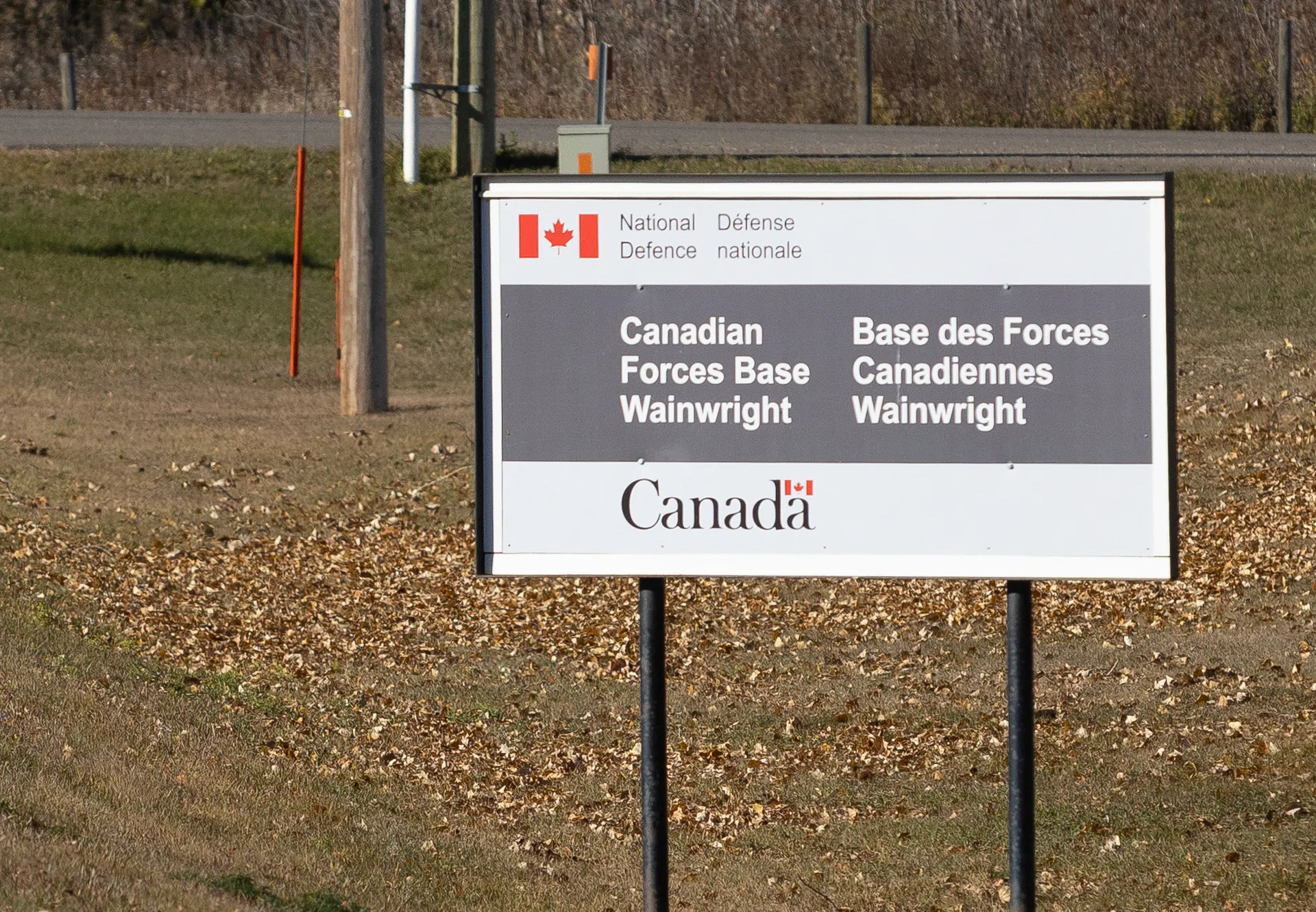 Canada
How a grass fire at a Canadian military base killed four soldiers
1 week ago
 Canada
How will household electricity rebate reduction, temporary winter pricing change impact Ontarians?
1 week ago
 Canada
Residents told to boil tap water due to bacteria
1 week ago
 Canada
Oil
1 week ago
 Canada
Albertans vote on path to independence as Carney fights to keep Canada united
1 week ago
 Canada
Two of 4 soldiers killed in fast
1 week ago