
South Korea's Policy

The problem is performance that fails to support the valuations. Rebellions posted 2024 revenue of 32 billion won (approximately $23.6 million) and an operating loss of 120.5 billion won (approximately $89.0 million). FuriosaAI recorded revenue of 5.7 billion won (approximately $4.2 million) and an operating loss of 62.5 billion won (approximately $46.1 million) last year. Upstage's 2024 revenue was 24.8 billion won (approximately $18.3 million), yet its IPO valuation is discussed at up to 5 trillion won (approximately $3.7 billion). The valuation-to-revenue multiples range from 100x to 500x.
Even though policy funds participate in rounds alongside private investors, critics point out that the injection of massive capital all at once has narrowed the room for price validation.
As policy funds drive AI investment, various institutional fund-of-funds programs are following suit. Korea Venture Investment Corp.'s first regular fund-of-funds commitment this year totaled 1.63 trillion won (approximately $1.2 billion), up 63% year-over-year, with AI convergence and deep tech accounting for 47%. The South Korean postal service agency has set conditions for its second-half AI venture fund commitments requiring fund managers to invest at least 200% of the commitment amount into the AI value chain.
What concerns the investment industry is whether AI sector companies can sustain their unlisted-stage valuations in the public market. Early investors can still realize gains even if the IPO price falls below their recent investment cost basis, but late-stage investors who entered at high valuations cannot even guarantee principal recovery.
An investment industry source said, "Policy funds have driven up valuations, making it burdensome for private capital to follow in. If private money enters at already-inflated prices and the IPO price comes in below that level, the losses fall entirely on private LPs." The source added, "When LPs ask 'Don't you have anything other than AI?', it ultimately comes down to uncertain exits. There seems to be a growing tendency among LPs to want portfolio diversification beyond AI into other sectors."
Following these large investments, the commercialization and customer acquisition efforts of these companies are now being put to the test. AI semiconductor companies must sequentially prove not only design performance but also mass production capability, software compatibility, data center customer validation, and global customer acquisition. Physical AI and robotics companies also face the challenge of converting massive R&D spending into enterprise customer revenue and sustainable business models.
Rebellions plans to deploy its raised funds toward expanding mass production of its next-generation NPU "REBEL-100" for large-scale generative AI inference and expanding overseas operations. This month, the company agreed to collaborate with Japanese AI technology firm ai& to deploy rack-type AI inference infrastructure "RebelRack" equipped with its NPUs at a Tokyo data center. FuriosaAI plans to use its investment to expand production of its second-generation AI inference accelerator "RNGD" (Renegade), which entered mass production in January, pursue overseas commercialization, and develop next-generation NPUs. The company is working with global data center operator Equinix to install Renegade servers at a Lisbon, Portugal data center, establishing a performance evaluation environment for European customers.
An industry source said, "As hundreds of billions of won in capital concentrate on a handful of deep tech companies with proven technology and commercialization potential, the investment unit size in South Korea's VC market is growing. Given the massive capital deployed by the government and private investors, future evaluations will hinge on mass production results, overseas orders, customer expansion, and revenue growth."
Related Stories
 AI News
Anthropic unveils Claude Opus 5.5
28 minutes ago
 AI News
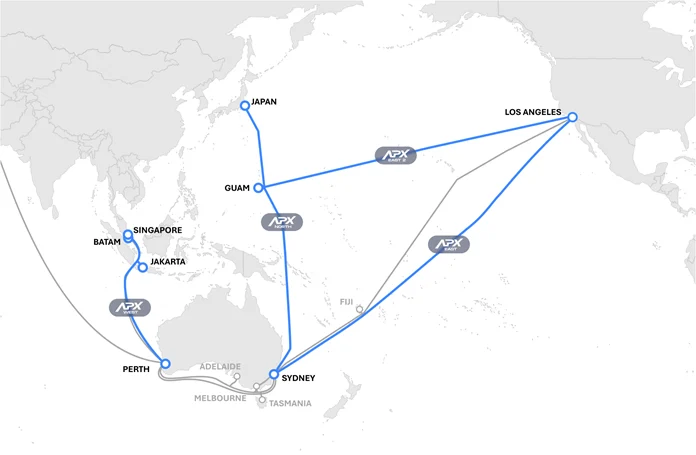
SUBCO Announces Three New Subsea Cables
1 hour ago
 AI News
Trump Addresses United Nations to Rebrand Artificial Intelligence as "Super Intelligence"
1 hour ago
 AI News
Watch: Moment Trump rebrands Artificial Intelligence to Super Intelligence
1 hour ago
 AI News
From smart glasses to AI pins, privacy fears challenge tech’s next big bet
2 hours ago
 AI News
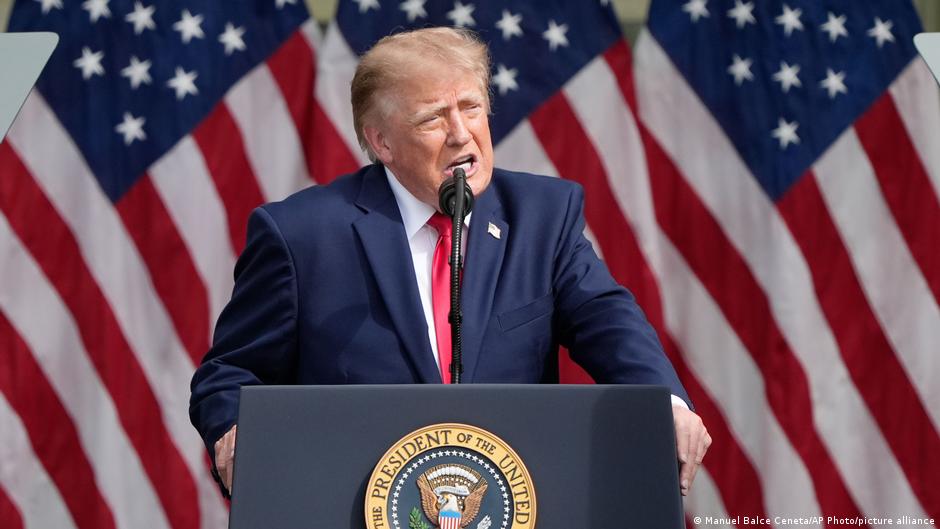
'AI force': Does Trump want to regulate AI amid growing concerns over artificial intelligence?
2 hours ago
 AI News
Artificial Intelligence Issue Favors Democrats
2 hours ago
National AFL
3 hours ago