
Survey: 5 Ways AI Is Cutting Into Students’ Ability to Learn
Survey: 5 Ways AI Is Cutting Into Students’ Ability to Learn
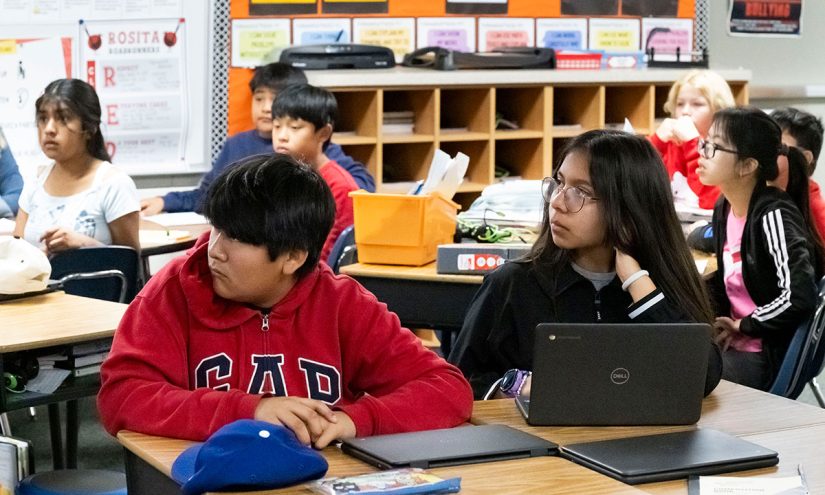
In new work from Common Sense Media, many teens acknowledge AI is changing how they think, with schools providing few safeguards.
Get stories like this delivered straight to your inbox. Sign up for The 74 Newsletter
Over the past four years, generative artificial intelligence has quietly colonized the minds of U.S. adolescents, changing the way they learn.
A College Board survey last fall found that the share of high schoolers using it for schoolwork had climbed to 84%, with about half using it to brainstorm, revise essays or research topics. A follow-up issued in December found that high-achieving students — and those who are perhaps experiencing “senioritis” — are the most expansive users of AI.
A new survey released Tuesday by the nonprofit Common Sense Media offers another set of key data points, looking at teens’ own sense of how they use the technology — and what AI is doing to their thinking.
The nationally representative sample of 1,017 U.S. teens ages 13 to 17, conducted in April and May, found that 70% now use AI for schoolwork, but that fewer than one in three say a teacher has ever talked with them about using it safely. And just one in four have discussed with a teacher how to tell whether AI-generated information is accurate.
Here are five things to know about the findings:
Among the 70% of teens who use AI, 77% say they use it as a support tool, using it for brainstorming, checking their work and getting feedback on writing, for instance. And 66% say it helps them understand schoolwork, not just finish it faster.
But 63% separately report going straight to a chatbot for an answer rather than working their way to it themselves. Of those, 25% use AI output as-is, while 31% rewrite it to sound like their own voice. Another 35% “improve it with what they know.”
And yes, the 77% and 63% figures add up to more than 100%. That’s because many teens say they are, at different times, different kinds of AI users, either looking for support and brainstorming or simply zeroing in on a quick answer, depending on the assignment.
Former U.S. Education Secretary John King, an advisory board member for the nonprofit’s Youth AI Safety Institute, said the 63% figure is worrying “because we can’t allow AI to become a substitute for students doing the learning themselves.”
Much of that will fall to teachers, he said, who must change their basic practices. “Some of that is old-fashioned blue books and saying, ‘We’re going to do some of the writing in class,’ complementing a written assignment with an oral presentation in class so you know that students are really doing the work.”
He acknowledged that changing course design “is really hard,” there’s really no alternative. “I think this is really a moment where the entire K 12 sector has to think through: ‘How do we help students understand AI safety and appropriate use of AI tools, and how do we adapt teaching and learning assessment so that students are doing the intellectual work?’”
Many of those who rely on AI for schoolwork acknowledge that it’s changing how they think: 38% say having AI available leads them to develop fewer original ideas, and 39% say that when they use AI to complete assignments, they feel they’re missing out on learning.
Darren Lam, 18, a recent graduate of New York’s Staten Island Technical High School, said AI use was widespread among his classmates. “A very large percentage of people that I know either regularly use, or have at some point used, AI to just completely do an assignment for them,” he said. “So I think that the concern of AI being used as a cheating tool is definitely not invalid.”
But he said the bigger problem is students not coming clean about their motivation — or lack of motivation — to learn. “If students wanted to genuinely learn and were willing to be honest about their own work, then giving them free access to AI would not encourage them to cheat in the first place,” he said.
As it is, for many students school simply isn’t relevant, he said. “They think that many of the things that they learn in the modern education system aren’t particularly beneficial once they leave the four walls, and I think because of that they want to just skip through it as fast as they can. And the fastest way is by just getting AI to do all your work and then submitting it.”
Among teens who use AI for schoolwork, 44% say they’ve had an AI tool blocked on a school device or network. Yet 59% of these students say they simply switched to a personal device with less oversight — and less support — than a school-managed device or network.
Lam, who plans to major in electrical engineering in college, said his Staten Island high school has a fairly open policy about AI — it’s full of future coders and computer engineers, after all — but he worries more broadly that schools limiting access to AI tools could backfire.
“Although it can sometimes prevent some harmful behavior that may arise,” he said, “it also prevents students from learning how to use it effectively, which is going to be a very pivotal skill coming into this job market.”
Asked to name the skills that matter most for their future, teens zeroed in on a few key ones, dubbed “the human skills that AI can’t or shouldn’t replace” by Common Sense:
King, the former Education Secretary, who now leads the State University of New York, said helping students develop these skills in response to AI will be difficult, but educators can’t bury their heads in the sand.
“I think a lot of teachers already, understandably, feel overwhelmed by the core challenge of getting students the academic knowledge and skills they need,” he said. Noting that many schools are still doing “recovery work” from the disruption of the COVID pandemic, he said, “I’m sure it feels like a lot. That’s certainly true for our faculty at SUNY, but I think the reality is these tools are here. Students are using them, and we have to respond thoughtfully.”
The new findings arrive Tuesday alongside the launch of a new Common Sense Digital Literacy & Well-Being Curriculum and a new AI and Student Well-Being professional development course. The curriculum offers a research-backed framework for building students’ AI literacy skills through two courses, one designed for K-8 students and a second for high school students.
According to the survey findings, only 30% of teens overall say a teacher has ever talked with them about how to use AI safely — and just 26% say teachers have discussed how to evaluate whether AI-generated information is accurate or trustworthy.
Alex Kotran, CEO of the AI Education Project, said that’s especially troubling, given AI’s prominence in kids’ lives. “The fact that 70% of kids haven’t had a conversation about AI safety is a pretty big alarm bell, because it means the kids are using this stuff, and a lot of them are flying blind.”
Key to addressing the crisis of students using AI to offload cognitive effort, he said, is training teachers how it works. “There is no solution that doesn’t involve a teacher just understanding how AI can be used, and through that understanding [and] adapting assignments and lessons.”
Like other observers, Kotran suggests that teachers use this moment to rethink assessments, turning to in-class demonstrations, talks and the like to ensure that students understand material.
“Even if a student is going home and using AI, it’s not going to help them because ultimately they’re going to have to go and demonstrate their knowledge in the classroom,” Kotran said. “I think it is as simple as that. There are other ways to adapt assignments, but I think it’s really hard to adapt your assignments if you don’t understand what AI is actually capable of.”
Did you use this article in your work?
We’d love to hear how The 74’s reporting is helping educators, researchers, and policymakers. Tell us how
Related Stories
 AI News
Pope to Waldensian Synod: Bear witness together to the freedom of God’s children
40 minutes ago
 AI News
Chinese workers fight back against AI; the meaning of milk in Rwanda
1 hour ago
 AI News
90 Percent of Execs Say Oops, AI Didn’t Help Productivity, So Layoffs Will Continue
1 hour ago
 AI News
UNC Artificial Intelligence: Innovate Carolina hosts AI workshop series to help students, professionals build workplace skills
2 hours ago
 AI News
STREAMLINE uses AI to tackle one of nuclear physics’ toughest problems
2 hours ago
 AI News
Experts weigh costs, benefits of using artificial intelligence in education
3 hours ago
 AI News
PRESS RELEASE: European Union Begins Enforcing Sweeping Artificial Intelligence Act
4 hours ago
 AI News
AI
5 hours ago