
Tech diaspora in U.S. marks 75 years of IIT amid concerns over AI, immigration curbs
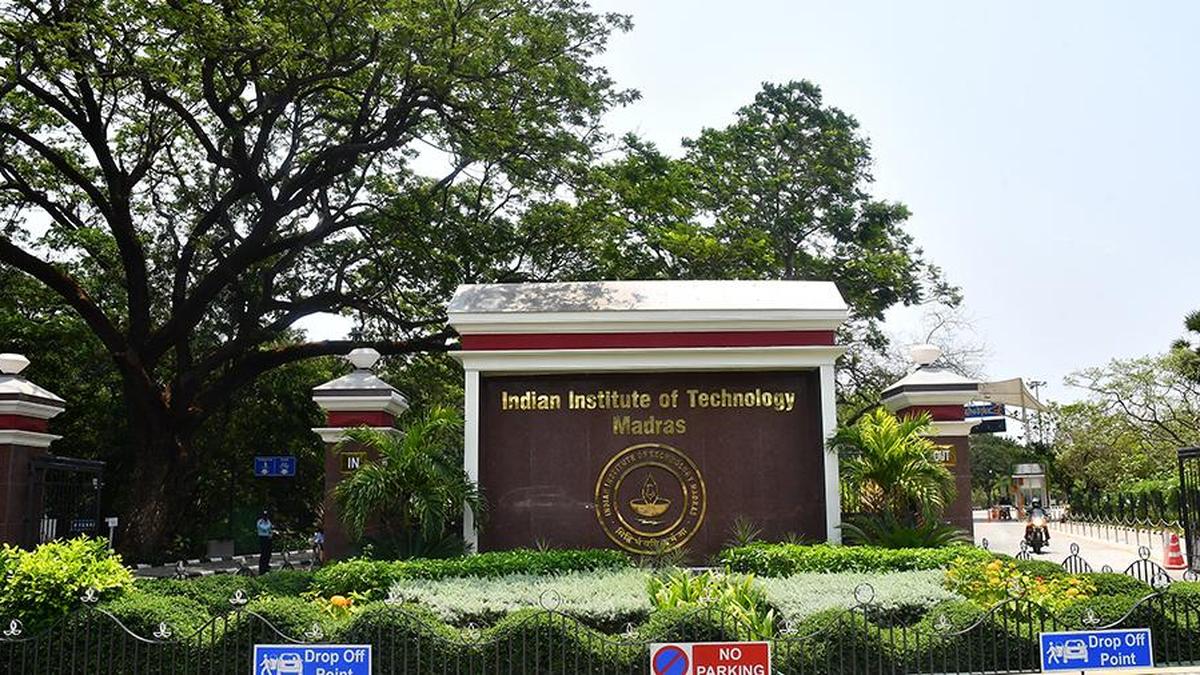
As the Indian Institutes of Technology (IITs) celebrate 75 years, the milestone is met with pride and pragmatism. For decades, the IIT brand has been indisputably considered the gold standard of global engineering. However, the reality has changed now. At home, a new tier of Indian universities is churning out talent that rivals the old guard. Also, in the U.S., the IIT-ian aura is facing unprecedented pressure due to unfavourable visa rules.
At this juncture, the IIT alumni are holding their annual event – IIT2026 Global Conference – in Long Beach, California, from April 22 to 25, in what they are referring to as “a call to elevate the value of the Indian diaspora”. Also known as ‘Indiaspora’, most of them graduated from the IITs a decade or two ago, before shifting to the U.S. for careers in technology and business.
Shashi Tripathi, chairman of the conference and a venture capitalist in the U.S.-India corridor for over two decades, hinted at the currently “unwelcoming” geopolitical climate for immigrants.
“From the CTO of OpenAI to leadership at Amazon and Cisco, from CMOs at Pizza Hut to founders in the VC space, IIT-ians have made their presence felt in leadership positions across sectors in the U.S. Despite representing only 2% of the U.S. population, this group contributes a staggering 8% to the economy. The deep talent is undeniable. Yet, there is a growing sense that this contribution isn’t valued enough, the reason being we don’t have enough representation or role at the district, county or state level in policymaking,” Mr. Tripathi said.
Immigration and AI, a double whammy
When Anindya Sharma, an engineering graduate from IIT Kanpur arrived in Southern California in 1999, the path was clear: arrive, innovate, and eventually, the green card would follow. “Today, that journey has stretched into a 15-year marathon. Even after waiting for long periods, the chances that a H1B visa application will get picked are bleak,” he said.
Mr. Sharma is the managing partner at Accelerant Inc., a company that automates high-volume document workflow using AI. The current landscape presents a “double whammy” for the next generation of engineers, including IIT-ians, he said. The “sweat equity” model that built Silicon Valley is being strangled by bureaucracy, he said.
“On one hand is the restrictive public policy with stringent H1-B processes, appointment wait times of nearly two years, and a proposed high deposit requirements in certain cases (~$100,000). This makes it nearly impossible for smaller startups with a team of ~120 like ours to recruit top talent,” Mr. Sharma said.
“On the other hand, while AI (driven by tools like Claude and Gemini) is creating ~70% efficiency in coding and data management, it is also squishing the job market. If a company spends a million dollars on AI, the first question is: how many people can I let go? That is the nature of the beast,” he said.
Smita Hashim, an IIT Kanpur graduate, a Google veteran and former chief product officer at Zoom, said it is ‘painful’ for her to see that so many layoffs are happening in the tech sector now. Ms. Hashim, who is the AI track co-lead at the conference, said the findings in a recent report released by AI safety and research company Anthropic on ‘Labor Market impacts of AI’ are telling.
According to the report, Claude is extensively used for coding, so computer programmers are at the top of the ‘exposed’ professions likely to be affected by AI, followed by customer service representatives and data entry keyers. However, she mentions that AI is bringing access to technology for companies who have previously not used it ‘effectively’.
Use of AI has become both a veritable concern as well as a matter of debate in the IIT alumni circles where the engineers must now navigate a world where being ‘smart’ is not enough. One has to be indispensable in a world where the machines are learning to keep up.
“In the energy sectors, tasks that once required 40 people now require two. Also, VC firms can feed in the profit and loss (P&L) and pitch deck into AI for creating due diligence documents. AI does 80% of the work. So previously the work of three analysts can now effectively be done by one due to AI,” said Mr. Tripathi.
Culture of failure versus cost of friction
What attracts Indian techies to the U.S. is the latter’s culture that allows for failure. “In India, a failed first company can be a stigma, in the U.S., it’s a badge of honour. For me, it led to a successful third venture and a transition into venture capital,” said Mr. Tripathi.
However, if the U.S. continues to suppress talent through unfavourable immigration policies, it risks losing its greatest strength, he added. If the relationship is not strengthened within the next five years, the “brain drain” will officially reverse its flow, favouring Europe and India’s own burgeoning hubs.
“We are already seeing a ‘reverse migration’ and a pivot toward the India-EU corridor. With Germany and the U.K. offering smoother paths, and India’s own startup ecosystem becoming phenomenal, the brightest minds are no longer defaulting to the American Dream,” he said.
Despite these hurdles, the focus remains on value creation, Mr. Tripathi said, adding that at this year’s conference, doors are open not just to IIT-ians but literally anyone who is ‘open to learning and growing’.
“Also, we are recognising seven IIT alumni including likes of Dr. Anil K. Rajvanshi and Dheeraj Pandey (co-founder of DevRev.ai) for their contributions,” he said Mr. Tripathi.
“Mr. Rajvanshi after pursuing his mechanical engineering degree from IIT Kanpur, he moved to the U.S. for a PhD in solar energy and returned to India to serve in rural Maharashtra where he developed low cost tech for farmers.”
Related Stories
 AI News
China vs US: Who is winning the AI race, in four charts
1 hour ago
 AI News
Apple Acqui
1 hour ago
 AI News
Ethiopian AI Institute hosts Danish delegation to explore technology cooperation
1 hour ago
 AI News
'Careless use of AI is the real threat
2 hours ago
 AI News
Geroulanos: Greek Values Must Give a ‘Human Face’ to the Age of Artificial Intelligence
2 hours ago
 AI News
In Silicon Valley, AI founders cheer Trump’s calls for the industry to police itself on safety
2 hours ago
 AI News
'Careless use of AI is the real threat
3 hours ago
 AI News
A timeline of developments in AI safety since the attack on Hugging Face
3 hours ago