
The Consequences We Should Have Seen Coming

I think policymakers in the United States would do well to consider Newton's Third Law of Motion, which dictates that for every action, there is an equal and opposite reaction. Nations do not live in vacuums. So when actions are taken by one, there's every reason to expect other nations to respond. History is replete with examples of actions producing consequences that easily could have been predicted.
The recent kerfuffle between the United States and Canada is one of these predictable reactions, particularly in light of Prime Minister Carney's prior resistance to the United States's pushing Canada around. Aggressively threatening and then imposing tariffs against our best ally is a dangerous game. The response from the Canadians was swift. The Prime Minister compared the dispute to a war, saying, "You're at war when you're attacked, and we got attacked." Meanwhile, since the last engagement between the two countries, Canada has been seeking bilateral agreements with other trading partners. For each action, there is a reaction…
American independence was hardly a sure thing, but the actions of the British government brought about a revolution by a people whose initial grievance was that they weren't being treated the same as British citizens. The beginnings of the First World War were a study in failed statecraft and have been the subject of countless books (Barbara Tuchman's excellent The Guns of August among them).
In WWI, the actions of each state in response to the assassination of Franz Ferdinand set off a chain reaction among countries bound by mutual defense pacts. In retrospect, there were numerous moments when, had any of those principals considered the likely responses to its actions, the war might have been averted. The lesson isn't that every consequence can be predicted. It's that governments have an obligation to seriously consider the most obvious ones before they act.
Current American actions, beyond the dispute with Canada, are no exception to the rule, although our uniliteral policy moves, seemingly often taken without a full vetting of the possible alternatives and potential responses, have escalated in frequency and magnitude.
The deportation of long-term immigrants: At this point, I think most people can agree that the porous borders of the Biden administration were a mistake, allowing President Trump's signature campaign initiative to perhaps be the issue solidifying his victory. I also think there are few of us who would debate that, with minimally policed borders, some people got through the cracks who a more rigorous immigration policy would have prevented. But in an effort to close off the border and deport recent immigrants with criminal records, we decided to go after long-time residents and taxpayers in this country.
One reasonably foreseeable consequence of the mass deportation of immigrants is exacerbating the nation's housing shortage. In 2017, before the deportations began in earnest, some 15% of all workers in construction jobs were undocumented. (In Texas and California, it has been estimated that some 40% of those workers are foreign-born.) Fewer immigrant laborers means fewer people with skills like roofing that take years to learn — and fewer homes being built. And it's worth noting that 53% of U.S. roofers are immigrants.
Another current labor shortage in America is in home health care, where the Bureau of Labor Statistics estimated foreign-born workers constitute 38% to 40% of dedicated home health aides. In New York, immigrants make up 73% of the workforce.
Massive tariffs: We've known for years that other nations, particularly China, have engaged in international trade practices that skew the system. (The theft of intellectual property seemingly has been a matter of national policy for some.) And the fact that some manufactured goods that compete with U.S. goods do so on the backs of low-paid labor can also cause globalization to work against the interests of our industries, consumers, and labor force.
It may be true that selected, targeted tariffs can be a justifiable response to such inequities, tariffs in both number and magnitude, without clear messaging of their justification, sparked considerable reaction from the international community. In our eschewing of the world economic order and international trading pacts, it hardly is surprising that many of our trading partners began to look for other means of securing reasonable trade deals. Notably, Canada has been at the forefront, but many of our friends and adversaries have turned to bilateral agreements that provide access to partners with lower barriers to entry than our own.
But arguably the greatest challenge has been the response of China. The response has been swift and impactful. As the global leader in rare earths, necessary for everything from magnets to batteries to hard drives and petroleum refinement, they simply choked our ready access. Until we find alternative sources of these important minerals, or technological advances to their reduce their importance (including, happily, advances in salt-based batteries), we'll be challenged by shortages and disruptions in supply chains.
Marginalization of long-standing alliances: The administration legitimately raised the concern that our partners in the Atlantic alliance didn't contribute enough to their collective defense. Under threats from the U.S., that has changed. But then America went further, undermining the alliance itself and giving indications that troops would be drawn down. In response to America's apparent pull-back from backing up the alliance, countries are now looking at new ways to provide for their defense. Countries previously pledged to avoid offensive rearmament, like Germany and Japan, now are considering a more muscular posture.
The Iran War: While one can debate the reasoning behind the war with Iran, and the negotiations that preceded it, a war was instituted. And the first thing that happened was serious damage to the American supply base in Bahrain, stretching American supply lines. This was foreseeable. The justifications for the war were regime change and to stop the Iranian nuclear program. But regime change, with unarmed and unorganized citizenry, was always unrealistic. And the goal of thwarting the Iranian nuclear program was to deny Iran access to the ultimate weapon of deterrence. Instead, Iran found that drone warfare and, even more importantly, the ability to bring the world economy to its knees in blocking of the Strait of Hormuz, to be arguably the "new nuclear weapons."
Other events that could have been foreseen also happened: Our munitions are significantly reduced. Our troops are beleaguered and tired. Our military supply lines have been stretched. Naval assets have been diverted from the Pacific. China is strengthened. Russia sees similar justification for its war in Ukraine. For every action, there's an equal and opposite reaction.
National debt: The United States recently passed $40 trillion in national debt. That's a staggering sum, brought about by profligate spending by Republicans and Democrats alike, but fueled in no small measure by tax cuts primarily benefiting the wealthy. As could reasonably be expected, the nation's borrowing costs went up, precipitating the predictable increase in borrowing costs for businesses and individuals. High and rising debt also leaves the economy more vulnerable to inflationary pressure. Fiscal irresponsibility eventually catches all who ignore the lessons of history.
By the way, a trillion is a hard number to grasp: It's a thousand billion (itself a large number). In physical terms, a trillion dollars in quarters would stretch 4,349,609 miles (or to the Moon and back more than nine times). So 40 trillion would go 174 million miles, or 1.9 times the distance to the Sun. It's a big number and it's a big problem.
It seems that our nation is ready to act, and act quickly, without full consideration of the consequences of its actions. We would do well — in considering future spending, economic policy, or military adventure — to heed the words of Sir Isaac Newton. Yes, he was writing about physics, not foreign policy. But the lesson travels remarkably well: Before you push, it's worth asking what might push back.
When he isn't writing his column Thinking Things Through, Glenn Sonnenberg heads a real estate investment company and serves on several nonprofit boards. A graduate of the University of Southern California, Mr. Sonnenberg also received his J.D. from USC. He began his career as an attorney specializing in real estate and finance. Follow him on Substack here.
The post The Consequences We Should Have Seen Coming appeared first on Katie Couric Media.
Related Stories
 World
World
Sault triathlete takes on two world championships in one month
2 minutes ago
 World
World
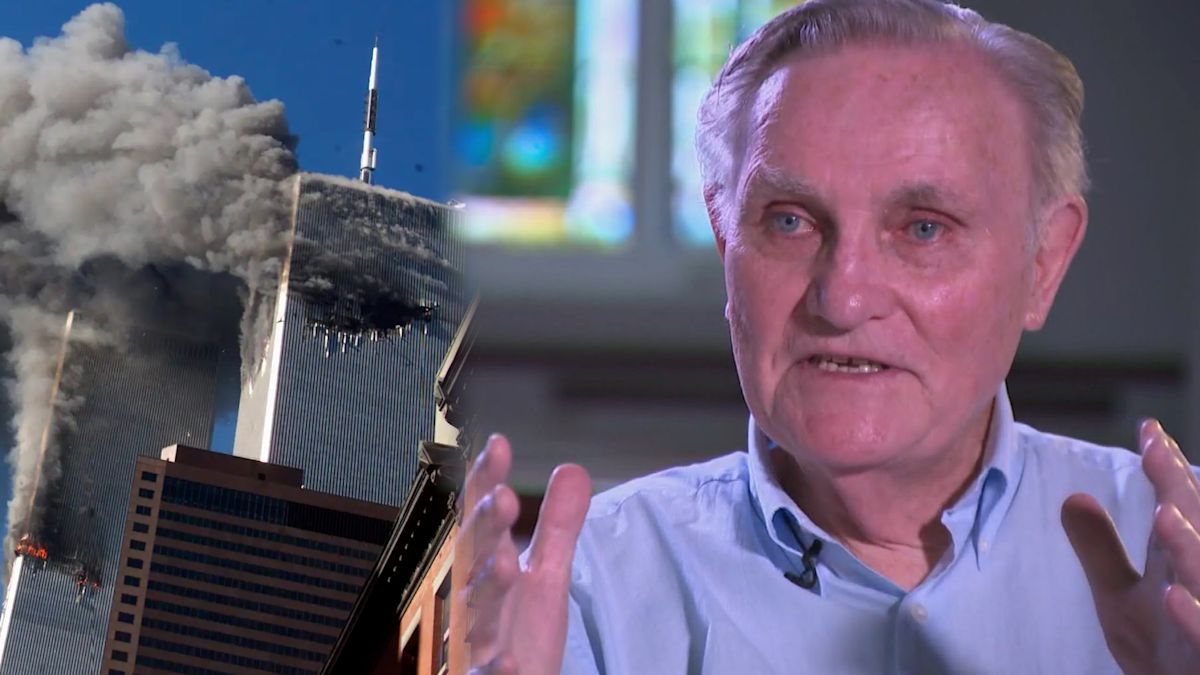
Canadian survivor of 9/11 looks back 25 years later
3 minutes ago
 World
World
Thousands turn out in Serbia for funeral of 'Butcher of Bosnia' Ratko Mladić
1 hour ago
 World
World
Canadian survivor of 9/11 terror attacks tells his story
1 hour ago
 World
World
France sets 3
2 hours ago
 World
World
The steel 'embodies his soul': 9/11 family takes World Trade Center beam across US
2 hours ago
 World
World
France put on a record
2 hours ago
 World
World
Africa, Mercator and the politics of how we see the world
3 hours ago