
The Future of Data Analysis in the Age of Artificial Intelligence
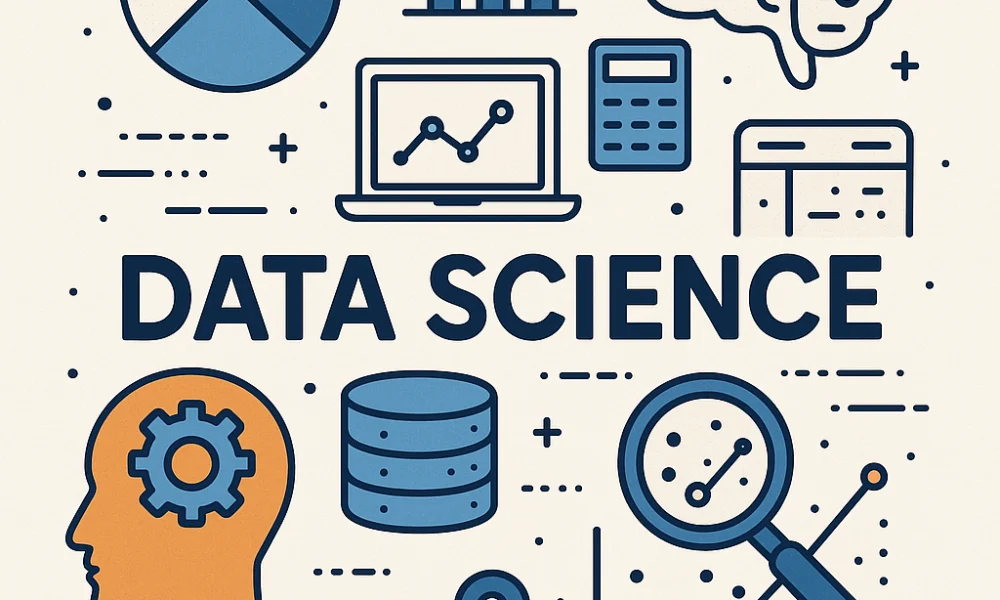
The development of generative models and AutoML platforms has prompted many specialists and business leaders to reflect on the future of analytics. It appears that algorithms are already capable of writing code, building models, and identifying patterns in vast datasets on their own.
From a professional standpoint, it is evident that artificial intelligence is truly a game-changer. Yet, a logical question arises: will AI displace humans from work processes, or are we simply witnessing the next stage in the evolution of tools? After all, without human resources, no problem can be solved 100%. Therefore, the answer to will data science be replaced by AI is a firm “no.” However, it is important to note that the profession itself is undergoing a transformation faster than ever before.
What AI is already automating in data science
Today, AI handles the most routine and labor-intensive stages of working with data. Tasks that once required days of painstaking effort are now completed in minutes.
Modern algorithms excel at the following tasks:
This impressive set of AI capabilities enables the automation of various workflows. Relieving specialists of these routine tasks allows them to focus on the more critical stages of a project.
Why AI won’t replace data scientists: key barriers
The primary weakness of any algorithm is its lack of understanding of the business context. AI can generate an algorithmic answer, but it cannot assess the extent to which that result applies to the company’s real-world challenges.
There are several key reasons why the human element remains indispensable:
Matters of security, model interpretability, and final decision-making remain the purview of the expert.
Role transformation: from coding to solution management
Requirements for specialists are evolving. Basic coding skills are becoming the standard, while the primary value is shifting toward product-oriented thinking, deep domain expertise, and the ability to effectively manage AI agents. Market demand for specialists performing simple, mechanical tasks is declining, whereas the value of experienced analysts and data architects continues to rise.
Instead of complete replacement, we are witnessing the emergence of synergy. Artificial intelligence is becoming a powerful assistant that frees data scientists from routine work, allowing them to focus on truly complex, creative, and strategic tasks.
The winners are the professionals and companies that view AI not as a threat, but as a tool to exponentially boost their efficiency.
Thus, the future of data analysis lies not in competition between humans and artificial intelligence, but in their effective interaction. AI handles routine tasks, while the specialist retains a key role in setting goals, interpreting results, and making decisions.
Related Stories
 AI News
Anthropic reveals Haiku 5.5 model as AI pricing war intensifies
10 minutes ago
 AI News
Meta Is Refusing to Remove AI
39 minutes ago
 AI News
White House AI Responsibility Accord & Super Intelligence Task Force: What Businesses Need to Know
39 minutes ago
 AI News
Watchdog group says ChatGPT should be restricted for teens
1 hour ago
 AI News
LibreOffice touts ‘no AI’ as a feature
2 hours ago
 AI News
WSU turns to artificial intelligence to assist sports communications
2 hours ago
 AI News
Sam’s Side: Artificial intelligence makes Halloween scarier than ever
2 hours ago
 AI News
AI could take advisors back 3 decades. That's a good thing
3 hours ago