
‘They simply did not understand one another’: What doomed Canada
Why did Canada-U.S. trade talks fall apart?
It depends on which side of the border you ask.
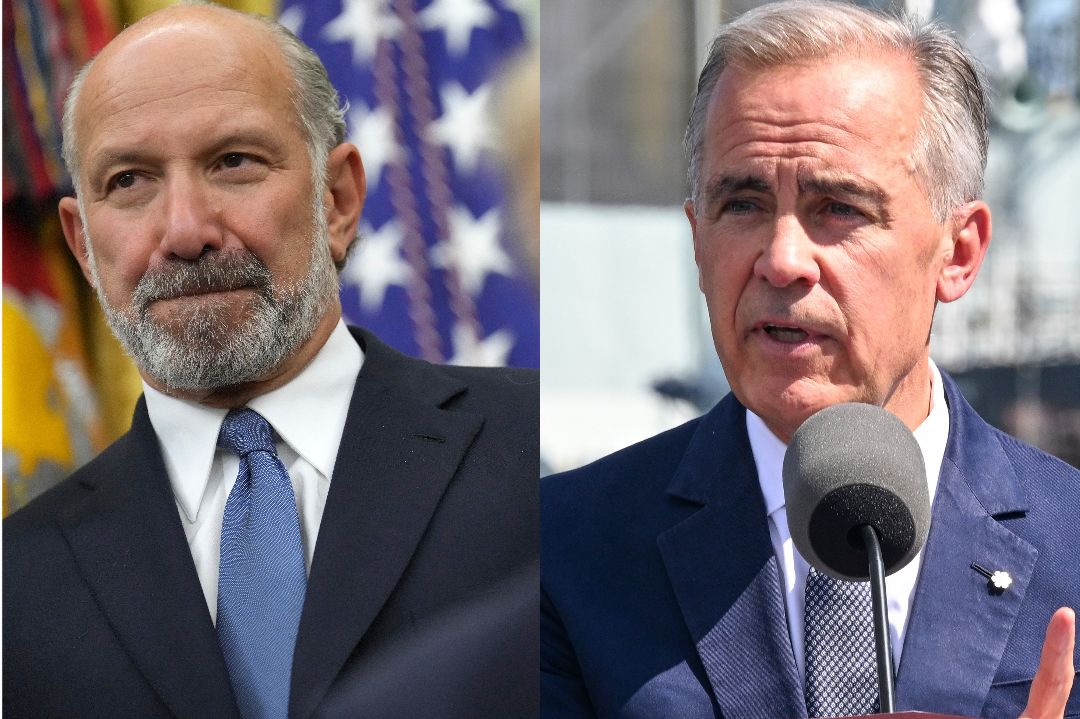
U.S. Commerce Secretary Howard Lutnick says Canadian negotiators introduced new demands hours before talks collapsed last month. He claims Canada "blew it up for political reasons only."
Prime Minister Mark Carney rejects that account. He says Washington maintained hard positions until the final hours of negotiations, only to soften some after Canada walked away.
The dispute is the latest escalation in a Canada-U.S. trade war that has stretched across key sectors including steel, aluminum and autos. The latest negotiations collapsed on Aug. 21 after Canada rejected last-minute U.S. terms it considered unacceptable. Washington then imposed tariffs of up to 50 per cent on $27.6 billion worth of Canadian goods, while Canada is set to impose matching counter-tariffs on U.S. products starting Sept. 8.
The disagreement over why those talks failed has now opened another front in the dispute: whether Canada walked away because Washington asked too much, or because standing up to the U.S. made political sense at home.
Akaash Maharaj, a senior fellow at the Munk School of Global Affairs and Public Policy, says there may be another explanation: the two sides may not have understood each other.
"Both the Canadian and American delegations were being sincere in what they're saying, but they simply did not understand one another," Maharaj told Yahoo News Canada.
Maharaj stressed that the Americans he spoke with were not in the negotiating room. However, he said they had spent considerable time with people who were.
Maharaj pointed to two disputes that he believes illustrate the disconnect.
One involved Canada's ability to negotiate trade agreements with other countries.
Maharaj said Canada understood a late U.S. demand as potentially giving Washington a "veto" over Canada's trade agreements with other countries — something Ottawa considered unacceptable.
But people close to the American side described the concern differently, he said.
Their concern was that other countries could export goods to Canada, which could then be re-exported into the U.S. as Canadian goods.
"If that's what they wanted, they expressed it very poorly," Maharaj said.
Another disconnect involved protections for French language and culture.
Carney has said the U.S. maintained demands involving Canadian language and cultural protections until the final stages of negotiations. In his Aug. 22 remarks announcing Canada's withdrawal, Carney said Ottawa was not prepared to compromise on French-language and cultural protections and alleged the U.S. pursued those issues "until the very last minute."
More recently, Carney said Washington appears to have softened on some of those positions since the talks collapsed.
Maharaj said the American side did not appear to understand how deeply French-language protections run in Canada or the political consequences of asking Ottawa to set them aside.
"They simply do not seem to understand that this runs very deep in Canada," he said.
Maharaj said the similarities between the countries may actually make such misunderstandings more likely.
"Canadians and Americans are similar enough that we think that we understand one another," he said.
"But that similarity often masks very deep differences."
Did Canadian politics play a role?
Phil Triadafilopoulos, a University of Toronto political science professor, cautioned that anyone outside the negotiating room cannot independently verify either government's version of events.
What is clear, he said, is that Canada and the U.S. are offering "two very different takes" on why negotiations collapsed.
Both governments also have political reasons to frame their positions favourably, he told Yahoo News Canada.
And Triadafilopoulos isn't dismissing domestic politics entirely.
"There may be a domestic political dimension to this as well, where standing up to the United States lends credibility to both political leaders and political parties," he said.
His comments come days after Carney's Liberals swept three federal by-elections on Aug. 31, retaining seats in Toronto and British Columbia while flipping Chicoutimi–Le Fjord in Quebec from the Conservatives.
The Canada-U.S. trade war was also part of the political backdrop to those contests. An Ipsos poll released ahead of the votes found the Liberals leading the Conservatives nationally by 44 to 33 per cent, while 63 per cent of Canadians said Canada was right to stand firm in U.S. trade negotiations, even if it meant higher costs and job losses.
An released as voting began found the Liberals leading nationally, while 57 per cent of respondents approved of Carney's handling of the trade dispute.
Still, Triadafilopoulos said political considerations are difficult to separate from the substance and tactics of any negotiation.
Maharaj believes Washington's apparent softening on some issues since the breakdown is significant. Carney has also publicly pointed to what he describes as changes in the U.S. position.
"My sense is that the Americans were genuinely shocked that Canada walked away," Maharaj said.
That may suggest U.S. negotiators believed Canada's reliance on American trade meant Ottawa ultimately wouldn't say no.
But Maharaj doesn't believe the differences are impossible to resolve.
"It is still possible for there to be a meeting of minds between the two countries," he said.
Carney has also left the door open, saying Thursday that Canada is ready to negotiate a deal that benefits both countries when Washington is ready.
For now, the competing accounts leave a more fundamental question: before Canada and the U.S. can reach another deal, do they understand what the other side is actually asking for?
Related Stories
 Canada
JUST IN: Mistrial is formally declared in the Lindsay Clancy trial after a last
36 minutes ago
 Canada
Some voters alarmed by self-declaration requirement on mail
37 minutes ago
 Canada
Judge says he is going to declare mistrial in Lindsay Clancy case, defence files appeal. Live updates here
1 hour ago
 Canada
Canada must prepare for a 5°C hotter future and act now to avoid worst impacts: new federal report
1 hour ago
 Canada
Here’s how the heat dome over U.S. will impact Canada, according to experts
1 hour ago
 Canada
Trump looms over U.S. midterms. Will he help or hurt Republicans?
2 hours ago
 Canada
State of Canadian cottage real estate analyzed as buyers navigate shifting market
2 hours ago
 Canada
New owner says they're working to re
2 hours ago