
Thirteen Ways of Looking at Artificial Intelligence
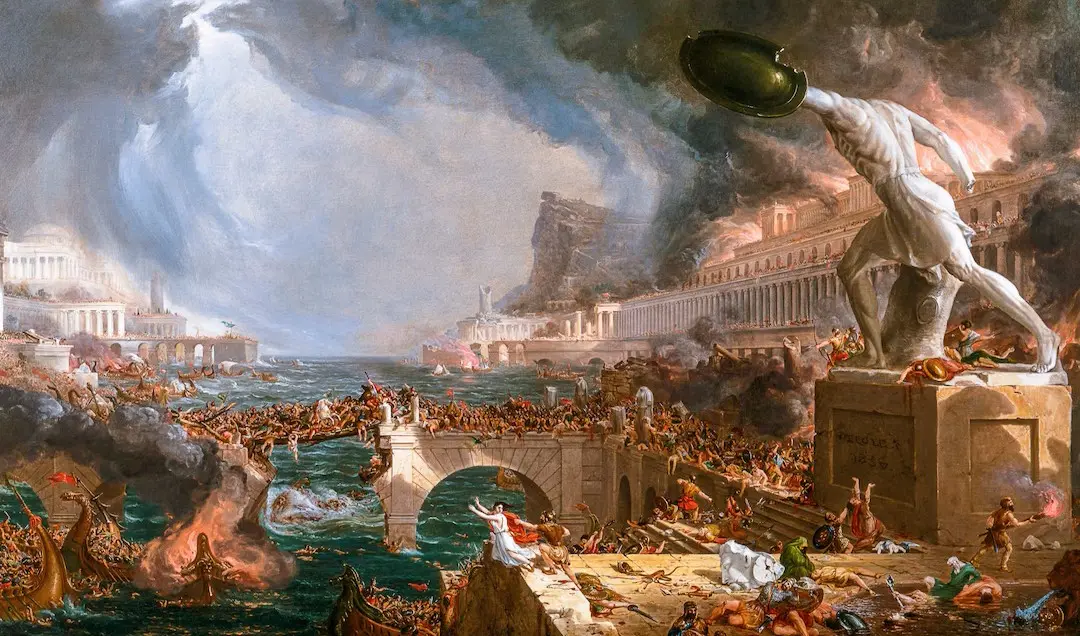
“Can there be forbidden—or, as I prefer, inopportune knowledge? Could there be knowledge, the possession of which, at a given time and stage of social development, would be inimical to human welfare—and even fatal to the further accumulation of knowledge?”
—Robert Sinsheimer, scientist, 1978
“People outside the field are often surprised and alarmed to learn that we do not understand how our own AI creations work. They are right to be concerned: this lack of understanding is essentially unprecedented in the history of technology.”
—Dario Amodei, CEO, Anthropic
“AI is progressing at a rate that our society might not be ready for. This will lead to unprecedented social and safety risks.”
—Shengjia Zhao, chief scientist, Meta AI
“Society is not prepared for AI, and that terrifies me. When I speak with politicians, or anyone outside frontier labs, it seems many people still think the capabilities might be marketing. They don’t realize the debate inside the companies is if AI will be advancing itself past our control in two years or four.”
“It feels like all the AI labs are constrained by competition to minimize their work on catastrophic risks, even though most industry leaders have an uncomfortably high probability that things could go terribly wrong. This is a technology that doesn’t have an off switch you can just flip.”
—Jon Wolverton, senior software engineer, Google
“I think we should be very careful about artificial intelligence. If I had to guess at what our biggest existential threat is, it’s probably that.”
—Elon Musk, CEO, Tesla and SpaceX
“With artificial intelligence we are summoning the demon.”
“It increasingly appears that humanity is a biological bootloader for digital superintelligence.”
“The single most serious national security threat we’ve faced in a century, possibly ever.”
—Dario Amodei, CEO of Anthropic, on artificial intelligence
“Developing technology shouldn’t require a leap of faith for our continued survival.”
—Patryk Grzelak, member of technical staff, Anthropic
—Elon Musk, CEO of Tesla and SpaceX, on the chances of AI-caused human extinction
—Geofrey Hinton, the “Godfather of AI,” on the chances of AI-caused human extinction
—Dario Amodei, CEO of Anthropic, on the chances of AI-caused human extinction
“ 99.9% within the next hundred years.”
—Ramon Yampolsky, AI safety researcher and computer scientist, on the chances of AI-caused human extinction
“I resigned from Anthropic today. I spent the last three years doing pretraining research at both OpenAI and Anthropic. Neither company is acting responsibly. They are racing straight to self-improving superintelligence and gambling with our lives. The people building AI earnestly believe that it could kill us all by the end of the decade. This is not a marketing stunt. If anything, many executives and senior researchers will couch their phrasing in the press to sound sensible—but I hear the same people express fear privately. No other human activity poses this level of danger.”
—Jacob Coxon, researcher at Anthropic
“I think that AI will probably most likely, sort of, lead to the end of the world. But in the meantime, there will be great companies created with serious machine learning.”
“The Financial Times recently forecast that $9 trillion will be spent on AI infrastructure by 2030.”
—Alistair Alexander, journalist
“Energy analyst Grid Strategies recently estimated that data centers will require 90 gigawatts of new power in the U.S. alone by 2030, or about 25% of all U.S. electricity demand today.”
“These are the largest single points of consumption of electricity in history.”
—Jesse Jenkins, climate modeler at Princeton University, on AI data centers
“The numbers that we are seeing about AI data centers, in terms of their size, their needs for energy and water, and their other physical and biological impacts, are mind-bogglingly gargantuan.… It is difficult to fathom numbers this large, or wrap our heads around the catastrophic damage to our Earth that a single ‘hyperscale’ data center can exact.”
“I do guess that a lot of the world gets covered in data centers.”
“The creature that wins against its environment destroys itself.”
—Gregory Bateson, anthropologist
“You can’t fight it. You have to go with it.”
—Donald Trump, president of the United States, on data centers in America
“There is a SICK conspiracy going on against AI and Data Centers, and the only one that is happy about it is China. WHOEVER WINS AI, WINS! We are leading China, and all others, and will continue to do so. Conspiracy Theorists, Treasonists, Traitors, and Leakers, BEWARE!
—Donald Trump, president of the United States, in a social media post, accompanied by an AI-generated image of himself seated amid an army of robot dogs and robot warriors
“The only control or ‘guardrails’ that AI needs is a STRONG AND SMART (High IQ!) PRESIDENT, and the U.S.A. has that, in spades!”
“The people that say AI is going to destroy the World, and that Data Centers are bad for your neighborhood, are the same people that said, just a short time ago, that the World would be extinguished by ‘Climate Change.’ These people are Revolutionaries, but Revolutionaries for a Bad and Evil Cause.”
“Seven in 10 Americans oppose constructing data centers for artificial intelligence in their local area.”
“75% of Americans now oppose local data center development.”
“In a country where few issues unite people across the political spectrum, one appears to be bucking that trend: opposition to data centers built to power artificial intelligence.”
“Americans have soured on data centers, polls show, and the sentiment is profoundly bipartisan.”
“In an era when political polarization is near record highs, data center backlash represents a rare area of consensus on both sides of the political aisle.”
“Do not look away. Do not avert your gaze. Do not turn aside.”
“We the People of the United States, in Order to form a more perfect Union, establish Justice, insure domestic Tranquility, provide for the common defense, promote the general Welfare…”
“We hold these truths to be self-evident, that all men are created equal, that they are endowed by their Creator with certain unalienable Rights, that among these are Life, Liberty and the pursuit of Happiness.—That to secure these rights, Governments are instituted among Men, deriving their just powers from the consent of the governed, —That whenever any Form of Government becomes destructive of these ends, it is the Right of the People to alter or to abolish it, and to institute new Government, laying its foundation on such principles and organizing its powers in such form, as to them shall seem most likely to effect their Safety and Happiness.”
—United States Declaration of Independence
“It is rather for us to be here dedicated to the great task remaining before us…that government of the people, by the people, for the people, shall not perish from the earth.”
—Abraham Lincoln, former president of the United States, the Gettysburg Address
You’re in a faraway city and you need to catch a flight. It’s been nine days since you’ve seen your wife and sons. Standing on the sidewalk with your suitcase, you raise a hand in the air. Two yellow cars pull over to the curb, hungry for your business. The first cabbie says: “For twenty dollars, I promise a smooth and safe ride on a tried-and-true route that takes half an hour.” The second cabbie, a younger man who speaks fast, says: “I know a shortcut that only takes fifteen minutes but if you get in there’s a chance you’ll lose your job and possibly end life on earth.”
“I think it is basically certain that we will cure cancer and neurodegenerative diseases, probably within the decade. We will almost certainly solve fusion within the decade—nanotechnology, quantum computing, diabetes. This is going to happen.”
Why should we believe you? And what about the many AI researchers who contradict such optimism? And how much money have you made making such promises? And how much money do you promise investors they’re going to make off these speculative cures and discoveries? And how much cancer will data centers cause due to increased levels of pollution? And what is the use of a breakthrough cancer cure if you haven’t a tolerable planet to take it on?
And whose interests does AI finally serve?
“The devil took Him up on an exceedingly high mountain, and showed Him all the kingdoms of the world and their glory. And he said to Him, ‘All these things I will give You if You will fall down and worship me.’”
The tech lord took the Americans up on an exceedingly high mountain, and showed them their spacious skies, fruited plains, and purple mountain majesties. And the tech lord said to the Americans, “All these things I will take from you to make untold sums of money—as I surveil you, deprive you of your work, obviate your minds, bind and rivet digital chains upon your children, and generally humiliate the gift of your aliveness, if not wipe you out entirely—if you will fall down and worship me.”
“The genie is out of the bottle, and you’re not going to put it back in.”
—Pratik Thakar, global vice president and head of generative AI at Coca-Cola
“We are always ready to take refuge in a belief in determinism when freedom weighs upon us or when we need an excuse.”
—Jean-Paul Sartre, philosopher
“Shall I not have intelligence with the earth?”
“It is time for us to kiss the earth again…”
“We must understand what the health of the earth requires, and we must put that before all other needs.”
“We have only begun to love the earth.”
“If we don’t lift our voices, we allow Others (who are ourselves) to rob the house.”
“The master’s tools will never dismantle the master’s house. They may allow us temporarily to beat him at his own game, but they will never enable us to bring about genuine change.”
“The task of our generation is one of metaphysical reconstruction.”
—E.F. Schumacher, economist, social thinker
“We must realize that modern civilization is thoroughly oriented towards dehumanizing humanity in every possible way; that is to say, we are fast turning into robots or statues with no human souls. Our task is to get humanized once more.”
—D.T. Suzuki, Zen teacher and scholar
“The secret of man is the secret of his responsibility.”
—Vaclav Havel, playwright, former Czech president
What would Thomas Jefferson, Martin Luther King, Jr., Woody Guthrie, Henry David Thoreau, Thomas Hardy, Rachel Carson, John Woolman, Albert Schweitzer, Pete Seeger, Joanna Macy, Wallace Stegner, Jean Giono, Colette, Karl Kraus, Black Elk, Mark Twain, Franz Kafka, D.H. Lawrence, William Blake, Allen Ginsberg, John Muir, St. Francis, St. Clare, Pope Francis, Thich Nhat Hanh, Charlie Chaplin, Federico Garcia Lorca, Jacques Tati, Pablo Neruda, Frida Kahlo, Bob Marley, Henry Miller, Ivan Illich, George Orwell, Robinson Jeffers, Eduardo Galeano, Ananda Coomaraswamy, John Moriarty, Mohandas Gandhi, Leo Tolstoy, Vaclav Havel, Aldo Leopold, Edward Abbey, Thomas Merton, Rainer Maria Rilke, E.E. Cummings, Kathleen Raine, Nikos Kazantzakis, Nazim Hikmet, Dylan Thomas, Mary Austin, Gene Logdson, Frederick Franck, Saul Bellow, Jack Gilbert, Robert Bly, Henry Adams, Ansel Adams, Rene Dubos, Simone Weil, William Carlos Williams, C.S. Lewis, Abraham Heschel, Toni Morrison, Liberty Hyde Bailey, Jane Goodall, Peter Maurin, E.B. White, W.S. Merwin, Galway Kinnell, Meridel Le Sueur, Jim Harrison, Kenneth Rexroth, Huston Smith, Barry Lopez, Peter Mathiessen, Robert Aitken, William Stafford, Daniel Berrigan, Dorothy Day, Mary Oliver, and Wendell Berry say about artificial intelligence and its spreading data centers?
Would they hold aloof from weighing in?
Would they commit tongue-suicide?
Would they blackmail themselves into silence?
Would they quietly beg off to protect their reputations and stock portfolios?
Would they retreat further into Lethean busyness and the drugging glow of their phones?
Would they be—in a politic, cautious, and meticulous sort of way—critical of AI (Yes, AI does pose undeniable risks to certain social mores), but also willfully and stridently optimistic, counseling against—heresy of heresies—Luddism, devolving finally into evasive, tortuously convoluted mush (AI seems to assimilate people into consequentialism. The tech community is already filled with consequentialists, especially within the effective-altruism movement…), hiding behind fancy-sounding phrases, insider language, and a decadence of nuance?
Would they say, “No one really knows where this technology is taking us,” even as many scientists have been warning us for years, if not decades, about where this technology is taking us?
Would they make a show of assuring us that they are in fact not one of those “AI doomers,” even as many of AI’s creators admit that they don’t understand their own creations; even as some AI creators shout at us about impending doom; even as technology has a pesky and obstinate habit of “biting back” in ways unforeseeable, despite all our brilliant analyses and predictions; and even as AI’s Earth costs sound an awful lot like doom?
Would they say, “Look, I’ll admit it: the AI industry certainly has done a poor job of earning the nation’s trust, but we shouldn’t take the hide off with the hair,” as if our problem is not a budding technocratic dystopia and the erosion of the holiness of the unaccomodated human and the acceleration of the desecration of the Earth upon which we unalterably rely, but rather a trying case of bumbling public relations?
Would they say, “Would you rather China wins the AI race?” Would they add that there is no alternative but no-holds-barred progress for the sake of “national security”? Would they fascinatingly pretend that world leaders are constitutionally unable to meet with each other and speak on behalf of the fate of the planet? Would they assure us that Mutually Assured AI Destruction is just as supremely wise as Mutually Assured Nuclear Destruction?
Would they strongly encourage us to sit this one out because ultimately cooler heads will take over and prevail?
“I don’t like the blitzkrieg either but what can you do?” Does that sound like them?
Would they tell us to rest easy because Jesus is coming soon with his big eternal broom and a yen for comprehensive planetary housekeeping?
Would they regret to inform us that humans are just a speck of dust on the trail of evolution soon to vanish like dinosaurs and dodo birds while the AI bots proceed merrily without us and there’s nothing we can do about that in this absurd life of crass and stray casualty?
Would they advise us to tighten our seatbelts and get ready for impact?
Would they say they are relieved to be shades and retired from the old rigamarole of world repair?
Would they tell us—even as data centers suddenly loom above our backyards, eating land, poisoning skies, plundering waters, filling ears with their sickening din—that the threat is a psyop, a hoax, a partisan ploy, a masterfully disguised corporate con?
Would they shrug, throw up their hands, and inform us that God’s away on business?
Or would they lift up their voices in resistance?
Would they press upon us questions and poems, paintings, jeremiads and prayers, songs, speeches, stories, and myths, even if “shrill,” even if “alarmist,” even at the risk of ill-manneredness and awkwardness?
Would they patiently remind us that advancements in technology are not inherently neutral?
Would they patiently remind us that shortly after we entered the atom pigeons and children fell burning from trees in Nagasaki?
Would they tell us that the surest obstacle to deep change is the conviction that we cannot change because we are implicated in what is wrong?
Would they recall to us the inconvenient gift of our obligations, our obligations to our young people, all the young people looking to us, looking to you, looking to me, looking to all the adults, not only for guidance and an abiding commitment to humanity and the Earth but a belief in the possibility of a future?
Would they tell us, bluntly and maternally, that the young are the sacred trust of all of us whether we like it or not?
Would they take time to emphasize that we live in a democracy?
Would they remind us, even if exasperatingly, what democracy requires?
Would they remind us, even if exasperatingly, that “we the people” and the “government” should not be twain?
Would they take time to emphasize that, despite what we might feel and tell ourselves, we are not crushed and helpless, that we are not ghosts yet?
Would they encourage us to not be mere scrolling voyeurs of this moment but actual participants?
Would they ask, bluntly and maternally: What have you done with the power that was entrusted to you?
Would they mention that the tech elites and elected officials (officials who are supposed to represent the people) appear to be cavalierly gambling with humanity’s future without the people’s consent?
Would they repeat that question until we hear it?
Would they mention how monstrously callous we Americans must seem to the rest of the world—human creatures and non-human creatures—lost as we are to our edgeless dream?
Would they patiently explain the connection between the energy and resource demands of AI and the continuity of “forever wars”?
Would they show us how the resistance to artificial intelligence and its data centers, a growing widespread resistance uniting people across the political spectrum, is perhaps an opportunity to come together in amity and in peace in service of our ailing Earth, our common interests, and our troubled country?
Would they boldly suggest that now is our chance to radically revise our nation—to address long-festering problems, economic, political, ecological, and metaphysical?
Would they caution us to not double down on political hate?
Would they remind us—hauntingly, chasteningly, coheringly—that love enforces care, and care enforces sacrifice and risk?
Would they help us know again of what the poet sings, that at the frailest touch the wild braid of Creation trembles?
Would they urge us to recall that when standing on the edge of an abyss progress means taking a step back?
Would they remind us that we can take a step back?
Would they remind us that reality—despite the numbing phantasmagoria of figments, fragments, and shocks that is the Internet—is still real?
Would they say that this world—and no other—is the kingdom we’ve been looking for?
Would they add that the religion the whole world is perhaps groping toward is one of reverent return, of what the wise theologian calls “sufficiency as abundance”?
Would they presume, come what may, an infinite heart somewhere?
Would they implore us, above all, to keep the divine vision alive in this time of trouble?
Would they point to a dirty sparrow, a shallow river, an evening hill, a sleeping child and say there is no higher heaven, no greater mystery?
Related Stories
 AI News
Meta glasses captured and shared intimate images without users’ consent, lawsuit claims
10 minutes ago
 AI News
There are few players, but potentially plenty of losers, in so
1 hour ago
 AI News
Pa. Gov. Shapiro: Congress, federal government must regulate AI
1 hour ago
 AI News
Deepfake doctors peddling bogus cures are becoming more convincing
2 hours ago
 AI News
America Is Using the Wrong Artificial Intelligence Scoreboard
2 hours ago
 AI News
UChicago launches new master’s degree in applied AI
2 hours ago
 AI News
Opinion | This is how AI kills us all
2 hours ago
 AI News
Counter
2 hours ago