
Opinion: Former concert producer says council got it right
I am Calgary-born and raised. I learned to put on concerts here, and I have put on a lot of them.
These days, the work takes me all over the world, which offers some perspective on which rules are worth fighting.
I have been on the production teams of Badlands and Stampede party tents, and I run a licensed security agency now in its 22nd year that still works in this scene.
I have stood between a bylaw officer saying "turn it off" and an artist's rep saying "please, just one more minute." I have taken the late-night call from a neighbour and pulled the levels down myself.
We get to do this for a living. We are not entitled to it. And the work of coexisting with the people trying to sleep across the street belongs to us, not to them.
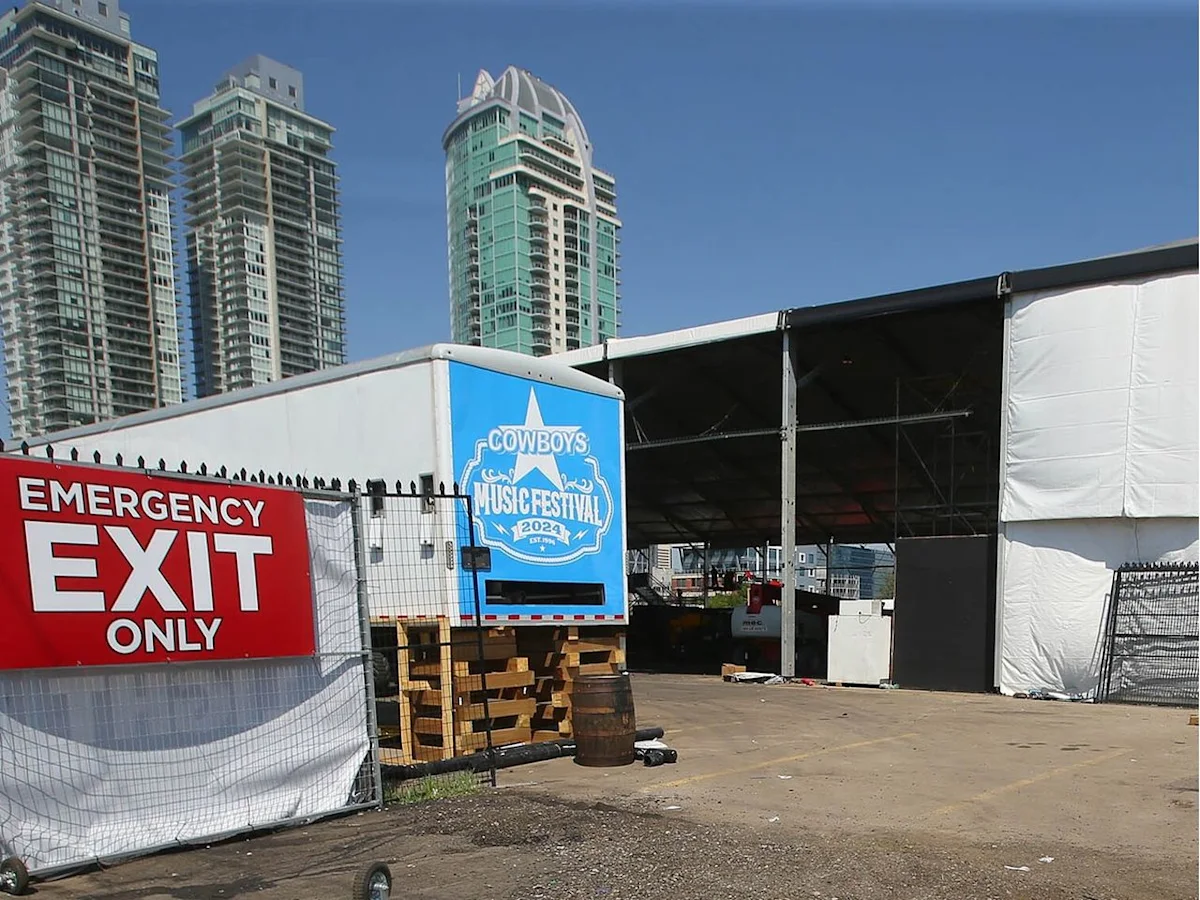
There is history worth knowing. Through 2017, Alberta's special-event liquor licence capped events at four days and required a major venue, so a 10-day stand-alone music tent couldn't legally exist. The workaround was to license it as an existing bar's patio, the way Cowboys did from the late 1990s.
By 2019, both clauses were gone, replaced by a risk-assessment model. Then COVID hit, and when we returned the playing field was different. If you have wondered why there are so many more tents than there used to be, that timing is most of the answer.
Regulatory constraint did not disappear. It moved from liquor licensing to noise, and that is the fight now. Recently it boiled over — city council held the line on tighter limits, a festival was cancelled and the premier called the result the work of the fun police.
I won't adjudicate who is right about the decibel numbers or how much notice was owed for what, because from my seat, it was never about that. When the events and the people who live nearby aren't productively talking to each other, the city has to step in as the tiebreaker, and then no one feels it is fair.
That is not a noise problem. It is a breakdown in trust, and you do not repair that with a sound meter.
A 1 a.m., bass line matters to the family three blocks away, and I won't pretend otherwise. There is loud and there is too loud, and on a show site, we know the difference the moment we cross it. So does the bylaw officer with the meter.
This was never about who can tell. We can all tell. It is about who acts on it first. That answer does not sit with council or with the neighbours. It sits with us, the concert producers, because we are the ones with our hands on the faders.
The standard moved and the industry was slow to catch up. Responsibility once stopped at the fence line. It no longer does.
The blocks around our fence line are now part of the event, and we share the responsibility for it. We don't always get it right, but we learn and adapt. Almost every outdoor show takes complaints; what matters is whether we react quickly enough today, and build remedy into next year's plan.
At the Event Safety Alliance Canada and the Global Crowd Management Alliance, we advocate that operators should be setting the standard, not living under one imposed on us.
Here is what the cost argument misses: managing our curfews and owning our impact is not a tax on the business. It is the business. Goodwill is the asset that buys us next year.
So my judgment on what council settled is simple: the exemptions that major events get during Stampede are reasonable. The later hours the tents enjoy are not a right. They are a privilege and should be treated as such.
And before anyone says restrictions kill shows, I have produced dozens of shows at notoriously strict venues across the continent. When we show up in a market where we have to bring the levels down, we do. It is literally our job to make the show happen in accordance with local law.
A city does not owe its residents a guarantee of silence. Nobody in a vibrant urban core is promised their surroundings will never touch them. The test was never zero impact; it is reasonableness. A wall that shakes at 1 a.m. fails it. Two weeks that run a little louder than the other 50 do not.
But the people on the other side of the fence are not an abstraction. Our neighbours include firefighters, nurses and shift workers with 5 a.m. alarms. Choosing to live downtown should not come with a nightclub for a roommate. Both sides can get most of what they want, like any good negotiation.
But it is not free, and that bill belongs to us, not to the family across the street.
Today, this is a Calgary argument, but it is not a Calgary problem. Every city that allows outdoor shows has this fight, and everyone who runs them is on the same side of it.
So, to those of us with our hands on the faders: go knock on the doors before a bylaw officer does. Apologize when you are wrong and then go make it right. Noise exemptions are not a right. They are a privilege, and privileges can be revoked.
Remember, we get to do this for a living. Don't blow it.
Chris Kerr is president and founder of XA Security, which provides event security at festivals and concerts, including the Calgary Stampede grounds. He is treasurer of the Global Crowd Management Alliance and a past vice-chair of the Event Safety Alliance Canada.
Related Stories
 Opinions
White House TV pool back in operation after ban of news outlets
7 hours ago
 Opinions
White House TV pool back in operation after ban of news outlets
8 hours ago
 Opinions
2 men charged after woman trapped in tipped
17 hours ago
 Opinions
Judge orders Trump White House to restore access to CNN, MS Now and Politico
1 day ago
 Opinions
Tom Cruise's 'Outrageous' Digger Already Looks Set To Become 2026's Most Divisive Film
2 days ago
 Opinions
Which mayoral candidate has the best digital campaign? | Opinion
1 week ago
 Opinions
Supreme Court denies Trump's request to restrict mail
1 week ago
 Opinions
’60 Minutes’ Changed Its Look, Not Its Formula | Analysis
1 week ago