
Truth and Reconciliation Day 2026: 'The work is happening on the ground’: Carrying reconciliation forward
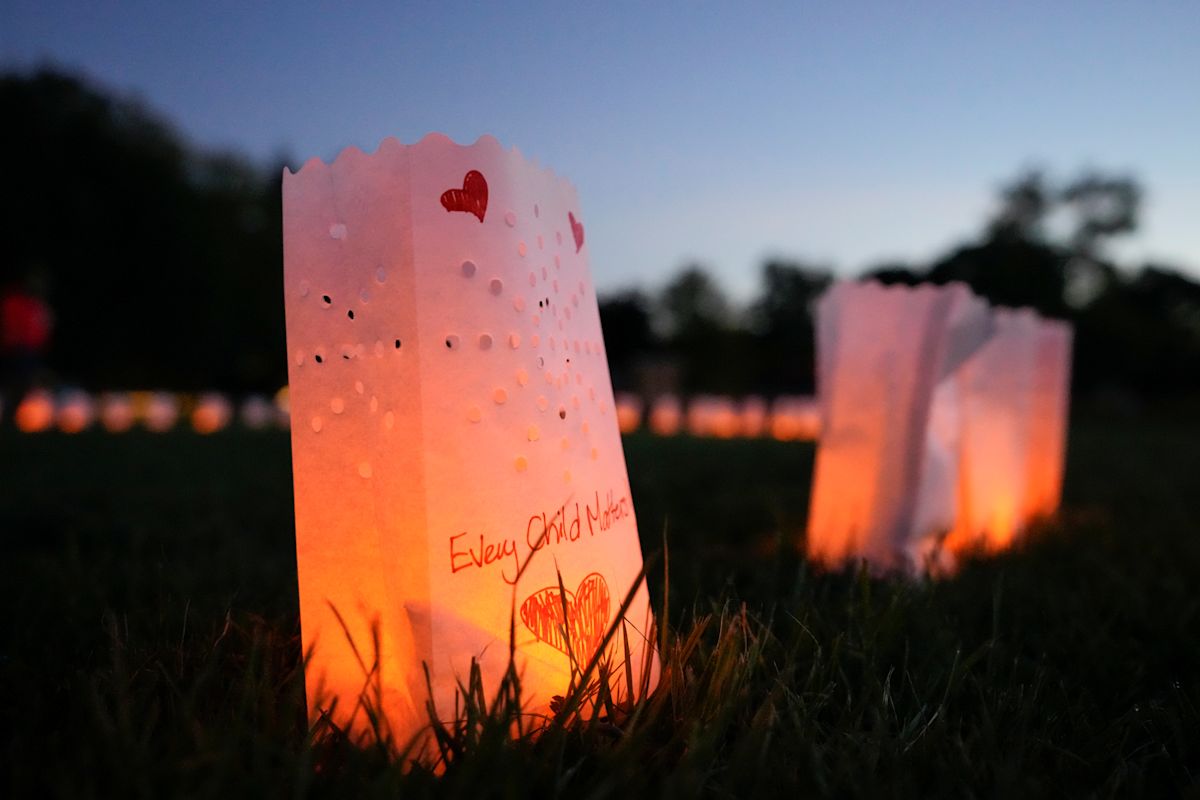
On Sept. 30, Canadians mark the National Day for Truth and Reconciliation and Orange Shirt Day, to honour residential school survivors, remember the children who never returned home and recognize the continuing impacts of the residential school system.
Orange Shirt Day grew from the story of Phyllis Webstad, who was six years old when she arrived at St. Joseph Mission Residential School in British Columbia wearing a new orange shirt bought by her grandmother. The shirt was taken from her on her first day.
Webstad's story became the foundation of a national movement built around the message "Every Child Matters."
The day is also rooted in the Truth and Reconciliation Commission of Canada's (TRC) Call to Action 80, which called for a statutory day of commemoration to honour survivors, their families and communities, and keep the history and legacy of residential schools part of the reconciliation process.
But remembering is only one part of the work.
The TRC released 94 Calls to Action in 2015, setting out concrete steps for governments, institutions and individuals to address the legacy of residential schools and advance reconciliation. They cover everything from child welfare and education to health, language, justice, commemoration, media, business and the relationship between Indigenous and non-Indigenous peoples.
A decade later, the work is still unfolding. The federal government says more than 85 per cent of the Calls to Action that involve federal leadership alone or jointly are completed or well underway. The National Centre for Truth and Reconciliation, however, continues to stress that reconciliation is not finished.
But what does that work actually look like in the lives of Indigenous people today?
Yahoo News Canada spoke with two Indigenous activists actively working in their communities to understand what that looks like on the ground, what has changed and what still needs to happen.
Creating spaces where youth can heal: 'I feel like I'm connected'
The jingle dress moves as Eternity Neekan dances.
For her, it is more than a beautiful piece of clothing. It is a connection to her family, her community and the people around her who need healing.
"I feel really proud," the 22-year-old said in a phone interview. "I feel beautiful. I feel like I'm connected."
Neekan is from Mishkeegogamang Ojibway Nation in Northern Ontario, and she says dancing is healing for her.
"I love dancing," she said. "I'm not only dancing for me, I'm dancing for my family. I'm dancing for people there who need healing."
That feeling is at the heart of what reconciliation means to Neekan.
It is not just something that is brought up once a year. She explained it is about making culture easier for young people to access, giving them places where they feel safe and helping them feel connected.
"Truth and reconciliation for me means revitalizing culture, engaging culture, making it accessible for youth today," Neekan shared. "Just creating safe spaces for these youth so they can continue healing."
Neekan is an Indigenous youth and human rights advocate and community leader based in Thunder Bay, Ont. She first found her way into youth advocacy when she was 16.
She had joined Thunder Bay's Regional Multicultural Youth Council while looking for a job. Her mentor, Moffat Makuto, asked her to become a peer mentor at Superior Collegiate and Vocational Institute.
She was told to talk to other students. Take them for coffee and ask how they were doing.
"I believe that's how I started getting into more advocacy for youth," she said.
Soon, she was running after-school programs, attending conferences and speaking with city council about what young people needed to feel safer.
Thunder Bay has a large Indigenous population, with hundreds of young people from surrounding First Nations coming to the city for high school, and having somewhere to go and people to turn to matters, Neekan highlighted.
Sometimes, she sees the difference in something as simple as what happens after a program ends.
"They're like, 'Can I come again? Can we do this again?'" she said. "And I'm like, 'yes, of course. That's what we're here for.'"
That same idea is behind the free regalia closet she helps her friend Tisha with. Young people can borrow traditional regalia to wear at powwows, removing one more barrier to taking part.
"To me, regalia is more than just something pretty," Neekan said. "It's very meaningful. I was taught every piece has a spirit, and there's a connectedness to you."
Eternity Neekan is a 22-year-old First Nations youth leader, human rights advocate, and traditional dancer. (Image supplied)
When Neekan thinks about reconciliation, she wants that connection to be there for the next generation.
She wants to see more Indigenous young people become doctors, pursue an education and step into the world with confidence. But she also wants them to come home.
Neekan hopes they will have "the bravery to go out into the world" and then return to their communities, "and just help and expand it and just keep advocating for our needs."
That, to Neekan, is the future she wants to see.
'The work is happening on the ground': Dr. Cynthia Wesley-Esquimaux
For Dr. Cynthia Wesley-Esquimaux, that work is already underway.
As Lakehead University's first Indigenous Chair for Truth and Reconciliation, Wesley-Esquimaux has spent years helping communities, institutions and Canadians grapple with what truth and reconciliation can actually mean.
Lakehead says she continues to develop pathways toward reconciliation across Canada, while also serving as chair of the Governing Circle for the National Centre for Truth and Reconciliation.
Dr. Cynthia Wesley-Esquimaux, Chair on Truth and Reconciliation in Canada for Lakehead University. (Image courtesy: Faculty of Social Work, University of Toronto)
Nearly four decades into her work, where does she think Canada stands in 2026?
"We have made some headway," she said. "There is still much to do, and we're now increasingly coming up against denial."
Still, Wesley-Esquimaux sees reasons for hope, especially in areas where people are turning reconciliation into something practical.
"I think people on the ground level is where most of the action is happening," she said.
She points to education as one area where she has seen meaningful movement. Universities and colleges across the country have created Indigenous spaces, expanded Indigenous learning and worked to make Indigenous students feel a sense of belonging, she explained.
"[Late Canadian Senator and lawyer] Murray Sinclair often said, 'Education got us here, education will get us out,'" she said. "I think the education systems across Canada have done their best to actually enliven that statement."
But Wesley-Esquimaux's understanding of reconciliation is also deeply personal.
Her mother and stepfather both spent years in residential schools, and she grew up seeing the effects of that trauma ripple through her family and community.
"I want to know what the hell happened," she said. "Why are people behaving like this?"
That question became part of a lifelong search for understanding, but also for healing. She chose a different path for herself and her children, she said, and saw the next generation begin to build lives shaped by different choices.
"For me, that was something that was very important," Wesley-Esquimaux stressed. "It's up to us to make the choices that actually create a better life for the next generation."
That, she believes, is inseparable from reconciliation.
"Healing can happen because we choose to have it happen," she said. "We choose to embrace the idea of letting go."
It's hard to have reconciliation without healing. People are still very angry and hurt and lashing out.
Wesley-Esquimaux's vision for what comes next stretches back centuries, to Indigenous teachings about how people should live alongside one another and care for the world they share.
The Two Row Wampum, she said, offers a powerful model. Two peoples travel down the river side by side, without interfering with one another, in a relationship built on "peace, friendship, and respect."
For Wesley-Esquimaux, that teaching isn't just history. It's a blueprint for where Canada could go next.
Related Stories
 Canada
Reports on what Cornell’s Jane Doe initially told investigators prompt fresh questions in newly reopened investigation
26 minutes ago
 Canada
Canadian says Meta won't let her talk to a human after killing her accounts
26 minutes ago
 Canada
Canada
26 minutes ago
 Canada
A Trump adviser's outburst and a new poll suggest Canada’s tariff strategy is landing
27 minutes ago
 Canada
Prince Harry’s children targeted by ‘European paparazzi’ while at school in England
27 minutes ago
 Canada
Almost 40K residential school records will be destroyed. Not all survivors think they should be
1 hour ago
 Canada
Far right gains ground in Europe, as Canada pivots from Trump to EU
1 hour ago
 Canada
After 27 parties shut down in Ontario, police watching N.S. university homecomings
1 hour ago