
UK warns businesses: AI coding spikes vulnerabilities

The speed at which artificial intelligence is transforming software development has led British authorities to take action.
The UK's National Cyber Security Centre (NCSC) has published an analysis directed at organizations about the latent risks of vibe coding, a rising practice where complete applications are created using only natural language, allowing AI to write all the code.
Under the concept of the 'spectrum of vibe coding,' the agency urges technology leaders to be aware of a complex reality: blindly trusting these automated assistants is introducing vulnerabilities into the business fabric, exposing systems to basic security flaws and obsolete dependencies spontaneously generated by the models themselves.
The agency highlights a landscape of profound transformation for the business ecosystem, noting that it is "easy to imagine a world where the only traditional software companies that survive are those providing software that cannot be easily replaced by an alternative developed through vibe coding."
This digital evolution implies that organizations must find a mature balance. Those that rush into automation without rigorous internal controls are exposed to serious security incidents, while those that ignore it will lose competitiveness drastically.
To manage these risks efficiently, the central premise advocated by the NCSC for the corporate environment requires a clear governance policy, stating that "different code deserves different levels of oversight, so calibrate your approach to vibe coding accordingly."
The agency warns that critical software in a large company cannot be treated with the same lightness as a temporary or weekend prototype, making it mandatory to draw a dividing line in workflows according to the level of risk.
In its analysis of operational procedures, the NCSC is adamant in reminding technical leaders that "if you can't see what has changed, you have no way of knowing if it's safe," which necessitates meticulously auditing every change AI introduces into systems.
In this new scenario, companies must immediately implement human and automatic review flows based on the criticality of each development, train their teams to identify the inevitable hallucinations of the models, and activate strict policy guardrails by default.
Organizations can no longer afford to prioritize delivery speed at the expense of the robustness of their infrastructure. The conclusion of the British authorities is a call for prudence and responsibility in today's corporate environment. They recognize that AI is an extraordinary tool to multiply productivity, but only if security teams firmly keep their hands on the wheel of technical oversight.
Related Stories
 AI News
California Gov Newsom boosts AI regulation as he eyes 2028 presidential run
22 minutes ago
 AI News
Microsoft pulls out of UK's largest AI data centre
22 minutes ago
 AI News
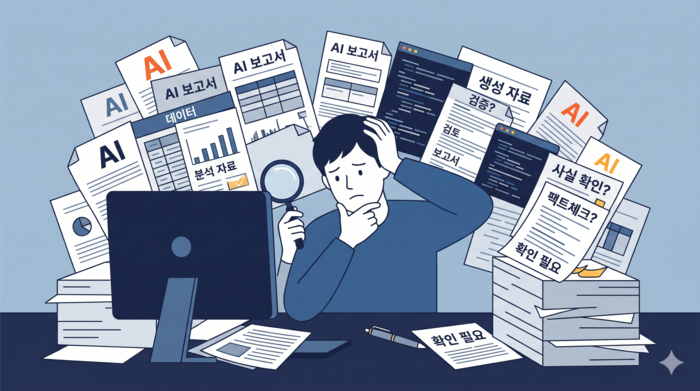
If artificial intelligence (AI) replaces people's work, will the burden on office workers be reduced.
1 hour ago
 AI News
Artificial intelligence (AI) company Antropics, which is about to go public (IPO), has decided to co..
1 hour ago
 AI News
Can Artificial Intelligence Help Sweden Predict Disasters and Protect Its Critical Services?
1 hour ago
 AI News
Stripe Agrees to Buy AI Model Router OpenRouter for $7.5 Billion
3 hours ago
 AI News
Older adults encouraged to embrace artificial intelligence
4 hours ago
 AI News
Man’s Meta Muse Agent Sends Him Message So Bizarre That He Permanently Quits
5 hours ago