
Uncertainty more concerning than threat of U.S. tariffs, Canadian farmers say
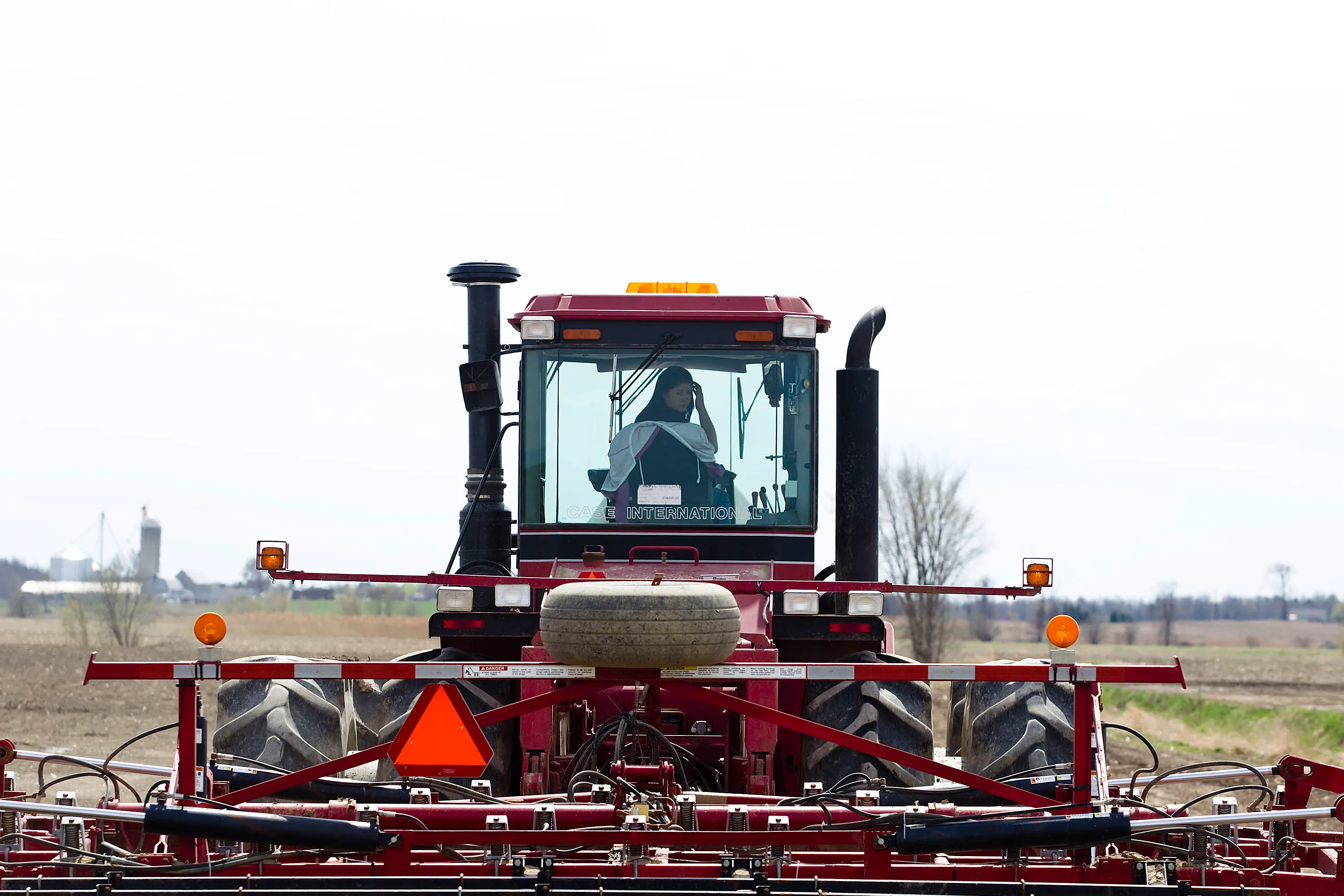
High fuel prices and uncertainty around the potential of reopening trade agreements appear to be affecting the bottom lines of farmers much more than the latest threats of tariffs.
The agriculture industry was thrown into a loop this week after President Donald Trump threatened to levy a 50 per cent tariff on about $20 billion worth of Canadian goods imported into the U.S., set to come into effect in August. Among the irritants mentioned by Trump to justify the new round of tariffs were supply management. That’s the system allows the government to establish how much milk, eggs and poultry is needed to meet the demand of Canadians, and thereby guarantee a fair price to farmers. It means they can’t flood the market with as much of their product as possible and drive down the price of such goods.
However, there is little supply management in the U.S., so when the price goes down, famers often attempt to produce more. That, in turn, makes the price fall even more, explained John McCart, a recently retired dairy farmer and the president of the Quebec Farmers’ Association. McCart now grows corn and soybeans near Grenville-sur-la-Rouge.
“I’m sure (supply management is on the table),” McCart said. “I think their attitude is that they don’t like seeing it protected and they want to come in and dominate.”
McCart explained most Canadian dairy farmers sell their product within Canada, so the tariff threat is much less important than maintaining supply management. With the reopening of the USMCA trade agreement, McCart is concerned supply management could be on the table.
He said as part of those negotiations, there is talk Canada could grant U.S. dairy farmers a greater share of the Canadian market, in exchange for more security in the auto sector, for example.
“There would be some serious explaining to do if Canada would give in to this again,” McCart said. “We’ve done it twice already, we don’t have to open it up again.
“Instead of the two per cent that we gave (in the last negotiations), if we gave 10 per cent, that would be devastating to the industry,” he said. “If that’s the best deal for Canada, it won’t be the best deal for Canadians or Canadian dairy farmers.”
McCart added keeping milk and other products local is the best way to ensure they are affordable.
“If you start shipping milk eight to 10 hours away, the costs are there; there’s not going to be a huge benefit to the consumer,” he said.
Dairy farmer Ben Nichols said his business has already been affected by the rising cost of fuel.
“What is most annoying right now is fuel prices, because it takes energy to make product,” Nichols said. “So when the price of energy goes up, the price of everything goes up.”
Speaking to The Gazette on Thursday, Martin Caron, president of the Union des producteurs agricoles (UPA), said his group is closely monitoring trade negotiations with the U.S. He, too, is less concerned about tariffs, but more about the general uncertainty that comes when trade agreements are put into question, adding sales in the U.S. represent a small amount of what is produced by farmers represented by his organization.
“For the dairy industry, I think exports to the U.S. represent two per cent,” Caron said. “For us, it’s never good to put down tariffs, especially when it comes to predictability. At the end of the day, it means consumers will have to pay more and that’s never good.
“Uncertainty is bad for us, but also for our neighbours to the south because our systems are so integrated at this point.”
Caron said the tariffs and the countermeasures imposed by the Canadian government is making everything more expensive, especially since most farm equipment is made in the U.S.
He’s aware U.S. producers have been asking for more of the Canadian market, but isn’t concerned supply management will be given up by the Canadian government.
“We have to always remain vigilant, but it doesn’t seem like (U.S. producers) are very concerned about supply management,” Caron said. “The Canadian government and the provinces have all passed motions affirming they will keep it in place.”
Related Stories
 Canada
Japan dad ditches 7-year
55 minutes ago
 Canada
Canada suspends trade talks with U.S.
1 hour ago
PM Carney on Canada-U.S. trade negotiations
1 hour ago
 Canada
Canada will match US tariffs 'dollar for dollar,' Carney says
1 hour ago
 Canada
Canada suspends trade talks, new U.S. tariffs take effect
1 hour ago
 Canada
Canada risks falling behind with tepid approach to African trade: South Africa envoy
1 hour ago
 Canada
Aid workers say Canada's Ebola quarantine hinders response, hope it won't be extended
1 hour ago
 Canada
United Canada will 'get to the right place' on trade, says Trudeau
2 hours ago