
Veterinarians for Animal Welfare calls for better monitoring of virtual fencing technology
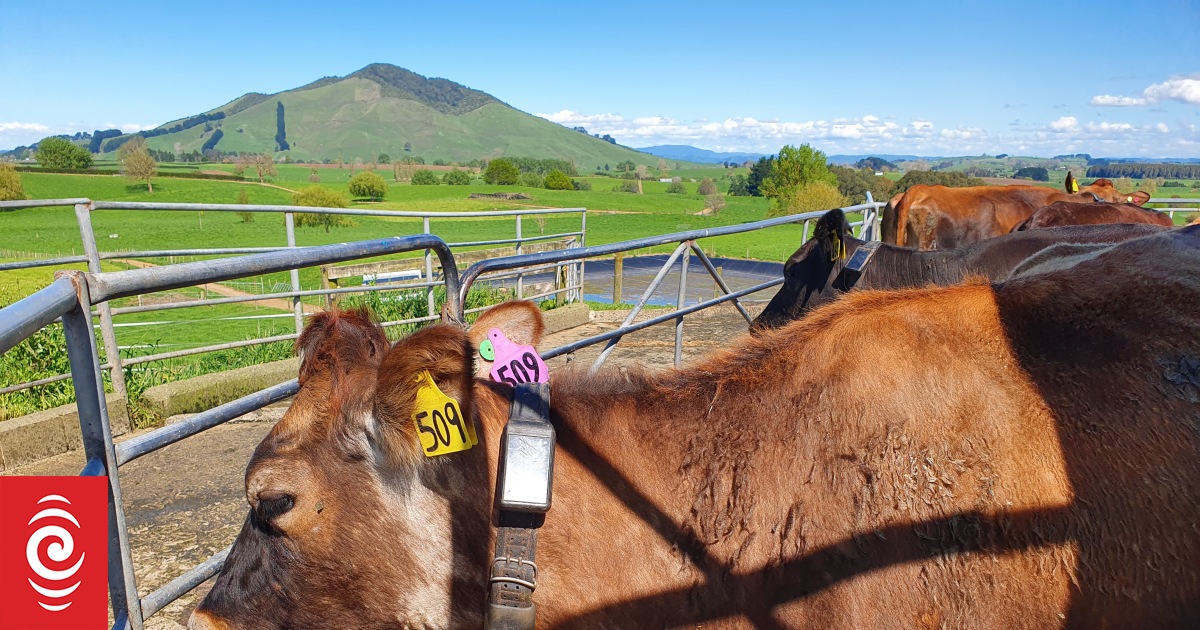
A cow wears a solar-powered, GPS-enabled smart collar. Photo: RNZ/Sally Round
A New Zealand animal welfare group has released what it says is the world's first code of ethical conduct for virtual fencing technology.
Veterinarians for Animal Welfare Aotearoa (VAWA) said the technology, which uses GPS collars and electric stimuli to contain livestock without physical fences, was being used on hundreds of thousands of animals worldwide despite limited animal welfare regulation.
VAWA managing director Dr Helen Beattie said the code was developed to address a lack of consistent animal welfare standards as the technology became more widely adopted.
Dr Helen Beattie. Photo: Supplied
"What we don't want is for newcomers to start from below what we already know is the necessary baseline. That is not fair to animals," Beattie said.
The organisation's key recommendation was the creation of a Virtual Fencing Manufacturers' Association (VFMA), which would develop industry-wide standards and best-practice guidelines for both existing companies and new entrants to the market.
VAWA also released a companion document, Critical Safeguarding Standards for the VFMA, as a proposed starting point for discussions among manufacturers.
The code recommended greater transparency from companies developing virtual fencing products, including public reporting on how often electrical stimuli were used and the technical details of how those signals were delivered.
VAWA says such measures were needed to build public confidence and ensure animal welfare considerations remain central as the technology evolved.
The organisation consulted with the SPCA, farmers, animal welfare scientists, manufacturers and other experts while developing the code.
VAWA, said that some manufacturers engaged constructively with the process, while others rejected the initiative, highlighting what the organisation says is the need for independent standards.
Animal welfare and farm management consultant Mandi McLeod, who co-authored the code, said virtual fencing had the potential to deliver benefits for both farmers and animals if implemented carefully.
"Done well, virtual fencing presents opportunities and benefits, including enabling a deeper understanding of cattle behaviour," McLeod said.
However, she said more research was needed into how the technology may affect herd dynamics, social behaviour and long-term animal welfare outcomes.
VAWA said the framework was intended as an interim measure until more formal regulatory oversight was established.
Sign up for Ngā Pitopito Kōrero, a daily newsletter curated by our editors and delivered straight to your inbox every weekday.
Copyright © 2026, Radio New Zealand
Related Stories
 Technology
Three takeaways from Elon Musk's latest political donations
47 minutes ago
 Technology
Body of missing man found in Okanagan Lake after 23 days
2 hours ago
 Technology
QNX Launchpad Introduced to Help Startups Build and Scale Mission
2 hours ago
 Technology
Texas Tech Faces Arizona State With Five Players Out For Big 12 Clash
4 hours ago
 Technology
PU to help startups land first business orders
5 hours ago
 Technology
NetApp Selects Five Deep
6 hours ago
 Technology
Kenya reviews Nuclear Research Reactor plans with IAEA support
8 hours ago
 Technology
Virginia Tech Hokies News: Megan Duffy's recruiting heater, men edge Wofford, more
10 hours ago