
Vinayanand Singh on building an IP strategy that supports business growth
Vinayanand Singh on building an IP strategy that supports business growth
Google News - BusinessVinayanand Singh is Co-Founder and CEO of Epiphany IP Solutions, India, and Head of IP Services at Evergreen Valley Law Group (EVLG), USA, where he supports its US IP practice. With more than 20 years of experience in intellectual property, he advises technology companies, Fortune 500 corporations, startups and SMEs on patent strategy and IP protection across multiple jurisdictions. A registered patent agent with the Indian Patent Office, he has a multidisciplinary background spanning engineering, VLSI design and law, combining technical depth with a commercial perspective on IP. He was recognized by IAM among the world's Top 300 IP Strategists.
In this conversation with VCCEdge Research Desk, Singh examines how Indian startups and SMEs can make IP a business priority, with implications for fundraising, partnerships and international expansion. He explains why clear ownership, carefully chosen patents and timely decisions about disclosure matter, and why the strength of an IP portfolio ultimately depends on how well it protects the business a company is building.
VCCircle Q1. India has seen rising patent activity and more participation from startups and smaller businesses. How much of this reflects a real shift in how companies value IP, rather than simply greater awareness of the filing process?
Vinayanand Singh - Both, but the more interesting shift is in the questions founders now ask.
Earlier, the conversation usually began with, "We have developed something new. Can we patent it?" Increasingly, founders ask: What part of our technology is actually defensible? What should remain a trade secret? Would this matter to an investor, partner or acquirer? What are competitors protecting?
We see a similar change among established SMEs, particularly manufacturers and exporters. Many are realizing that a process improvement, a product design or a brand built over decades is a business asset worth protecting, not just something they happen to own. This matters because a patent count is not an IP strategy. A filing becomes strategically useful when it is connected to a product, a market, a competitive threat or a business opportunity.
Maturity is still uneven. A company can have fifteen patents and little meaningful protection around what actually drives its business. Another may have two or three well-chosen patent families covering its core technology and be in a much stronger position.
So the real evolution is not from 'fewer patents' to 'more patents'. It is from treating IP as proof that innovation happened to using IP to protect where the business is going.
VC Q2. When does IP become a boardroom issue for a startup, rather than something handled only by its legal team?
VS - Ideally, before a crisis, fundraising round or transaction forces it there. If technology is central to a company's competitive advantage, many IP questions are really business questions: What technology do we want to control? What should competitors find difficult to copy? What should we patent and what should stay confidential? Which markets matter?
IP often becomes visible at exactly the wrong time, such as during investor due diligence, a strategic partnership, overseas expansion or an acquisition. That is when companies discover that an important invention was disclosed before filing, a contractor still owns part of the technology, or their patents cover yesterday's product rather than what they sell today. The board does not need to discuss every patent application. But it should know whether the company's most valuable technology is owned and reasonably protected.
If a technology is important enough to be in the investor presentation, its ownership and defensibility are important enough to be understood in the boardroom.
“A patent count is not an IP strategy.” - Vinayanand Singh, CEO & Co-Founder, Epiphany IP Solutions
Q3. Startups often have limited resources. How should founders decide which parts of their technology or business are worth protecting—and which are not?
VS - The starting question should not be, "What can we patent?", It should be: "What would materially weaken our business if a competitor could copy it?".
Founders should focus on technology that creates real differentiation, is likely to remain commercially relevant and would be valuable for a competitor to reproduce. They should also consider whether something can realistically stay secret. Technology buried inside a manufacturing process may be better protected as a trade secret. Many SMEs make this choice well, often without formally calling it a strategy. But if a competitor can independently develop or reverse-engineer the solution, a patent serves a different purpose.
At Epiphany, we see this constantly in deep technology. In quantum computing, for example, valuable inventions arise not only in the quantum processor but in control electronics, calibration, pulse sequencing, real-time hardware orchestration and the interaction between software and hardware. AI is similar. The valuable invention is rarely just 'using AI'. It often lies in how models, data, validation, feedback and downstream actions work together to achieve a technical result.
Founders should also think beyond today's product: how might a competitor achieve the same result differently? A patent that describes your product beautifully but is easy to walk around may have limited business value.
4. What should shape a company's decision on when to file, what form of protection to seek, and which markets to cover?
These decisions should follow the business, not a standard filing template. Timing matters. Ideally, protection should be evaluated before an invention is publicly disclosed, demonstrated or built into a product in a way that reveals how it works. This is a real trap in India. Our grace period for prior disclosure is narrow, so a founder who demonstrates a prototype at an event or posts a technical video before filing may lose protection here, even where the US, with its one-year grace period, might have forgiven it.
Filing too early can also be a mistake if the invention is still so conceptual that the application misses the technical detail that later becomes commercially important. There is a useful middle ground. In India, a provisional patent application secures a filing date and gives the company twelve months to file the complete specification. That preserves an option without committing a startup to unlimited patent spending. The company can decide later how much more to invest, based on product development, commercial traction and the strength of the invention.
The form of protection also depends on the asset. Patents, designs, trademarks, copyright and trade secrets serve different purposes, and the strongest positions usually combine them. A patent protects how a product works, which is the part competitors most want to copy and find hardest to replicate legitimately. Trademarks and designs protect how customers recognize it. For SMEs and consumer-facing businesses especially, the real question is not which one to choose, but how they fit together around the core innovation.
Geography should follow commercial reality: Where will we sell? Manufacture? License? Where are the important competitors?
Start with a commercial map, not a map of patent offices.
5. How can founders balance the cost of building an IP portfolio against near-term priorities such as product development, hiring and market expansion?
A startup should not build an IP portfolio at the expense of building the business. The practical answer is prioritization. A company may identify ten innovations and conclude that only two or three deserve immediate protection. Some can wait, some may remain confidential and others may simply not justify the cost.
For an early-stage company, the goal need not be a large portfolio. It may simply be to secure a meaningful position around the technology most likely to become central to the business. Founders should also know what support is available. DPIIT-recognized startups can currently access an 80% rebate on patent fees and expedited patent examination in India. Many SMEs don't realize that small entities, including qualifying MSMEs, also pay the reduced fees and can request expedited examination.
That makes protection more accessible, but it should not encourage unnecessary filings. Government support can make patenting cheaper and faster. It cannot make a weak patent valuable. My rule is simple: protect the crown jewels, not every screw in the machine.
Q6. Investors increasingly assess a company's technology and defensibility during due diligence. What makes an IP portfolio commercially meaningful to an investor?
Investors back a company for its core product. What gives them confidence is knowing that product cannot easily be copied.
That is where a well-built portfolio earns its place. A cluster of patents around the core technology, covering the key invention, its improvements and the alternative routes a competitor might take, tells an investor the advantage is owned, not just claimed. It turns "our engineering is hard to replicate" into assets that can be diligenced and valued.
Investors will also check the basics. Does the company own its core IP? Are founder, employee and contractor assignments in place? Do the patents match today's product and tomorrow's roadmap? Are the important markets covered?
Patents do not create valuation on their own; the business, team and execution still matter. And owning a patent is not the same as freedom to operate, because third-party patents can still affect your product.
What investors value is depth around what matters, not volume. A thick patent portfolio can still provide thin protection. A focused one, built around the crown jewels, can make the difference.
“A thick patent portfolio can still provide thin protection.” — Vinayanand Singh
7. Beyond protecting an invention, how can IP strengthen a company's bargaining position when raising capital, licensing technology or entering a strategic partnership?
This is where patents become much more than legal documents. In fundraising, they help show that an important part of the technology is not simply open for others to copy. In licensing, clearly defined rights let a company keep its core market while licensing the technology for another geography, application or field of use.
We have seen this many times in our own practice at Epiphany. For instance, one client developed specialized assistive devices built around Braille. The resulting patent rights later proved valuable in licensing discussions, because they gave both parties something clearly identifiable to license. Patents can matter defensively too. Another client, in audio and video processing, had built a portfolio over several years. When competitors later asserted their own IP, those patents became relevant defensive assets and turned a one-sided conversation into a balanced one.
Sometimes a patent's value isn't the royalty you collect. It's the royalty you avoid paying. Good IP preserves choices: licensing, partnering, cross-licensing, international expansion or an eventual sale.
8. For startups working with larger companies, how can they protect their IP while still sharing enough information to secure a partnership or commercial opportunity?
The key is staged disclosure. A startup needs to show enough to demonstrate value, but it does not need to reveal every technical detail at the first meeting.
Early discussions can focus on the problem, product capability, performance and commercial benefit. As discussions become serious, confidentiality arrangements can be put in place and sensitive technical information shared selectively. Where patent protection is appropriate, filing before detailed disclosure adds another layer of protection. But an NDA should not be mistaken for a complete IP strategy. The agreement should also clearly set out what each party owned before the collaboration, and who will own or have rights to technology developed together. Startups should be especially careful with broad clauses that may unintentionally transfer rights extending well beyond the project.
Show enough to prove the value. Don't give away the recipe just to get a seat at the table.
9. How should an Indian startup think about IP protection when it plans to enter overseas markets, where costs and filing requirements can vary significantly?
It should begin with where it will realistically earn revenue, where its important competitors are, where the technology might be manufactured, and which countries matter for partnerships, licensing or an eventual acquisition. Those answers should drive the filing strategy.
International protection becomes expensive quickly, so selectivity is essential. The PCT route helps: it gives a company roughly 30 months from its first filing before it must commit to individual countries. That is valuable time to test markets and raise capital. But PCT postpones the costs; it does not remove them. There is also a step many founders miss. Indian residents generally need permission from the Indian Patent Office before filing a patent application abroad, unless an Indian application was filed at least six weeks earlier. A startup that files directly in the US to impress investors can create a serious problem for itself at home.
The most underestimated issue is the quality of the first application. For a technology company with international ambitions, that first specification often sets the ceiling for what it can protect later, because new technical material cannot simply be added after filing. That is why choosing the right patent attorney or patent agent matters. They should understand not only patent law, but the technology, the commercial differentiator and how competitors may try to work around the invention.
At Epiphany, we work closely with the founder's engineering team before drafting, so the specification captures the technical details that will matter commercially years later.
10. How can a company assess whether its IP is creating measurable business value, rather than simply adding to its portfolio?
Measure IP against the business, not against the number of certificates on the wall. A company should periodically ask: Do our important patents still cover our current products and roadmap? Do they protect features customers value? Do they make important technology harder to copy? Have they helped in a licensing discussion, partnership, fundraising or due diligence exercise?
Not every useful patent will generate licensing income, so royalties alone are too narrow a measure. One practical exercise is to map important patent families against today's products, tomorrow's products and the technologies management considers strategically important. Companies often discover that much of their patent spending sits around yesterday's technology, while the next generation of the product has little protection.
Management should be able to answer one simple question about every important patent family: "What business position are we trying to protect with this?" If nobody can answer that, the company may be accumulating paperwork rather than building strategic IP.
11. What changes as a startup scales—such as bringing in employees, vendors or collaborators—that can affect ownership and protection of its IP?
As a startup grows, innovation is no longer confined to the founders. Employees develop technology. Consultants write code. Vendors design components. Universities and research partners contribute.
Joint-development projects create new inventions. Unless ownership is handled systematically, gaps appear quickly. Companies need proper confidentiality and IP-assignment provisions, sensible contractor and development agreements, and a way of capturing important inventions as they are created, rather than reconstructing everything years later. Software companies also need to understand the third-party and open-source components they use, and the obligations that come with them. A common problem is technology developed before incorporation, or before somebody formally joined the company. Everyone may have understood that it "belongs to the startup", but due diligence looks at documents, not assumptions.
Ownership problems are easiest to solve while everyone is still friends. As a company scales, IP should become a simple, repeatable business process rather than an occasional legal exercise.
12. What practical first steps would you recommend to a founder who wants to make IP part of the company's growth strategy but has not yet built a formal approach?
Start with an IP map, not a patent count. When we work with early-stage companies at Epiphany, this is usually where we begin. Identify the core products and technologies that create differentiation, confirm who created them and make sure the company owns the rights. Then check what has already been disclosed publicly and what remains confidential.
Next, prioritize. Separate technology that could shape the company's competitive position from features that are useful but not strategic, and tie those priorities to the next two or three years: launches, fundraising, partnerships, licensing and overseas expansion.
But the real shift is cultural. Valuable IP is rarely born in a strategy meeting. It emerges quietly while engineers solve everyday product problems, and it is lost just as quietly when nobody notices. So make IP spotting a company-wide habit. Give engineers a simple way to flag novel solutions as they build, and review what is worth protecting at every technical breakthrough, release, public demonstration, partnership, fundraise or new market entry. Every development cycle can produce an invention, and every launch can give one away.
IP should not begin with, "What can we patent?" It should begin with: "What are we building that will create lasting value, and how do we make sure we retain enough of that value?". Innovation creates value. A thoughtful IP strategy helps the company keep more of it.
NOTE: This interview was conducted by the VCCEdge Research Desk with Mr. Vinayanand Singh, Co-Founder and CEO, Epiphany IP Solutions.
Related Stories
 Technology
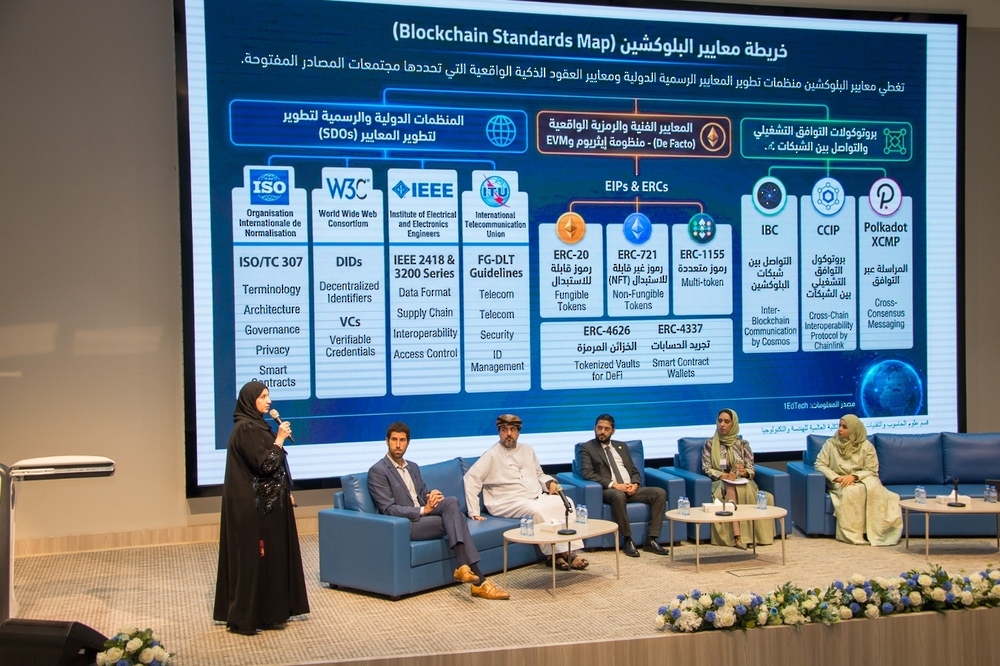
Workshop Explores Means of Utilizing Blockchain Technology to Authenticate Certificates
26 minutes ago
 Technology
StoneX maintains Buy rating on Marvell Technology, $375 price target
26 minutes ago
 Technology
Q2 Financial Technology Earnings: Robinhood (NASDAQ:HOOD) Impresses
1 hour ago
 Technology
Marvell Technology gets praise from Wall Street after investor day
1 hour ago
 Technology
DNV Certifies Buchan Floating Offshore Wind Foundation Design
1 hour ago
![[2026 Parliamentary Audit] Lee Soyoung Launches 'Regulatory Innovation Committee'... Challenges Pile Up at First Audit (Roundup)](https://the1news.com.tamilzha.com/storage/news/news_1791376279_rB6S36dblx.jpg) Technology
Technology
[2026 Parliamentary Audit] Lee Soyoung Launches 'Regulatory Innovation Committee'... Challenges Pile Up at First Audit (Roundup)
2 hours ago
 Technology
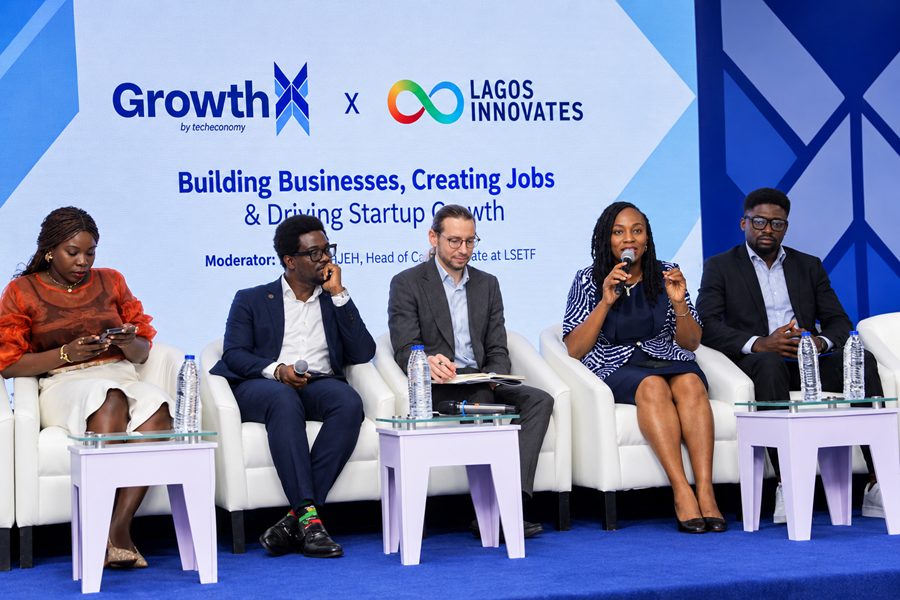
GrowthX: Lagos Innovates Targets More Tech Jobs after Supporting 1,200+ Startups
2 hours ago
 Technology
Wetech PitchHer 2026 backed three women
2 hours ago