
Virginia Tech hosts prestigious infectious disease research conference
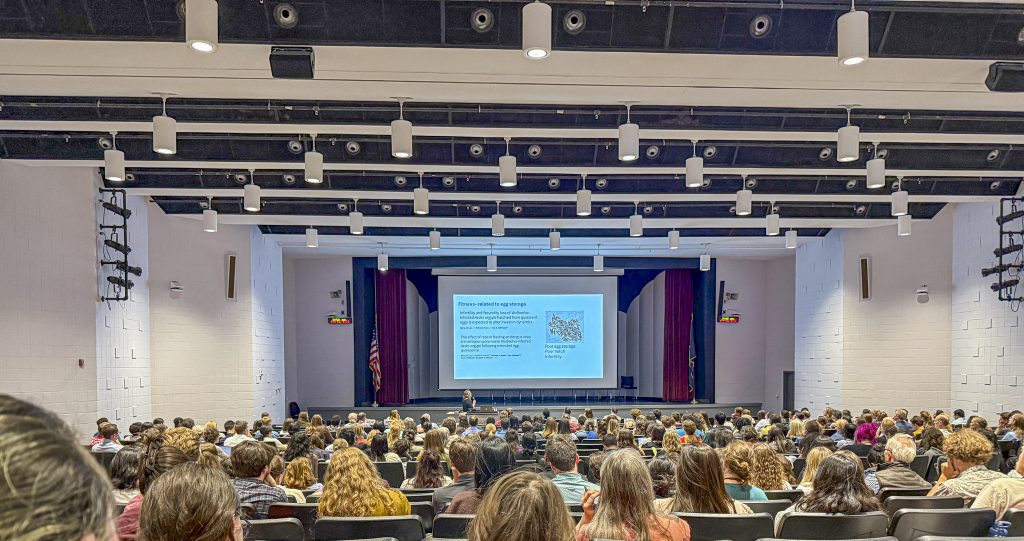
Researchers from around the world gathered at Virginia Tech for the 23rd Ecology and Evolution of Infectious Diseases Conference (EEID) to talk about one of the greatest challenges facing modern society and the environment.
“We know that we have many exceptionally talented faculty and early career scientists at Virginia Tech working on infectious diseases,” said Bill Hopkins, director of the Global Change Center, who led the charge to bring the conference to Virginia Tech starting four years ago. “We wanted to showcase our strengths to the rest of the world and highlight Virginia Tech’s commitment to confront grand challenges like emerging infectious diseases.”
To highlight that talent, several Virginia Tech graduate students and postdoctoral fellows gave presentations.
“The conference was an exceptional opportunity to present my research and connect with researchers whose work I have long admired,” said Anna Perez-Humphrey, a postdoctoral fellow in biological sciences. “The chance to exchange ideas and brainstorm with experts in the field was incredibly inspiring, and I returned with renewed enthusiasm and several exciting directions for future research.”
Purposefully including younger researchers in the conference extends the reach of the innovative research discussed, and it helps to continue the depth of knowledge across generations.
“Bringing this conference to Virginia Tech demonstrated our institutional commitment to fostering interdisciplinary collaborative research to find creative solutions to critical and complex global problems,” Hopkins said. “Welcoming the world’s leading experts to Blacksburg created a forum that advances science and will inevitably generate new collaborations across disciplines and institutions.”
Renowned disease biologists, ecologists, and mathematical modelers gathered in Blacksburg for several days of discussions on wide ranging topics to include sessions devoted to topics such as interactions between rapid environmental changes and disease, interventions and management of infectious diseases, and complex multi-host and multi-pathogen systems.
“The meeting at Virginia Tech was like a pinnacle. I was completely blown away,” said Peter Hudson, Willaman Professor of Biology at Penn State University and founder of the EEID Conference with Ottar Bjornstad, Distinguished Professor of Entomology and Biology at Penn State. “With emerging infectious diseases, we need people’s thoughts today to have the best response that we can possibly do for hantavirus or Ebola or Covid-19.”
The conference began from humble roots back in 2003. Just one year in the U.S. and his position at Penn State, Hudson said he invited 70 scientists he knew in North America to celebrate his birthday by getting together in a social context to talk science.
“I wanted to develop an inclusive community,” Hudson said. “That’s the fundamental aim here. It’s only with an interdisciplinary approach that we’re really going to be able to solve these problems. You can develop vaccines, therapeutics, but that can only get you so far. I think if we’d taken that inclusive approach, we would not have had the disaster we had with COVID-19.”
Since then, the conference has moved all over the country and grown exponentially.
Virginia Tech hosted the largest ever EEID Conference, including 450 attendees from around the world and featured 300 posters, 14 keynote speakers, 29 other speakers, and various panel discussions. Before the conference presentations began, two and a half days were dedicated to workshops, specifically designed to train graduate students and focused on quantitative skills and programming.
Lauren Childs, associate professor of math and Cliff and Agnes Lilly Faculty Fellow, and Kate Langwig, associate professor of biological sciences, coordinated the EEID workshops this year, which introduced epidemiological modeling with a focus on spatial applications and included training to develop, define parameters, and simulate spatial models including integration with data.
Virginia Tech added another layer to the workshop training by offering additional workshops by VectorByte, a five-year National Science Foundation Division of Biological Infrastructure grant, awarded to Leah R. Johnson, professor of statistics, and three other researchers from other colleges. The goal of VectorByte, now in its last year, has been to establish a global open access data platform to study disease vectors.
One primary feature of the conference, according to Hudson, is the willingness of the attendees to share their ongoing work, exchange ideas, and collaborate with researchers in a variety of different areas of disciplines.
“It is so interdisciplinary; we are focused on disease and emerging diseases that move from wildlife into humans, and how they drive an outbreak,” Hudson said. “You can’t believe how great it is just to be face to face with your colleagues from other universities talking science. There’s a true bonding that goes on, and that bonding is the framework that supports solutions.”
Hopkins, the Thomas H. Jones Professor of fish and wildlife conservation in the College of Natural Resources and Environment, worked with five Virginia Tech colleges, the Fralin Life Sciences Institute (FLSI), and the Center for the Mathematics of Biosystems to raise the funds needed to host the major event. The conference represented an important collaboration between the Global Change Center and the Center for Emerging Zoonotic, Arthropod-borne Pathogens, directed by Kylene Kehn-Hall.
The conference planning committee included long-time EEID conference participants Dana Hawley, Joseph Hoyt, and Langwig, all in biological sciences. Hawley, Hoyt and Langwig, oversaw the expansive scientific program and recruitment of keynote speakers by working with a robust scientific planning committee that included faculty from eight Virginia Tech departments as well as a regional advisory committee.
“It was truly a massive team effort, but the hard work paid off. The entire conference was characterized by open discussion of scientific discoveries, diverse perspectives, high energy, and collegiality. None of it would have been possible without support from the colleges and FLSI, the vision of our faculty leaders with EEID expertise, collaboration among centers, and many volunteers who donated their time.” Hopkins said. “Together we were able to host one of the most memorable EEID conferences yet, while also showcasing that Virginia Tech is a tremendous place to be if you work in this thematic space.”
Another organizing partner was the Continuing and Professional Education , which managed the conference and worked behind the scenes to support the planning, logistics, and on-site coordination that helped bring hundreds of researchers to Blacksburg. The work is part of CPE’s broader role in helping faculty deliver conferences, professional programs, and learning experiences for university and external audiences.
Related Stories
 Technology
Lagos Innovates backs startups, targets more tech jobs
1 hour ago
![[PRNewswire] 2026 JETOUR Technology Experience Day Set to Begin](https://the1news.com.tamilzha.com/storage/news/news_1791858651_9o226JUmmG.jpg) Technology
Technology
[PRNewswire] 2026 JETOUR Technology Experience Day Set to Begin
2 hours ago
 Technology
Japanese Shares Drop on Tech Selloff
3 hours ago
 Technology
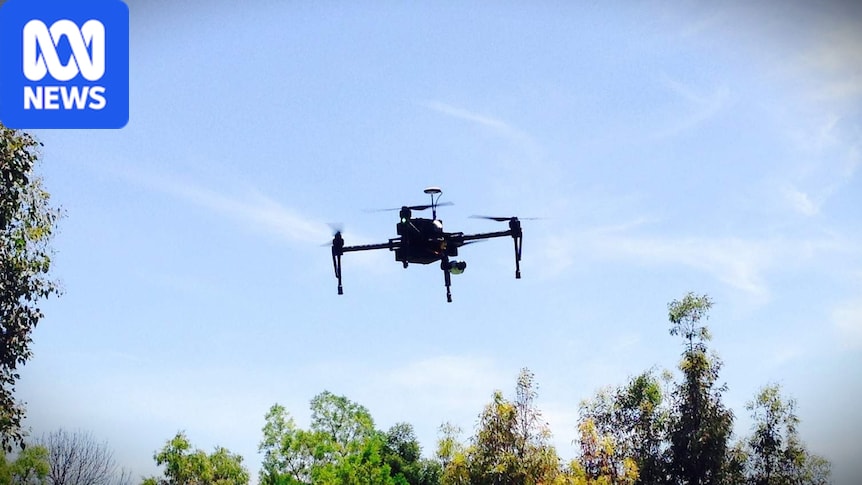
NSW prison staff want drone guns to stop contraband drops
4 hours ago
 Technology
Building solutions for changing needs
5 hours ago
 Technology
Eztia Expands 10
5 hours ago
 Technology
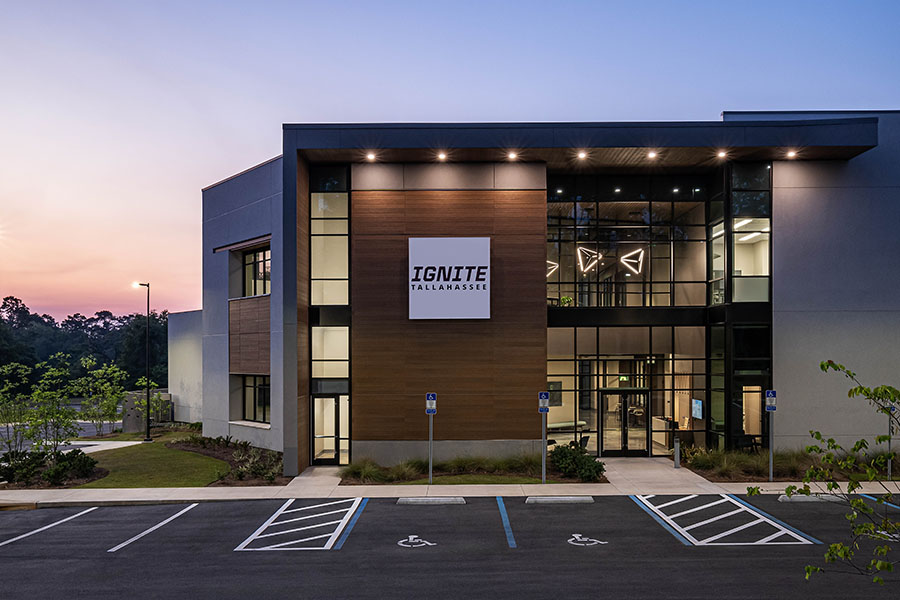
FSU Discovery Days: IGNITE Tallahassee Open House welcomes visitors for behind-the-scenes look at high
5 hours ago
 Technology
Local business founder discusses importance, safety of tech recycling
6 hours ago