
What went right this week: the good news that matters
Europe’s environmental progress, the world’s ‘greatest forest recovery’, and a new test for womb cancer, plus more good news
European nations are leading the rest of the world when it comes to protecting the environment thanks to their embrace of renewables and efforts to cut pollution, but most countries are off-track when it comes to meeting climate goals.
So finds the latest edition of the Environmental Performance Index, a biannual research collaboration between Yale and Columbia Universities, US. Marking 177 nations on their stewardship of the environment, it is the most comprehensive analysis of countries’ ecological performance.
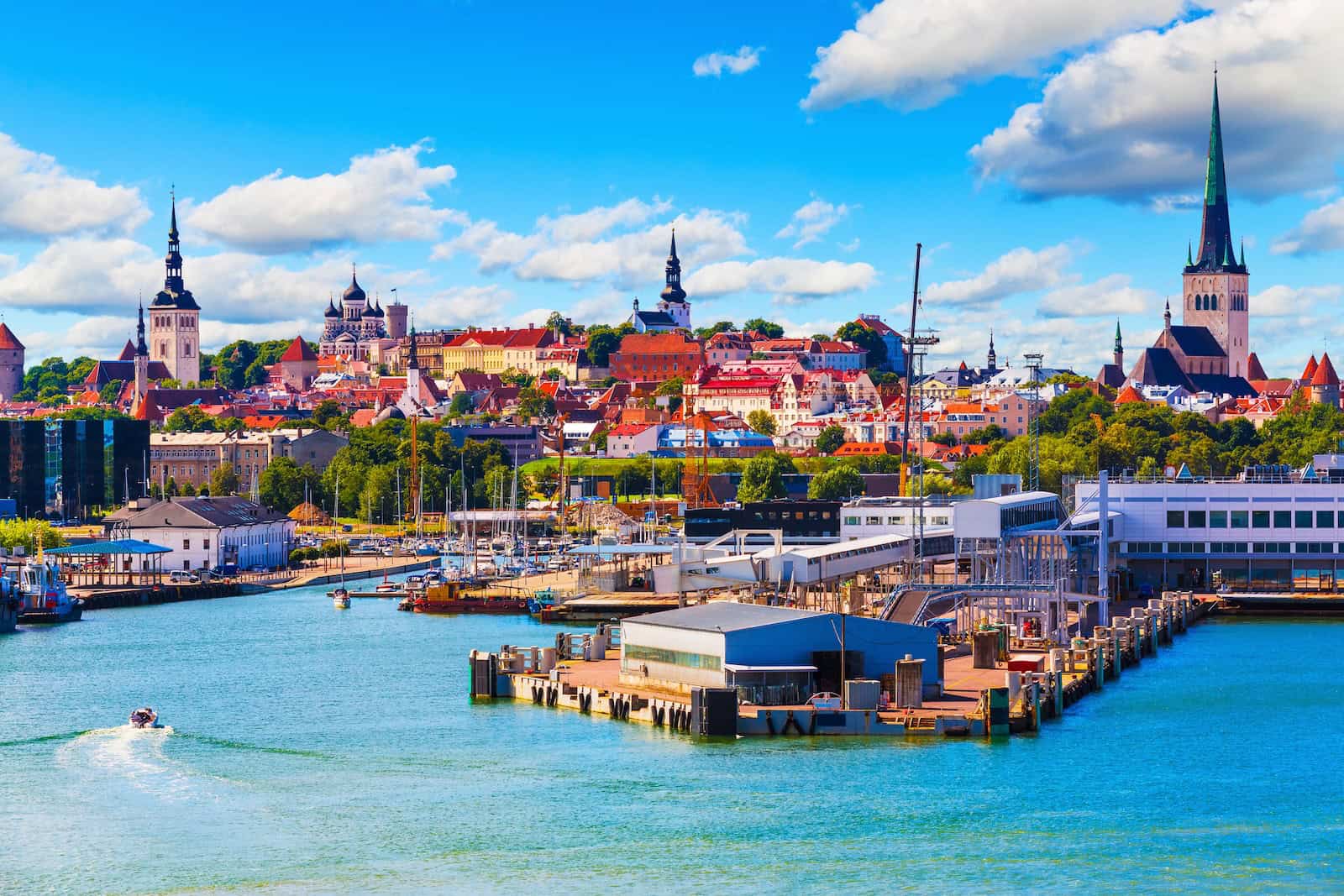
Topping the index is Estonia (pictured), which researchers praised for its “dramatic reduction” in greenhouse gas emissions, followed by Luxembourg and the UK. The only non-European nation in the top 20 is Japan (16th), while Australia ranks 25th – two places ahead of the US. Laos sits at the foot of the table, behind India and Bangladesh.
The index assesses nations on 47 ecological indicators, from greenhouse gas emissions to the sustainability of their forests, fisheries and farmlands. While the latest edition highlights global progress against pollution, few countries are on track to meet their climate targets.
“If countries aim to maintain a trajectory toward net-zero emissions by 2050, they will need to continually achieve large emissions reductions, which will require additional policies in the future,” said lead author Zach Wendling.
As the US marked its 250th birthday this week, environmentalists in the country commemorated the “greatest forest recovery in the history of the world”.
When European settlers arrived in the present-day US, they set about clearing its forests for agriculture. Massachusetts was particularly badly affected with some estimates suggesting it was 90% deforested. Neighbouring New England saw losses of 80%.
The farms, however, were duly abandoned in the mid-1800s as settlers sought pastures new inland. Nature filled the void, highlighting its ability to bounce back when left alone. Today, Massachusetts is estimated to be 60% forested.
“The regrowth of forest in the northeast US, particularly New England, is the greatest forest recovery in the history of the world,” said Bill Moomaw, a distinguished visiting scientist at the Woodwell Climate Research Center, US, talking to PRX public radio this week.
“And it all happened because of what I call benign neglect. It was not a plan, it was just abandonment of agricultural lands. It’s remarkable what has happened in the last hundred years.”
A breakthrough blood test for womb cancer could speed up diagnosis and spare thousands of women from having intrusive examinations, a study suggests.
Womb cancer is the fourth most common cancer among women in the UK, with around 9,700 people diagnosed annually. However, many more – upwards of 90,000 – are referred for transvaginal ultrasound scans to check for the disease.
The new blood test could spare many of them from having the intrusive procedure, while also speeding up diagnosis for those who have the disease, scientists said.
The PinPoint test uses AI to analyse markers in the blood to predict a patient’s cancer risk. It was trialled on 16,481 women, including 2,953 with suspected cancer, at hospitals across Yorkshire, England. A study finds that the test has a 99% accuracy rate at both detecting gynaecological cancers and ruling out its presence.
“High-risk patients could be diagnosed more rapidly, leading to potential earlier-stage diagnosis and a better diagnostic experience, [while] low-risk patients could avoid unnecessary invasive medical testing for cancer,” it noted. “[Furthermore] the software can be deployed rapidly … without the need for additional hardware.”
The scientist behind a malaria vaccine that has saved thousands of lives, many of them children’s, has been crowned winner of the European Inventor Award 2026.
Ireland-born Sir Adrian Hill (pictured) and his team at the University of Oxford, England, developed the pioneering R21/Matrix-M vaccine, which achieved around 75–80% protection against malaria in clinical trials, prompting the World Health Organization to recommend it in 2021.
The jab, which can be produced at scale, costs around £2.50 per dose and remains stable for up to two years under standard refrigeration conditions, making vaccination programmes more viable in remote regions.
Ghana was the first country to approve the vaccine in 2023. Around 20 other nations have since rolled it out, preventing potentially tens of thousands of malaria deaths.
Hill’s commitment to malaria research was shaped by his time in The Gambia, where he saw the devastating impact of the disease. “I am delighted to accept this prestigious award on behalf of the many hundreds of people who have contributed to the discovery, development and licensure of our malaria vaccine over the past 12 years,” he said.
Image: ©European Patent Office
The European Union (EU) has some of the world’s strongest nature laws, yet they are routinely ignored. A new environmental coalition launched this week to change that.
The MPA Legal Coalition, comprising 11 organisations, will push the European Commission (EC) to take action against several member states that are failing to comply with their legal obligations to protect marine ecosystems, and will support legal action at the national level.
“Given the EC’s new political drive to reduce administrative burdens, prohibiting destructive fishing practices such as bottom trawling in marine protected areas provides a clear and straightforward rule for all EU fishers, which would greatly simplify and reduce the costs of monitoring and implementation,” said the coalition.
With recent victories in the Dutch Dogger Bank protected area and the Banc des Flandres site, “all eyes are now on EU policymakers to take heed of these rulings”, said the MPA Legal Coalition.
The global energy system is at a “tipping point” amid a breakthrough in green energy.
That’s according to a new review of global power systems. Published by the Energy Institute, it finds that global electricity consumption rose by 3% in 2025 – an increase met entirely by renewables.
The review highlights the precipitous rise of clean power, particularly solar, which expanded by 30% in 2025, and was further boosted by a 66% rise in battery capacity. As per previous years, China added more wind and solar than the rest of the world combined, with coal generation declining. India saw coal, oil and gas generation fall, while renewable generation rose nearly 24%.
Highlighting growing regional disparities, the review reports an increase in coal burning and oil production in the US, where emissions rose four times faster than China’s. Concerningly, the US was the main driver of the 1.1% rise in global emissions.
“We see encouraging substitution of fossil fuels in power, yet global emissions continue to rise,” said Dr Nick Wayth, CEO of the Energy Institute. “These findings underline the urgency of accelerating efficiency, electrification and investment in clean technologies.”
It started life as a Viking fishing village, has more bikes than people in it, and has once again been crowned the world’s most liveable city. Step forward Copenhagen.
The Danish capital has retained its place atop the Economist Intelligence Unit’s (EIU) annual Global Liveability Index – edging out Vienna (second) and Melbourne (third) – scoring perfect marks for education, infrastructure and stability.
Improvements to living standards in Asian cities, particularly in China, was perhaps the most notable trend of the latest index, although the top half was still dominated by Europe. Find out where your city ranks here.
The Seine in Paris has stayed clean enough to welcome bathers back for a second summer – and did just that this week.
For the first time in more than a century, the once-polluted river was made swimmable in 2025 following a years-long clean-up and a major upgrade to the city’s sewage system.
This week, bathers returned to splash around in three swimming areas – one near Notre Dame Cathedral, another near the Eiffel Tower and a third in eastern Paris.
“It’s amazing to be swimming in the Seine while looking at the Eiffel Tower,” Stewart Talbot, a tourist from Melbourne, Australia, told Associated Press. “Maybe it’s not as good as the sea in Australia, but it’s better than our rivers.”
Related: Urban swimming: six European cities that revived river bathing
Applying crushed basalt to newly planted forests can increase the carbon stored in them by up to 27% over four years, a study by Imperial College London finds.
The research also makes the case for enriching soils in young woodlands with microorganisms from established forests. Doing so, it found, boosted tree growth and saw aboveground biomass rise by 13% over four years.
“Healthy new woodlands are essential for biodiversity, climate mitigation and resilient landscapes,” said study lead Dr Bonnie Waring. “Our findings show that relatively simple, nature-based interventions can improve tree establishment and increase the carbon uptake of new woodlands during their earliest years.”
For the research, scientists experimented with rocks and microorganisms on 72 new woodland plots in Wales. It’s hoped the findings will improve the success of future woodland creation projects. However, researchers stress that longer-term monitoring is needed to understand how “early gains translate into mature forests”.
Positive News took home an award this week for our podcast about purpose-led leaders who are reshaping business, culture and communities.
The Purpose Pioneers launched in January with host Sarah LaBrecque meeting people at the forefront of some of the UK’s most inspiring organisations – from a charity leader bringing the joy of play to excluded disabled children, to a founder who is making coach travel cool again.
On Wednesday, the podcast won best culture and lifestyle podcast at the Publisher Podcast Awards. It comes a year after our first podcast, Developing Mental Wealth, was declared best health and wellbeing podcast at the same awards.
Judges praised the podcast for covering a “fantastic topic, very closely aligned with the publication.” Listen here.
As the World Cup continues amid more than a bit of controversy, there is a growing sense that elite sport is drifting further from the people that built it. Cue the new issue of Positive News magazine.
In it, we dive into the growing movement to reclaim the beautiful game, visiting grassroots clubs where volunteers hold everything together, children can get near the action, newcomers can find a way in, and people can truly belong.
“We meet those using the game to support physical health, mental wellbeing and social connection, and we see how minority communities are not simply being invited in at the edges, but helping shape what sport can become,” said editor Tom Pattinson.
“Football is not only about rivalries and tribalism. Like so many of the stories you will read in this issue, it is also about what happens when communities come together and build something of their own.”
Image: Positive News Main image: iStock
Get your weekly fix of good news delivered to your inbox every Saturday, by signing up to the Positive News email newsletter
At Positive News, we’re not chasing clicks or profits for media moguls – we’re here to serve you and have a positive social impact. We can’t do this unless enough people like you choose to support our journalism.
Give once from just £1, or join 1,800+ others who contribute an average of £3 or more per month. Together, we can build a healthier form of media – one that focuses on solutions, progress and possibilities, and empowers people to create positive change.
Related Stories
 AI News
7 craziest World Cup conspiracy theories, from FIFA helping Lionel Messi to Ronaldo '99 final mystery and more
4 minutes ago
 AI News
Death toll on the rise in quake
5 minutes ago
 AI News
The Inner Circle 21 Main Event Result: Joshua Pacio Sleeps Mansur Malachiev To Retain ONE Strawweight MMA World Title
5 minutes ago
 AI News
Barbados leader rejects ‘asinine’ claim by former UK minister that ex
5 minutes ago
 AI News
WORLD CUP DAILY, July 10: France heads to the semi
5 minutes ago
 AI News
New swimming dock opens near history museum
6 minutes ago
 AI News
Canada orders deportation of ‘bottom
7 minutes ago
 AI News
Canada’s National Ukrainian Festival cancelled due to western Manitoba floods
7 minutes ago