
When books become too political: How power, pressure and fear have shaped what India gets to read
Sunday SpecialWhen books become too political:How power, pressure and fear have shaped what India gets to read
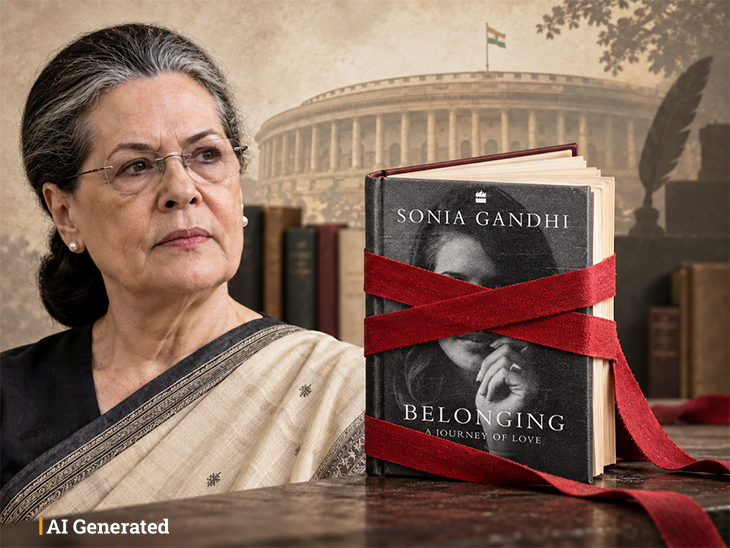
Sonia Gandhi’s memoir Belonging: A Journey of Love was expected to be published in India by Penguin Random House.
Then the publisher stepped away.
On 4 September, HarperCollins India announced that it would publish the memoir. Its global release is scheduled for 10 November 2026.
The book traces Gandhi’s journey from her childhood in post-war Italy to her marriage to Rajiv Gandhi and her years at the centre of Indian politics.
But the book has already become political before readers have even opened it.
Reports say changes were sought in sections dealing with Narendra Modi, the RSS, communal issues and China.
The Gandhi family is understood to have rejected the changes.
Penguin has denied political pressure. It has described the situation as an editorial impasse.
Because in India, books do not always disappear through an official ban.
Sometimes a publisher backs away. Sometimes an author changes a passage. Sometimes a university removes a book from its reading list.
And sometimes, political pressure never reaches a courtroom at all.
There is an interesting twist to the current controversy.
Sonia Gandhi is now at the centre of a dispute over the publication of her own book.
But years ago, her representatives had objected to another book about her.
In 2010, Spanish writer Javier Moro’s The Red Sari faced objections from Sonia Gandhi’s representatives.
They objected to the way private events were presented and alleged that material had been used without permission.
The controversy delayed its release in India.
The two cases are not identical.
But together, they raise the same uncomfortable question:
Who decides what a reader gets to see?
Jaswant Singh paid a political price for defending Jinnah
In 2009, BJP leader Jaswant Singh published Jinnah: India-Partition-Independence.
He questioned familiar accounts of Partition. He examined Jinnah’s political journey and the roles of Jawaharlal Nehru and Vallabhbhai Patel.
His argument challenged the idea that Jinnah alone was responsible for dividing India.
On 19 August, the BJP expelled Singh. That day, the Gujarat government, led by Narendra Modi, banned his book.
The government’s objection centred on Patel. It said the book damaged his image and questioned his patriotism.
The Gujarat High Court set aside the ban on 4 September 2009.
Singh had lost his place in the party. But the government’s attempt to restrict his book did not survive the court’s scrutiny.
A passage about Shivaji sparked a battle beyond the book
James Laine’s Shivaji: Hindu King in Islamic India appeared in 2003.
A passage about Shivaji’s parentage drew objections. Oxford University Press withdrew the book from circulation in India that November.
The withdrawal did not end the controversy.
On 5 January 2004, a mob associated with the Sambhaji Brigade attacked the Bhandarkar Oriental Research Institute in Pune.
Laine had acknowledged the institute and scholars who helped his research.
Books and rare manuscripts were destroyed.
The Maharashtra government ordered copies of the book to be forfeited. It later replaced that order with a fresh notification in 2006.
The Bombay High Court struck down the notification in 2007. The Supreme Court upheld that decision in 2010.
By then, the dispute had already damaged far more than one book’s chances of reaching readers.
Perumal Murugan declared himself “dead” as a writer
Tamil writer Perumal Murugan’s Madhorubhagan, translated as One Part Woman, tells the story of a childless couple.
Its portrayal of a temple festival and sexual relationships angered religious and caste groups. They said it insulted the local community and its women.
As protests grew, the district administration arranged peace talks. A settlement required Murugan to apologise and withdraw unsold copies.
In January 2015, he announced that the writer in him was dead.
He had reached a point where giving up writing seemed easier than living with the pressure.
The Madras High Court ruled in July 2016 that the settlement was not binding. It also rejected demands for action against the novel, its author and its publishers.
Then the fight moved into the classroom
A book can remain available in shops and still lose its place in education.
In 2011, Delhi University removed A.K. Ramanujan’s essay Three Hundred Ramayanas from its history syllabus.
The essay explored different tellings of the Ramayana. The Academic Council dropped it after years of objections, including protests by the ABVP.
A year earlier, Mumbai University had removed Rohinton Mistry’s Such a Long Journey from its BA syllabus.
The Shiv Sena’s student wing objected to its language and portrayal of the party. The novel was an optional text.
These were syllabus removals. They did not make buying or reading the works illegal.
But the decisions still mattered. They changed what students would encounter through their courses and discuss with their teachers.
When a publisher withdrew a book
Wendy Doniger’s The Hindus: An Alternative History faced a different route to withdrawal.
In 2014, Penguin India reached an out-of-court settlement with those challenging the book. It agreed to withdraw its Indian edition and destroy remaining copies.
Penguin said it stood by its decision to publish the work. But it also cited legal constraints and its responsibility to protect employees from threats and harassment.
It singled out Section 295A of the then Indian Penal Code. That provision concerned deliberate and malicious acts intended to outrage religious feelings.
The settlement ended the publisher’s legal battle. It also removed an Indian edition from circulation without a government ban.
The Satanic Verses never made it through India’s front door
The history goes back much further.
In 1988, Rajiv Gandhi’s government prohibited imports of Salman Rushdie’s The Satanic Verses following objections to its treatment of Islam.
The restriction returned to court decades later, with an unusual problem. The authorities could not produce the notification behind it.
In November 2024, the Delhi High Court said it had to presume that the notification did not exist. It closed the challenge and said the petitioner could take steps concerning the book as permitted by law.
The court did not rule on whether the original restriction was constitutional. It could not examine an order the government was unable to produce.
Naravane’s memoir became controversial before publication
Then came a very different kind of publishing controversy.
Former Army chief General Manoj Mukund Naravane’s memoir, Four Stars of Destiny, became the subject of a row in 2026.
The book had not officially been published.
Penguin Random House India, which held the exclusive publishing rights, said the book had not been released and that no authorised copies had been made available to the public.
The controversy moved further when Delhi Police registered an FIR over the alleged circulation of a pre-print version.
Police said a typeset manuscript bearing the same title had appeared online.
The case also raised questions about mandatory clearance required before publication of material by a former Army chief.
This was not a conventional book ban.
Who decides when an unpublished book can enter the public domain?
The Naravane case shows that control over a book can begin before it reaches readers.
India has no central board that clears every book before publication. Article 19(1)(a) protects freedom of speech and expression, while Article 19(2) allows reasonable restrictions on grounds including public order, defamation and national security.
There are legal routes to restrict publications. Section 98 of the Bharatiya Nagarik Suraksha Sanhita allows state governments to order forfeiture of certain publications, while Section 99 allows challenges in the High Court.
But a legal restriction, a publisher’s withdrawal and a syllabus decision are different things. Each must be judged on its own facts.
Publishers can also edit, fact-check and assess legal risks. Disagreement over edits alone does not prove censorship. Nor does criticism automatically amount to intimidation.
The concern begins when threats or political pressure prevent publication, force changes or make writers afraid to continue..
A book does not have to be banned to be stopped
A government can restrict its circulation. A university can remove it from the syllabus. A publisher can withdraw it. An author can decide that the personal cost is too high.
Some restrictions collapse in court. Some books find another publisher. Some reach readers years later. Others simply disappear from public view.
Sonia Gandhi’s memoir now has a confirmed Indian publisher and a release date of 10 November 2026.
When it arrives, readers can read her account, question it and disagree with it.
That is what lies beyond any one controversy.
The question is not whether every book must be accepted.
It is whether readers should get the chance to decide for themselves.
Who gets to decide what India reads?
Related Stories
 India
India
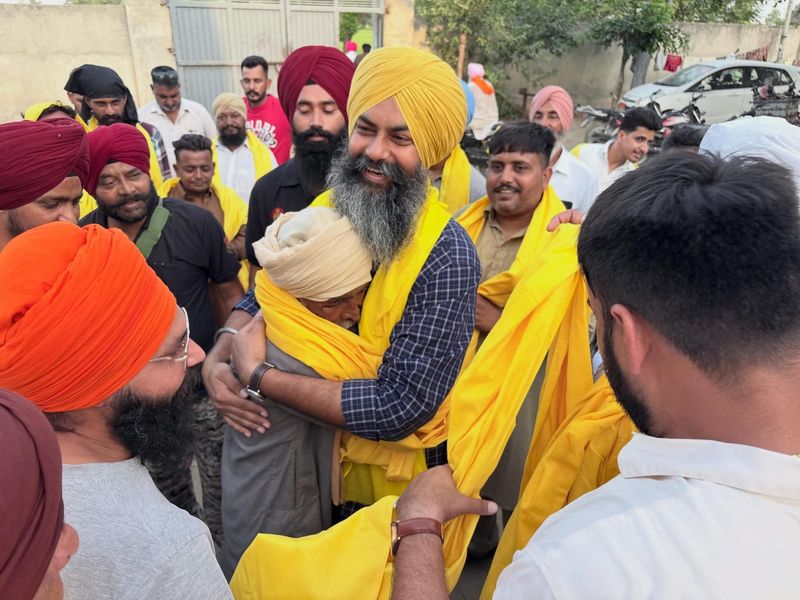
Dimpy Chandbhan to Gurpreet Sekhon: Punjab’s gangsters keep finding their way into politics
22 minutes ago
 India
India
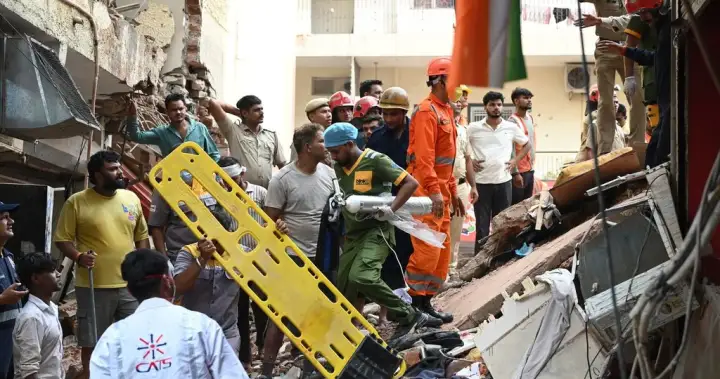
New Delhi building collapse leaves 1 dead, others trapped
22 minutes ago
 India
India
'ECI eliminated 15% of India's population': Ex
7 hours ago
 India
India
After Gen Z, India’s Gen Alpha rises, demanding education reforms
9 hours ago
 India
India
'Mirzapur: The Movie' box office Day 2: Pankaj Tripathi film crosses Rs 50 crore in India
9 hours ago
 India
India
Rahul a poster boy of negative politics, inherits ‘comprised mission’ legacy of family: BJP chief
10 hours ago
 India
India
Whataboutery: The Slow Poisoning of Indian Politics
10 hours ago
 India
India
Ali Fazal surprises cinemagoers at Mirzapur: The Movie screening in Delhi, fans call it a 'goosebump moment'
12 hours ago