
Why the Gordie Howe International Bridge was 'a bad deal for Canada from the start'
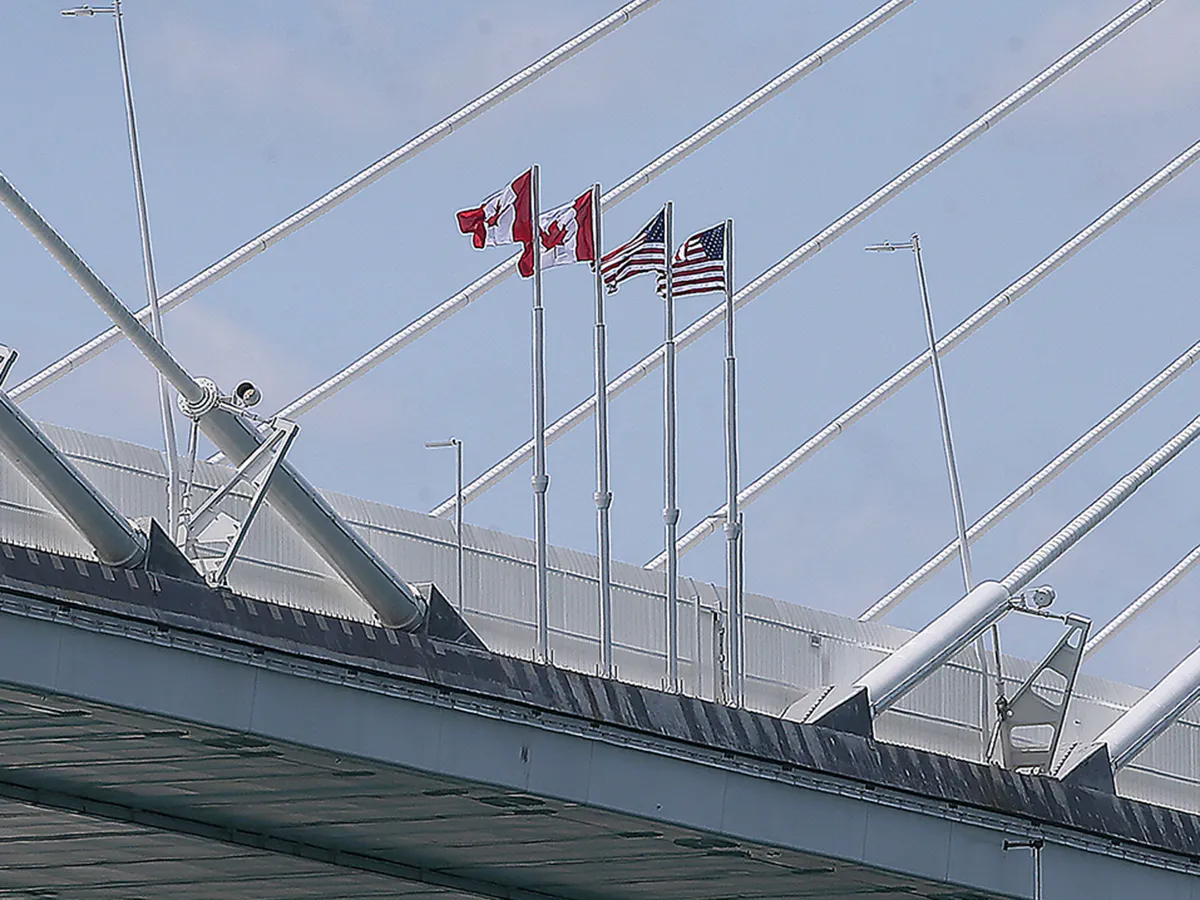
We learned this week the outcome of Canada’s gunpoint re-negotiation with the United States over revenue from the new Gordie Howe International Bridge, an impressive $6.4-billion cross-border span that Canada paid for and is now finally able to open for traffic on Monday.
The reality of the forced amendments — hammered out under threat from U.S. President Donald Trump who demanded changes to a long-standing binational contract at the eleventh hour — is not so much that it makes the new bridge a terrible deal for Canada, it’s that the changes made a bad deal even worse, according to a source with high-level knowledge of the business of border infrastructure.
“The original deal makes me wonder why Trump was moping about it being a bad deal. It was a steal for the U.S., an absolute steal,” said the cross-border specialist who requested their name not be published as they are not authorized to discuss the matter.
“It was already a sweetheart deal. Trump didn’t need to do anything more to make it a great deal. At the time, everyone in the bridge community all said the same thing: This is a sweetheart deal for the U.S.
“Canada was screwed from the beginning. It was a bad deal for Canada from the start, and it will continue to be a bad deal for Canada moving forward.”
Economically, it might make the Gordie Howe a bridge too far.
The new six-lane bridge connecting Windsor to Detroit with a main span of 853 metres, the longest of its kind on the continent, is an ambitious and grand structure that took 26 years to create.
Visually, with tall towers anchoring splays of 216 diagonal steel cables, it evokes the masts and rigging of sailing ships of yore, like the clippers run by American privateers during the War of 1812 that hijacked merchant shipping.
Looking at the bridge’s economics, its imagery of something out of step with its time seems appropriate, despite its modern amenities; and with recent events, conjuring American raiders of the past aiming north of the border also seems suitable.
The bridge project formally began in 2012 when a deal was signed by the government of Canada and the state of Michigan for a new border-straddling bridge. The deal created the Windsor-Detroit Bridge Authority (WDBA), a Canadian not-for-profit Crown corporation, that would fund construction of the bridge, the plazas for customs facilities, and connecting the bridge to the highway systems in both countries.
The deal stipulated that all tolls from bridge traffic in both directions will be collected only on the Canadian side, and used to reimburse Ottawa for funding the project before sharing revenue with Michigan.
While the business case for a new bridge was debated, its name appealed on both sides of the border, in honour of Gordie Howe, a much-loved and respected Canadian hockey star who spent 25 seasons in the NHL bringing the Detroit Red Wings to glory. Howe died in 2016, two years before bridge construction began.
Related Stories
 Canada
‘We know we got this wrong’: Target apologizes for children’s clown Halloween costume
2 minutes ago
 Canada
U.S. Secret Service aware of Iranian state media video threatening life of Barron Trump
2 minutes ago
 Canada
CBC News Network's Aarti Pole speaks to former Conservative cabinet minister Jason Kenney about new counter tariffs from Canada
3 minutes ago
 Canada
Nine McMaster faculty members inducted into Canadian Academy of Health Sciences
3 minutes ago
 Canada
Ontario Premier Doug Ford admits ‘it got a little heated’ with President Donald Trump
3 minutes ago
 Canada
Canada announces 'dollar-for
3 minutes ago
 Canada
Trump threatens to rename Lake Ontario. Checkmate, Canada. | Opinion
1 hour ago
 Canada
Air Canada still carrying U.S. alcohol as Ottawa pushes ‘Buy Canadian’
1 hour ago